Loading...
Indira Gandhi vs Modibo Keita
Indira Gandhi leads by 8.3 pts · 2 figures compared
…

Indira Gandhi
Politician · Modern
60.8Total
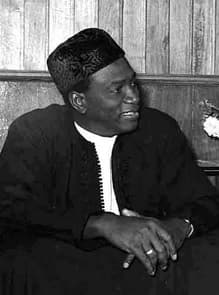
Modibo Keita
Politician · Modern
52.5Total
Basic Information
Born
1917
1915
Died
1984
1977
Era
Modern
Modern
Nationality
India
Mali
Occupation
Politician
Politician
Civilization
Indian
Other
Score Comparison
Military (10%)
45.0
10.0
Political (20%)
65.0
68.0
Influence (20%)
68.0
57.2
Legacy (20%)
52.0
48.3
Leadership (15%)
80.0
74.0
Strategy (15%)
45.0
38.3
TOTAL
60.8
52.5
Indira Gandhi — Complete Timeline
1967 AD
Green Revolution ImplementationReform◆ Major
Gandhi's government accelerated the Green Revolution, promoting high-yield crop varieties, fertilizers, and irrigation. This policy transformed India from a food-deficient nation to a self-sufficient one in grain production.
AgricultureFood SecurityEconomic Development
Impact: nationalconstructive
1969 AD
Nationalization of BanksReform◆ Major
Gandhi's government nationalized 14 major commercial banks in India. The policy aimed to extend banking services to rural areas and control credit flow, significantly expanding state control over the economy.
Economic PolicyBankingSocialism
Impact: nationalconstructive
1971 AD
Indo-Pakistani War of 1971War
India intervened in the Bangladesh Liberation War against Pakistan. The conflict ended with the surrender of 93,000 Pakistani soldiers and the creation of Bangladesh, establishing India as the dominant power in South Asia.
Bangladesh Liberation WarMilitary VictorySouth Asia
Impact: regional
1975 AD
Imposition of EmergencyPolitical Action◆ Major
Gandhi declared a national state of emergency, suspending civil liberties and censoring the press. Thousands of political opponents were imprisoned. The Emergency lasted 21 months and is considered a dark period in Indian democracy.
AuthoritarianismCivil LibertiesIndian Democracy
Impact: nationaldestructive
1984 AD
Operation Blue StarWar◆ Major
Gandhi ordered the Indian Army to storm the Golden Temple in Amritsar to remove Sikh militants. The operation caused significant damage to the temple and resulted in hundreds of casualties, deeply alienating the Sikh community.
Sikh ConflictGolden TempleMilitary Action
Impact: nationaltragic
Assassination of Indira GandhiPolitical Action
Gandhi was shot dead by her own Sikh bodyguards in New Delhi as revenge for Operation Blue Star. Her assassination triggered anti-Sikh riots across India that killed thousands.
AssassinationSikh RiotsPolitical Violence
Impact: nationaltragic
Modibo Keita — Complete Timeline
1960 AD
Adoption of Socialist PoliciesReform◆ Major
Keita implemented a socialist economic program, nationalizing key industries, collectivizing agriculture, and establishing state-run enterprises. These policies aimed to reduce dependence on France and promote self-sufficiency but led to economic inefficiency and shortages.
SocialismEconomic PolicyMali
Impact: national
First President of Independent MaliPolitical Action◆ Major
Modibo Keita became the first President of Mali on September 22, 1960, after the country gained independence from France. He led the Sudanese Republic (formerly French Sudan) in breaking away from the short-lived Mali Federation with Senegal.
IndependenceFoundingMali
Impact: nationalconstructive
1963 AD
Promotion of Pan-AfricanismPolitical Action◆ Major
Keita was a leading pan-Africanist and co-founder of the Organization of African Unity (OAU) in 1963. He advocated for African unity and anti-colonialism, hosting the OAU's first summit in Addis Ababa and supporting liberation movements across the continent.
Pan-AfricanismOAUDiplomacy
Impact: regionalconstructive
1968 AD
Overthrown in Military CoupPolitical Action◆ Major
On November 19, 1968, Keita was overthrown in a military coup led by Lieutenant Moussa Traore. The coup was fueled by economic decline, popular discontent with austerity measures, and political repression. Keita was imprisoned and died in detention in 1977.
CoupOverthrowMali
Impact: nationaldestructive
Expert Analysis
Origins
Indira Gandhi was born on November 19, 1917, in Allahabad, India, into the powerful Nehru family. Her father, Jawaharlal Nehru, was a leading figure in the Indian independence movement and later India's first prime minister. She was educated at Visva-Bharati University and Oxford, but did not complete her degree. Her early exposure to politics came through her father's work and her involvement in the independence struggle.
Modibo Keita was born on June 4, 1915, in Bamako, French Sudan (now Mali), into a Muslim family of modest means. He attended the École Normale William Ponty in Senegal, a training ground for African elites, and later became a teacher. He was influenced by Marxist and pan-Africanist ideas, joining the African Democratic Rally (RDA) in the 1940s.
Rise to Power
Indira Gandhi's rise was shaped by her family name. She served as her father's hostess and unofficial aide during his tenure as prime minister. After Nehru's death in 1964, she entered parliament and was appointed Minister of Information and Broadcasting. In 1966, following the death of Prime Minister Lal Bahadur Shastri, she won the leadership of the Congress Party and became prime minister, facing skepticism due to her gender and perceived inexperience.
Modibo Keita rose through the RDA, becoming secretary-general of the Sudanese Union party. He was elected to the French National Assembly in 1956 and served as a minister in the French government. When the Mali Federation dissolved in 1960, he became the first president of independent Mali on September 22, 1960.
Leadership & Governance
Indira Gandhi's leadership was characterized by centralization of power and populist policies. She nationalized banks in 1969 and abolished privy purses of princes. She also implemented the Green Revolution, boosting food production. However, her governance turned authoritarian: in 1975, she declared a state of emergency, suspending civil liberties and imprisoning opponents. Her political score is 65.0, reflecting both her effective consolidation of power and its democratic costs.
Modibo Keita pursued a socialist agenda, nationalizing industries and collectivizing agriculture. He focused on pan-African unity, co-founding the OAU in 1963. However, his economic policies led to inefficiency and decline. His leadership score of 74.0 indicates strong ideological commitment, but his strategy score of 38.3 reflects poor economic management.
Triumph & Tragedy
Indira Gandhi's greatest triumph was the Indo-Pakistani War of 1971, which led to the creation of Bangladesh. This boosted her popularity and India's regional dominance. Her tragedy was the imposition of Emergency and Operation Blue Star in 1984, which damaged her democratic credentials and led to her assassination by her Sikh bodyguards on October 31, 1984.
Modibo Keita's triumph was leading Mali to independence and promoting pan-Africanism. His tragedy was the failure of his socialist policies, causing economic hardship and leading to his overthrow in a military coup on November 19, 1968. He died in prison in 1977.
Character & Destiny
Indira Gandhi was determined and ruthless, often described as the 'only man in her cabinet'. Her character drove her to centralize power, but also led to isolation and poor advice. Her assassination was a direct consequence of Operation Blue Star.
Modibo Keita was idealistic and principled, dedicated to socialism and African unity. His inflexibility in economic policy and failure to adapt led to his downfall. His character was more suited for a revolutionary than a manager.
Legacy
Indira Gandhi's legacy is mixed: she strengthened India's national security and agricultural self-sufficiency, but also weakened democratic institutions. Her political score of 65.0 and influence score of 68.0 reflect her lasting impact on Indian politics. She remains a polarizing figure.
Modibo Keita is remembered as a founding father of Mali and a pan-Africanist. However, his economic failures led to a legacy of underdevelopment. His influence score of 57.2 and legacy of 48.3 indicate a more limited impact.
Conclusion
Indira Gandhi had a greater impact due to her role in a larger, more influential country and her decisive actions in war and policy. Her total score of 60.8 surpasses Keita's 52.5. While Keita's pan-African ideals were important, Gandhi's leadership shaped a nuclear power and a billion people. She takes the clear edge in historical significance.
Rankings
🥇
Indira GandhiLeader
Mil: 45.0Pol: 65.0Inf: 68.0
60.8
🥈
Modibo Keita
Mil: 10.0Pol: 68.0Inf: 57.2
52.5
+8.3 behind
How This Comparison Works
Algorithm
Each figure is scored on 6 dimensions (0—100 scale) based on structured historical data: Military (10%), Political (20%), Influence (20%), Legacy (20%), Leadership (15%), Strategy (15%). The weighted total produces the final ranking.
Data Sources
Scores are computed from structured sub-indicators in the database. Scale factors adjust for era (Ancient ×0.85, Modern ×1.0) and civilization size (Eastern ×1.05, Other ×0.80) to account for differences in population and military scale.
Maximum 3 Figures
Comparisons are limited to 2—3 figures to ensure readability and statistical meaningfulness.
Error Margins
±5 points per dimension — Sub-scores are derived from historical records with inherent uncertainty. Two figures within 5 points on a dimension should be considered roughly equivalent in that area.
Total Score Accuracy
±3 points overall — The weighted combination of 6 dimensions produces a total score with approximately ±3 points of uncertainty. Differences of less than 3 points are not statistically significant— the figures are effectively tied.
Known Limitations
- Historical records are incomplete and uneven across civilizations
- Figures from oral-tradition societies may be underrepresented
- Occupation labels can misclassify multi-role figures
- Scores measure capability and impact, not moral character
- Quantitative scoring is a comparison tool, not absolute truth
Capability Radar
Military (10%) — Battles & Warfare
Battles
10
0
Win Rate
10
0
Expansion
20
0
Political (20%) — Governance & Reform
Reform
75
65
Diplomacy
70
60
Economy
60
40
Influence (20%) — Cultural & Global Reach
Cultural
65
45
Global
70
40
Legacy (20%) — Historical Impact
Historical
70
50
Longevity
60
40
Leadership (15%) — Power & Stability
Tenure
85
60
Stability
50
30
Strategy (15%) — Tactics & Innovation
Strategy
20
0
Tactics
10
0
Reform
30
10
Similar Comparisons
Comments & Discussion
No comments yet. Be the first to share your thoughts!