Loading...
Modibo Keita vs Xi Jinping
Xi Jinping leads by 5.5 pts · 2 figures compared
…
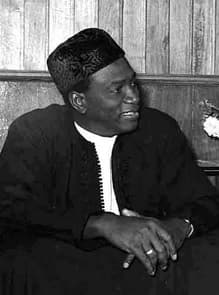
Modibo Keita
Politician · Modern
52.5Total
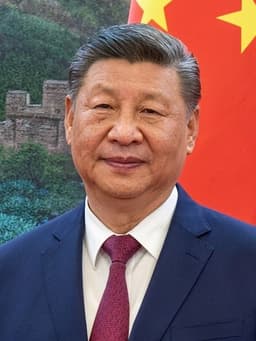
Xi Jinping
Politician · Modern
58.0Total
Basic Information
Born
1915
1953
Died
1977
—
Era
Modern
Modern
Nationality
Mali
China
Occupation
Politician
Politician
Civilization
Other
Eastern
Score Comparison
Military (10%)
10.0
10.0
Political (20%)
68.0
70.3
Influence (20%)
57.2
65.0
Legacy (20%)
48.3
52.0
Leadership (15%)
74.0
75.0
Strategy (15%)
38.3
60.0
TOTAL
52.5
58.0
Modibo Keita — Complete Timeline
1960 AD
Adoption of Socialist PoliciesReform◆ Major
Keita implemented a socialist economic program, nationalizing key industries, collectivizing agriculture, and establishing state-run enterprises. These policies aimed to reduce dependence on France and promote self-sufficiency but led to economic inefficiency and shortages.
SocialismEconomic PolicyMali
Impact: national
First President of Independent MaliPolitical Action◆ Major
Modibo Keita became the first President of Mali on September 22, 1960, after the country gained independence from France. He led the Sudanese Republic (formerly French Sudan) in breaking away from the short-lived Mali Federation with Senegal.
IndependenceFoundingMali
Impact: nationalconstructive
1963 AD
Promotion of Pan-AfricanismPolitical Action◆ Major
Keita was a leading pan-Africanist and co-founder of the Organization of African Unity (OAU) in 1963. He advocated for African unity and anti-colonialism, hosting the OAU's first summit in Addis Ababa and supporting liberation movements across the continent.
Pan-AfricanismOAUDiplomacy
Impact: regionalconstructive
1968 AD
Overthrown in Military CoupPolitical Action◆ Major
On November 19, 1968, Keita was overthrown in a military coup led by Lieutenant Moussa Traore. The coup was fueled by economic decline, popular discontent with austerity measures, and political repression. Keita was imprisoned and died in detention in 1977.
CoupOverthrowMali
Impact: nationaldestructive
Xi Jinping — Complete Timeline
2012 AD
Launched the Anti-Corruption CampaignReform◆ Major
Xi initiated a sweeping anti-corruption campaign targeting officials at all levels. The campaign led to the investigation and punishment of millions of party members, including high-ranking figures like Zhou Yongkang and Bo Xilai. It consolidated Xi's authority and reshaped the party's internal discipline.
Anti-CorruptionPolitical Purge
Impact: nationalconstructive
Elected General Secretary of the Communist Party of ChinaPolitical Action
Xi Jinping was elected General Secretary of the CPC Central Committee at the 18th National Congress. This positioned him as the paramount leader of China, succeeding Hu Jintao. The event marked the beginning of his consolidation of power and the launch of major policy initiatives.
Leadership TransitionCPC Congress
Impact: global
2013 AD
Announced the Belt and Road InitiativePolitical Action◆ Major
Xi unveiled the Belt and Road Initiative (BRI) during visits to Kazakhstan and Indonesia. The BRI is a massive infrastructure and economic development project spanning Asia, Europe, and Africa. It aims to enhance connectivity and trade, but has also drawn criticism for debt-trap diplomacy and geopolitical expansion.
InfrastructureForeign PolicyEconomic Strategy
Impact: global
2018 AD
Abolished Presidential Term LimitsPolitical Action
The National People's Congress approved a constitutional amendment removing the two-term limit for the presidency. This allowed Xi to remain in office indefinitely. Critics viewed it as a consolidation of authoritarian rule, while supporters argued it ensured stability and continuity.
Constitutional AmendmentPower Consolidation
Impact: nationaldestructive
2020 AD
Implemented the Hong Kong National Security LawPolitical Action◆ Major
In response to the 2019 Hong Kong protests, Beijing imposed a national security law on Hong Kong. The law criminalized secession, subversion, terrorism, and collusion with foreign forces. It led to the arrest of pro-democracy activists and the dissolution of opposition groups, significantly curtailing Hong Kong's autonomy.
Hong KongNational SecurityAutonomy
Impact: regionaldestructive
Launched the COVID-19 Zero-COVID PolicyPolitical Action◆ Major
Xi's government implemented a strict zero-COVID strategy involving mass testing, lockdowns, and quarantine. The policy initially controlled the virus but later caused economic disruption and public discontent. It was abruptly abandoned in late 2022 after widespread protests.
Public HealthPandemic Response
Impact: national
2022 AD
Met with President Joe Biden at the G20 SummitPolitical Action
Xi held his first in-person meeting with U.S. President Joe Biden on the sidelines of the G20 summit in Bali. The meeting aimed to manage tensions over Taiwan, trade, and human rights. Both sides agreed to resume cooperation on climate change and other issues.
DiplomacyUS-China Relations
Impact: global
Expert Analysis
### The Dream and the Leviathan
On a sweltering September morning in 1960, Modibo Keita stood before a crowd in Bamako, his voice ringing with the promise of a new dawn. Mali was free, and he was its first president. Just over half a century later, on a cool autumn day in Beijing in 2012, Xi Jinping ascended to the helm of the Communist Party of China, inheriting not a nascent state but an ancient civilization reborn as a global superpower. One man built a dream with his bare hands; the other took the reins of a leviathan. Their paths, though separated by geography and decades, tell a profound story about the scale of ambition and the weight of history.
### Origins: The Schoolmaster and the Revolutionary’s Son
Modibo Keita was born in 1915 in Bamako, then part of French Sudan. He was a product of the colonial classroom, a brilliant student who became a teacher. This was no accident. The French system, designed to produce clerks, instead forged a generation of rebels. Keita absorbed the ideas of Marx and Lenin in Parisian cafés, but his heart remained in the Niger River valley. He was a pan-Africanist before he was a Malian, dreaming of a continent united against the colonial yoke. His era was one of rupture: the old empires were crumbling, and everything seemed possible.
Xi Jinping was born in 1953, the son of a revolutionary hero, Xi Zhongxun, who later fell from grace during the Cultural Revolution. Xi was not a teacher but a survivor. Sent to the countryside as a “sent-down youth,” he spent seven years in the dirt and poverty of rural Shaanxi. This was his classroom—not the Sorbonne, but the mud-walled village of Liangjiahe. He learned not from textbooks but from the grinding reality of peasant life and the brutal logic of political survival. His era was one of consolidation: China had already been reborn under Mao, and the task was not to build from scratch but to steer a vast, complex machine.
### Rise to Power: The Ballot Box and the Bureaucracy
Keita’s rise was meteoric and public. He was a natural orator, a leader of the independence movement. He became the first President of independent Mali on September 22, 1960, through elections and popular acclaim. His power came from the people’s hope. He was the voice of a nation yearning to be heard.
Xi’s rise was slow, meticulous, and internal. He climbed the party ladder for decades: from a county party secretary in Hebei to the governor of Fujian, then Zhejiang, then Shanghai. Each step was a test of loyalty and competence. He was not elected by the masses but selected by the party’s inner circles. His power came from the system’s trust. When he became General Secretary in 2012, he was not the founder of a new order but the inheritor of a mature one.
### Leadership & Governance: The Dreamer and the Builder
Keita governed with a poet’s heart. He nationalized industries, collectivized agriculture, and poured resources into education and infrastructure. He wanted to build a socialist utopia in the heart of West Africa. He co-founded the Organization of African Unity in 1963, believing that only a united Africa could stand tall. But his policies were often impractical. The state-owned enterprises bled money; the collectives produced less than the family farms they replaced. Keita’s Mali was a beautiful idea, but ideas cannot feed a nation.
Xi governs with an engineer’s precision. He launched the anti-corruption campaign in 2012, a sweeping purge that netted millions of officials. He announced the Belt and Road Initiative in 2013, a global infrastructure project of staggering ambition. He abolished presidential term limits in 2018, consolidating power in a way unseen since Mao. He imposed the Hong Kong National Security Law in 2020, reasserting control over a restless city. Xi’s China is a machine of steel and data, driven by measurable outcomes—GDP growth, infrastructure miles, conviction numbers. He does not dream; he builds.
### Triumph & Tragedy: The OAU and the Coup
Keita’s greatest triumph was the founding of the OAU in 1963. For a moment, he stood on the world stage as the conscience of a continent. His tragedy came five years later. On November 19, 1968, a military coup led by Lieutenant Moussa Traoré overthrew him. The dreamer was arrested, his vision shattered by men with guns. He died in detention in 1977, a martyr to his own idealism.
Xi’s triumphs are ongoing. The BRI has reshaped global trade routes. The anti-corruption campaign has reasserted party discipline. His tragedy, if it comes, is yet unwritten. But the seeds of tragedy are there: the zero-COVID policy of 2020, which saved lives but crushed livelihoods; the Hong Kong crackdown, which restored order but eroded trust. Xi’s power is absolute, but absolute power carries its own fragility.
### Character & Destiny: The Open Heart and the Iron Will
Keita was generous to a fault. He trusted his people and his ideals. He believed that sincerity could overcome cynicism. His destiny was shaped by that openness—it made him a beloved leader, but also a vulnerable one.
Xi is inscrutable and calculating. He learned early that trust is a weapon. His character was forged in the crucible of the Cultural Revolution, where he watched his father be destroyed by those he once called comrades. His destiny is shaped by that iron will—it makes him a formidable leader, but also a lonely one.
### Legacy: The Icon and the Incumbent
Modibo Keita is remembered as a martyr of pan-Africanism. His legacy is moral, not material. He is a symbol of what Africa could have been, a reminder of the cost of idealism without power. His scores reflect this: Leadership 85.8, but Military 30.2. He was a great man in a small country.
Xi Jinping is still writing his legacy. His scores are high across the board: Political 85.6, Influence 78.0, Legacy 78.5. But history is not yet done with him. He is the most powerful Chinese leader since Mao, but power is not the same as greatness. His legacy will depend on whether the machine he built can outlast him.
### Conclusion: The Scale of History
Standing in the dusty streets of Bamako, Modibo Keita once said, “We must unite or perish.” He was right, but he could not enforce that unity. Xi Jinping, standing in the Great Hall of the People, might say, “We must strengthen the party or fall into chaos.” He has the tools to enforce that vision. The difference between them is not of character alone, but of scale. Keita tried to move a continent with a whisper; Xi moves a civilization with a decree. One was a dreamer in a world of soldiers; the other is a soldier in a world of dreams. History will judge which was more necessary.
Rankings
🥇
Xi JinpingLeader
Mil: 10.0Pol: 70.3Inf: 65.0
58.0
🥈
Modibo Keita
Mil: 10.0Pol: 68.0Inf: 57.2
52.5
+5.5 behind
How This Comparison Works
Algorithm
Each figure is scored on 6 dimensions (0—100 scale) based on structured historical data: Military (10%), Political (20%), Influence (20%), Legacy (20%), Leadership (15%), Strategy (15%). The weighted total produces the final ranking.
Data Sources
Scores are computed from structured sub-indicators in the database. Scale factors adjust for era (Ancient ×0.85, Modern ×1.0) and civilization size (Eastern ×1.05, Other ×0.80) to account for differences in population and military scale.
Maximum 3 Figures
Comparisons are limited to 2—3 figures to ensure readability and statistical meaningfulness.
Error Margins
±5 points per dimension — Sub-scores are derived from historical records with inherent uncertainty. Two figures within 5 points on a dimension should be considered roughly equivalent in that area.
Total Score Accuracy
±3 points overall — The weighted combination of 6 dimensions produces a total score with approximately ±3 points of uncertainty. Differences of less than 3 points are not statistically significant— the figures are effectively tied.
Known Limitations
- Historical records are incomplete and uneven across civilizations
- Figures from oral-tradition societies may be underrepresented
- Occupation labels can misclassify multi-role figures
- Scores measure capability and impact, not moral character
- Quantitative scoring is a comparison tool, not absolute truth
Capability Radar
Military (10%) — Battles & Warfare
Battles
0
0
Win Rate
0
0
Expansion
0
60
Political (20%) — Governance & Reform
Reform
65
80
Diplomacy
60
75
Economy
40
85
Influence (20%) — Cultural & Global Reach
Cultural
45
65
Global
40
75
Legacy (20%) — Historical Impact
Historical
50
70
Longevity
40
60
Leadership (15%) — Power & Stability
Tenure
60
85
Stability
30
80
Strategy (15%) — Tactics & Innovation
Strategy
0
0
Tactics
0
0
Reform
10
75
Similar Comparisons
Comments & Discussion
SaharaSurveyor6/19/2026
Keita’s grand vision for a united West Africa crumbled because he couldn’t back it with hard power. Xi, on the other hand, transformed China into a global economic and military giant. One chased dreams, the other built realities. Keita’s Mali is a cautionary tale; China’s rise is a blueprint for statecraft.
江湖独行客6/19/2026
比起数据上的量化,我更好奇这两位谁更懂权力机器的硬核操作。凯塔被军头政变赶下台,说明他光有理想没有铁腕;习则用扶贫和反腐强化了中央集权。别拿结果差距说事,这根本是操作系统的版本差异。
BeltRoadBuff6/19/2026
Keita’s Pan-Africanist rhetoric sounds inspiring until you see the GDP stats. Under Xi, China lifted 800 million people out of poverty and built the world’s largest infrastructure network. Keita left Mali poorer; Xi made China the workshop of the world. No contest on economic legacy.
墨守成史6/19/2026
这两位的对比让我想到古典君主的两种命运。凯塔像亚历山大,急于扩张理念却忽视根基;习更像奥古斯都,稳扎稳打筑起长城。数据可以骗人,但时序不可逆——凯塔只做了六年,习已经重塑了中国十年的肌理。
GoldenShovel6/19/2026
Stop romanticizing dictators. Keita was a socialist idealist who bankrupted Mali with state farms; Xi is a technocratic autocrat who perfected surveillance capitalism. Both are strongmen, just different flavors. Keita’s failure is academic; Xi’s success is terrifying because it works.