Loading...
Intef I vs Julius Caesar
Julius Caesar leads by 45.5 pts · 2 figures compared
…
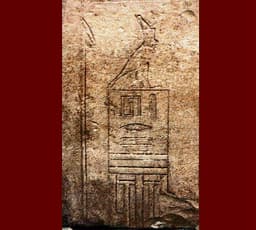
Intef I
Emperor · Ancient
37.3Total

Julius Caesar
General · Ancient
82.8Total
Basic Information
Born
-2110
-100
Died
-2100
-44
Era
Ancient
Ancient
Nationality
Middle Kingdom Egypt
Roman Republic
Occupation
Emperor
General
Civilization
Middle Eastern
Western
Score Comparison
Military (10%)
50.0
88.0
Political (20%)
30.7
78.0
Influence (20%)
43.2
85.0
Legacy (20%)
34.2
82.0
Leadership (15%)
31.2
80.0
Strategy (15%)
36.8
85.0
TOTAL
37.3
82.8
Intef I — Complete Timeline
2110 BC
Accession as Theban rulerPolitical Action◆ Major
Intef I succeeded Mentuhotep I as ruler of Thebes, taking the Horus name Sehertawy ('He who pacifies the Two Lands'). His reign continued the 11th Dynasty's efforts to expand Theban influence during the First Intermediate Period.
AccessionTheban DynastyFirst Intermediate Period
Impact: regional
2105 BC
Military campaigns against the northWar
Intef I led military expeditions northward against the Heracleopolitan kingdom. These campaigns extended Theban control into Middle Egypt but did not achieve a decisive victory, maintaining the stalemate between the two powers.
Military CampaignHeracleopolisExpansion
Impact: regional
Julius Caesar — Complete Timeline
58 BC
Gallic WarsWar◆ Major
Caesar, as proconsul of Gaul, launched a series of campaigns that conquered all of Gaul (modern France, Belgium, and parts of Switzerland). He fought numerous battles, including against the Helvetii, the Belgae, and the Gallic chieftain Vercingetorix. The wars brought immense wealth and a loyal army to Caesar.
Gallic WarsConquestRoman Expansion
Impact: regional
49 BC
Crossing the RubiconPolitical Action◆ Major
Caesar led Legio XIII across the Rubicon River into Italy, defying the Roman Senate's order to disband his army. This act triggered a civil war against Pompey and the Optimates, ultimately leading to Caesar's dictatorship and the end of the Roman Republic.
Roman Civil WarEnd of RepublicPower Struggle
Impact: global
48 BC
Battle of PharsalusWar◆ Major
Caesar's outnumbered army defeated the larger forces of Pompey the Great at Pharsalus in Greece. Caesar's tactical use of a reserve line to counter Pompey's cavalry charge proved decisive. Pompey fled to Egypt, where he was assassinated, leaving Caesar as the undisputed master of the Roman world.
Roman Civil WarBattleDecisive Victory
Impact: regional
44 BC
Appointment as Dictator for LifePolitical Action◆ Major
The Roman Senate appointed Caesar dictator perpetuo (dictator for life), granting him unprecedented personal power. This move concentrated military, legislative, and judicial authority in one person, effectively ending the Roman Republic's traditional system of checks and balances and alarming many senators.
DictatorshipEnd of RepublicPower Consolidation
Impact: regionaldestructive
Assassination on the Ides of MarchPolitical Action◆ Major
A group of Roman senators, led by Marcus Junius Brutus and Gaius Cassius Longinus, stabbed Caesar to death at a meeting of the Senate in the Theatre of Pompey. The assassination was intended to restore the Republic, but instead triggered another civil war that led to the rise of the Roman Empire.
AssassinationRoman PoliticsEnd of Republic
Impact: globaldestructive
Expert Analysis
intef-i-vs-julius-caesar
# The Conqueror and the Pacifier
On a winter day in 49 BCE, a Roman general stood at the banks of a small river in northern Italy. The Rubicon was little more than a stream, but crossing it meant civil war, the destruction of a five-hundred-year-old republic, and the birth of an empire. Julius Caesar did not hesitate. More than two thousand years earlier, another ruler faced a different kind of river—the Nile. Intef I, a Theban prince, looked north toward the delta where a rival kingdom held sway. He could not cross; he could only inch forward, campaign by campaign, carving out a fragile domain. Both men sought power. One remade the world. The other barely survived in the historical record. Why such a vast difference in outcome?
Origins
Caesar was born into a patrician family that had seen better days. His uncle was Gaius Marius, the great populist general, and his aunt was married to Marius’s rival Sulla. This tangled web of alliances meant Caesar grew up in a world of knife-edge politics, where a wrong word could mean exile or death. He fled Rome during Sulla’s purges, served as a young officer in Asia Minor, and learned early that survival required both charm and steel. The Roman Republic of the first century BCE was a cauldron of ambition, corruption, and violence—a system ripe for a man who could exploit its contradictions.
Intef I emerged from a very different world. He ruled Thebes around 2110 BCE, during the First Intermediate Period of Egypt, a time when the old order had collapsed. The pyramid-building pharaohs of the Old Kingdom were gone; the land was split between the Heracleopolitan kingdom in the north and the Theban kingdom in the south. Intef’s father, Mentuhotep I, had been a local nomarch, a provincial governor, who claimed the title of pharaoh but controlled little beyond Thebes itself. Intef inherited not a kingdom but a claim—a Horus name, Sehertawy, meaning “He who pacifies the Two Lands.” The name was aspiration, not reality.
Rise to Power
Caesar’s path was a masterclass in calculated risk. He climbed the Roman political ladder—quaestor, aedile, pontifex maximus—borrowing enormous sums to fund games and bribes. In 60 BCE, he formed the First Triumvirate with Pompey and Crassus, an alliance that gave him command of Gaul. Over the next eight years, he conquered what is now France, Belgium, and parts of Germany, winning battles against tribes that outnumbered his legions. He wrote his own propaganda—the *Commentaries on the Gallic War*—and made himself a legend while still alive. When the Senate ordered him to disband his army, he crossed the Rubicon instead. He was fifty-one years old.
Intef I rose by inheritance, not conquest. He became ruler of Thebes around 2110 BCE, likely in his twenties. His power base was small: a few thousand soldiers, some loyal nobles, and the prestige of Thebes’ god Amun. He could not afford a grand gamble. Instead, he led cautious military expeditions northward, pushing against the Heracleopolitan kingdom. The records are fragmentary—a few inscriptions on tomb walls, a mention in the Turin King List—but they suggest he extended Theban control perhaps a hundred miles. He was a local strongman, not a world conqueror.
Leadership & Governance
Caesar governed as a revolutionary. As dictator, he reformed the calendar, granted citizenship to provincials, launched public works, and centralized power in his own hands. He pardoned former enemies—a calculated mercy that won loyalty—but also packed the Senate with his supporters. His military genius was strategic: at Alesia, he besieged a Gallic stronghold while simultaneously building defenses against a relief army, then defeated both. He was ruthless when necessary, but he understood that power required legitimacy. He refused the title of king, knowing it would trigger revolt.
Intef I governed as a consolidator. He could not reform Egypt; he could only hold it together. His inscriptions emphasize his role as “pacifier”—a man who brought order to chaos. He built no great monuments, left no legal code, and waged no wars of annihilation. His strategy was defensive: push north, secure the border, and wait. He was a survivalist, not a visionary.
Triumph & Tragedy
Caesar’s greatest triumph was his victory in the civil war. By 45 BCE, he had defeated Pompey’s forces in Greece, Egypt, and Spain. He returned to Rome as dictator for life, with the Senate groveling at his feet. His tragedy came on March 15, 44 BCE—the Ides of March—when sixty senators stabbed him to death in the Theatre of Pompey. He fell at the base of a statue of his old rival. His last words, according to tradition, were “*Et tu, Brute?*”—a recognition that even his closest allies had turned against him.
Intef I’s triumph was modest: he held Thebes together and passed it to his son, Intef II. His tragedy is that we know almost nothing about him. He died around 2100 BCE, after a decade-long reign. No dramatic murder, no grand betrayal—just a quiet end, followed by centuries of obscurity.
Character & Destiny
Caesar was driven by an insatiable hunger for glory. He was brilliant, charming, and utterly ruthless. He believed he was destined for greatness—and he was right. His personality shaped Roman history: his ambition destroyed the Republic, but his reforms laid the foundations for the Empire. He was a gambler who kept winning, until the day he didn’t.
Intef I was driven by necessity. He was not a visionary; he was a man trying to keep his house from burning down. His personality is invisible to us—no letters, no speeches, no anecdotes. He was a product of his era, not its shaper.
Legacy
Caesar’s legacy is the Western world. His name became a title—Kaiser, Tsar—and his reforms outlasted him. The Roman Empire he unwittingly created shaped law, language, and government for two millennia. He is remembered as a genius and a tyrant, a man who both built and destroyed.
Intef I’s legacy is the survival of Thebes. He began the reunification of Egypt that his successors would complete. He is remembered, if at all, as a footnote—a name on a fragmentary list.
Conclusion
Two rulers, two worlds. Caesar crossed the Rubicon and changed history. Intef I crossed nothing and was forgotten. But perhaps the difference is not one of merit, but of scale. Caesar lived in a civilization that recorded everything; Intef I lived in one that recorded almost nothing. Caesar had a continent to conquer; Intef I had a river valley to hold. Both did what their times demanded. One became a legend. The other became a name. History, like the Rubicon, flows only one way—and it carries the ambitious far, while the cautious are left behind.
Rankings
🥇
Julius CaesarLeader
Mil: 88.0Pol: 78.0Inf: 85.0
82.8
🥈
Intef I
Mil: 50.0Pol: 30.7Inf: 43.2
37.3
+45.5 behind
How This Comparison Works
Algorithm
Each figure is scored on 6 dimensions (0—100 scale) based on structured historical data: Military (10%), Political (20%), Influence (20%), Legacy (20%), Leadership (15%), Strategy (15%). The weighted total produces the final ranking.
Data Sources
Scores are computed from structured sub-indicators in the database. Scale factors adjust for era (Ancient ×0.85, Modern ×1.0) and civilization size (Eastern ×1.05, Other ×0.80) to account for differences in population and military scale.
Maximum 3 Figures
Comparisons are limited to 2—3 figures to ensure readability and statistical meaningfulness.
Error Margins
±5 points per dimension — Sub-scores are derived from historical records with inherent uncertainty. Two figures within 5 points on a dimension should be considered roughly equivalent in that area.
Total Score Accuracy
±3 points overall — The weighted combination of 6 dimensions produces a total score with approximately ±3 points of uncertainty. Differences of less than 3 points are not statistically significant— the figures are effectively tied.
Known Limitations
- Historical records are incomplete and uneven across civilizations
- Figures from oral-tradition societies may be underrepresented
- Occupation labels can misclassify multi-role figures
- Scores measure capability and impact, not moral character
- Quantitative scoring is a comparison tool, not absolute truth
Capability Radar
Military (10%) — Battles & Warfare
Battles
15
95
Win Rate
20
92
Expansion
20
97
Political (20%) — Governance & Reform
Reform
10
90
Diplomacy
15
85
Economy
10
82
Influence (20%) — Cultural & Global Reach
Cultural
10
88
Global
5
94
Legacy (20%) — Historical Impact
Historical
15
95
Longevity
10
96
Leadership (15%) — Power & Stability
Tenure
20
75
Stability
15
60
Strategy (15%) — Tactics & Innovation
Strategy
15
94
Tactics
10
96
Reform
5
88
Similar Comparisons
Comments & Discussion
No comments yet. Be the first to share your thoughts!