Loading...
Intef II vs Julius Caesar
Julius Caesar leads by 37.8 pts · 2 figures compared
…
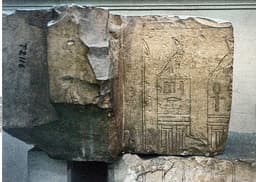
Intef II
Emperor · Ancient
45.0Total

Julius Caesar
General · Ancient
82.8Total
Basic Information
Born
-2100
-100
Died
-2050
-44
Era
Ancient
Ancient
Nationality
Middle Kingdom Egypt
Roman Republic
Occupation
Emperor
General
Civilization
Middle Eastern
Western
Score Comparison
Military (10%)
25.0
88.0
Political (20%)
36.5
78.0
Influence (20%)
46.3
85.0
Legacy (20%)
40.8
82.0
Leadership (15%)
74.0
80.0
Strategy (15%)
41.7
85.0
TOTAL
45.0
82.8
Intef II — Complete Timeline
2100 BC
Accession as Theban pharaohPolitical Action◆ Major
Intef II became ruler of Thebes, succeeding Intef I. His reign of approximately 50 years was the longest of the 11th Dynasty and marked a period of sustained expansion and consolidation of Theban power.
AccessionTheban DynastyLong Reign
Impact: regional
2080 BC
Conquest of the Thinite nomeWar◆ Major
Intef II captured the Thinite nome (Abydos region) from the Heracleopolitan kingdom. This victory gave Thebes control of a key religious and strategic area, strengthening their position in the ongoing civil war.
ConquestAbydosCivil War
Impact: regionalconstructive
2070 BC
Establishment of the 'Intef' tomb at ThebesCultural
Intef II built a large saff-tomb at El-Tarif in Thebes, a new type of royal burial. This tomb, with its long causeway and courtyard, reflected the growing wealth and power of the 11th Dynasty and set a precedent for later Theban burials.
TombArchitectureThebes
2060 BC
Expansion of Theban control to the 14th nomeWar◆ Major
Intef II extended Theban rule northward to the 14th nome of Lower Egypt, near the Faiyum. This expansion brought the Theban kingdom to the borders of the Heracleopolitan domain, setting the stage for eventual reunification.
ExpansionTerritorialReunification
Impact: regionalconstructive
Julius Caesar — Complete Timeline
58 BC
Gallic WarsWar◆ Major
Caesar, as proconsul of Gaul, launched a series of campaigns that conquered all of Gaul (modern France, Belgium, and parts of Switzerland). He fought numerous battles, including against the Helvetii, the Belgae, and the Gallic chieftain Vercingetorix. The wars brought immense wealth and a loyal army to Caesar.
Gallic WarsConquestRoman Expansion
Impact: regional
49 BC
Crossing the RubiconPolitical Action◆ Major
Caesar led Legio XIII across the Rubicon River into Italy, defying the Roman Senate's order to disband his army. This act triggered a civil war against Pompey and the Optimates, ultimately leading to Caesar's dictatorship and the end of the Roman Republic.
Roman Civil WarEnd of RepublicPower Struggle
Impact: global
48 BC
Battle of PharsalusWar◆ Major
Caesar's outnumbered army defeated the larger forces of Pompey the Great at Pharsalus in Greece. Caesar's tactical use of a reserve line to counter Pompey's cavalry charge proved decisive. Pompey fled to Egypt, where he was assassinated, leaving Caesar as the undisputed master of the Roman world.
Roman Civil WarBattleDecisive Victory
Impact: regional
44 BC
Appointment as Dictator for LifePolitical Action◆ Major
The Roman Senate appointed Caesar dictator perpetuo (dictator for life), granting him unprecedented personal power. This move concentrated military, legislative, and judicial authority in one person, effectively ending the Roman Republic's traditional system of checks and balances and alarming many senators.
DictatorshipEnd of RepublicPower Consolidation
Impact: regionaldestructive
Assassination on the Ides of MarchPolitical Action◆ Major
A group of Roman senators, led by Marcus Junius Brutus and Gaius Cassius Longinus, stabbed Caesar to death at a meeting of the Senate in the Theatre of Pompey. The assassination was intended to restore the Republic, but instead triggered another civil war that led to the rise of the Roman Empire.
AssassinationRoman PoliticsEnd of Republic
Impact: globaldestructive
Expert Analysis
intef-ii-vs-julius-caesar
The General and the Pharaoh
In the winter of 49 BCE, a Roman general stood on the banks of a small river in northern Italy. The Rubicon was a provincial boundary, but crossing it with an army meant war—civil war, treason, and the death of a republic. Julius Caesar hesitated, then spoke: "The die is cast." He crossed, and the world changed.
Almost two thousand years earlier, another ruler stood at the edge of a different kind of frontier. Intef II, a Theban pharaoh, looked north from his capital toward the lands held by the Heracleopolitan kingdom. He did not hesitate either. But where Caesar’s crossing was a single, dramatic act that shattered an entire political order, Intef II’s expansion was a slow, patient crawl—a conquest measured in decades, not days. Both men sought power, both reshaped their worlds, yet their paths and outcomes could not have been more different. Why?
Origins
Julius Caesar was born into the twilight of the Roman Republic, a world of senatorial intrigue, civil strife, and relentless ambition. His family, the Julii, claimed descent from the goddess Venus, but they were not among the ruling elite. Caesar’s father died when he was sixteen, leaving him to navigate a brutal political arena where fortunes were made and destroyed by alliances, bribes, and military command. He was a product of a hyper-competitive, literate, and ruthlessly pragmatic civilization that had already conquered the Mediterranean.
Intef II, by contrast, was born into the chaos of the First Intermediate Period, a time when Egypt had fractured into competing kingdoms after the collapse of the Old Kingdom. The throne of Thebes was a provincial seat, not an imperial one. His dynasty, the Eleventh, was fighting for survival against the Heracleopolitan pharaohs to the north. There were no grand senates or written constitutions—only the authority of divine kingship, the loyalty of local nomarchs, and the slow, grinding logic of Nile Valley warfare. Intef II inherited a small, embattled kingdom, not a republic on the verge of empire.
Rise to Power
Caesar’s rise was a masterclass in political calculation. He climbed the Roman career ladder—quaestor, aedile, praetor—using borrowed money, popular reforms, and a brilliant alliance with Pompey and Crassus (the First Triumvirate). His command in Gaul from 58 to 50 BCE was his springboard: eight years of relentless campaigning that made him fabulously wealthy, gave him a loyal army, and burnished his reputation as a military genius. When the Senate ordered him to disband his forces, he refused. The Rubicon was the final, inevitable gamble.
Intef II’s rise was quieter, slower, and more ritualized. He ascended to the throne around 2100 BCE, succeeding his brother Intef I. There was no dramatic crossing, no civil war—just a long, patient campaign to reunite Egypt. His key event came in 2080 BCE, when he captured the Thinite nome, the region around Abydos, from the Heracleopolitans. This was not a lightning strike but a careful military operation that gave Thebes control of a vital religious and strategic center. Over the next two decades, he pushed northward, reaching the 14th nome of Lower Egypt near the Faiyum by 2060 BCE. His rise was a slow accretion of territory, not a sudden seizure of power.
Leadership & Governance
Caesar governed as a reformer and a revolutionary. As dictator, he overhauled the calendar, reformed debt laws, expanded Roman citizenship to provincial elites, and initiated massive public works. His military genius was undeniable—his sieges at Alesia and his campaigns in Gaul are still studied in war colleges. But his political wisdom was flawed: he centralized power, accumulated titles (dictator for life, consul for ten years), and alienated the senatorial aristocracy. He ruled by force of personality and military might, not by building lasting institutions.
Intef II governed as a traditional pharaoh, but with a pragmatic edge. His longest reign of the dynasty—about fifty years—allowed him to consolidate power gradually. He built a new type of royal tomb at el-Tarif, a saff-tomb with a long causeway, signaling his dynasty’s permanence. He did not reform Egyptian society; he restored it, reasserting the cult of the god Montu and the authority of Thebes. His military strategy was cautious and incremental, avoiding pitched battles where possible. He was a consolidator, not a revolutionary. His leadership score of 73.9 reflects steady competence, not dazzling brilliance.
Triumph & Tragedy
Caesar’s greatest triumph was his conquest of Gaul, which added a vast, wealthy province to Rome and made him the most powerful man in the Republic. His most devastating failure was his assassination on the Ides of March, 44 BCE—a tragedy born of his own arrogance. He had pardoned his enemies, but they did not forgive him. His death plunged Rome into another round of civil wars, ultimately destroying the Republic he had tried to save.
Intef II’s triumph was the reunification of Egypt, a process he began but did not complete. He expanded Theban control to the 14th nome, laying the groundwork for his successors to conquer all of Egypt. His tragedy is that he remains obscure—a name on a tomb, a footnote in histories dominated by Ramesses and Cleopatra. He died around 2050 BCE, having reigned for half a century, but his achievement was undone by later dynasties. He built a kingdom, but not an enduring legacy.
Character & Destiny
Caesar was driven by an insatiable ambition that bordered on recklessness. He was brilliant, charismatic, and ruthless—a man who could forgive his enemies but never forget a slight. His personality shaped his destiny: his refusal to compromise led to his murder. He once said, "It is better to create than to learn! Creating is the essence of life." He created a new world, but it consumed him.
Intef II was cautious, patient, and methodical. He was a survivor, not a gambler. His personality shaped a destiny of slow, steady expansion—a reign that outlasted his rivals but never captured the imagination of posterity. He was not a man for dramatic gestures; he was a builder of foundations. His tomb at el-Tarif, with its long causeway, is a metaphor for his life: a slow, deliberate path toward a distant goal.
Legacy
Caesar’s legacy is immense. His name became synonymous with imperial power—"Kaiser" in German, "Tsar" in Russian. His military campaigns, his calendar, his reforms, and his assassination shaped the course of Western history. He is remembered as a genius and a tyrant, a liberator and a destroyer. His total score of 83.3 reflects this complexity.
Intef II’s legacy is modest. He is remembered by Egyptologists as a key figure in the reunification of Egypt, but his name is unknown to most. His military score of 39.2 and political score of 48.7 reflect the limitations of his era and his resources. He did not transform the world; he restored a small part of it. Yet without him, there would have been no Middle Kingdom, no golden age of Egyptian culture.
Conclusion
The contrast between Caesar and Intef II is not merely one of scale—it is one of speed and temperament. Caesar lived in a world of rapid change, where a single decision could rewrite history overnight. Intef II lived in a world of slow cycles, where power was built over generations. Caesar’s ambition was a fire that burned bright and fast, consuming everything around it. Intef II’s ambition was a river, flowing steadily toward the sea.
Both men sought to shape their worlds, but the worlds they inherited shaped them in return. Caesar’s tragedy was that he moved too fast for his own creation to survive him. Intef II’s tragedy was that he moved too slowly for his name to endure. Their stories remind us that history is not a race—it is a conversation between the bold and the patient, the brilliant and the steady. And in that conversation, both voices are essential.
Rankings
🥇
Julius CaesarLeader
Mil: 88.0Pol: 78.0Inf: 85.0
82.8
🥈
Intef II
Mil: 25.0Pol: 36.5Inf: 46.3
45.0
+37.8 behind
How This Comparison Works
Algorithm
Each figure is scored on 6 dimensions (0—100 scale) based on structured historical data: Military (10%), Political (20%), Influence (20%), Legacy (20%), Leadership (15%), Strategy (15%). The weighted total produces the final ranking.
Data Sources
Scores are computed from structured sub-indicators in the database. Scale factors adjust for era (Ancient ×0.85, Modern ×1.0) and civilization size (Eastern ×1.05, Other ×0.80) to account for differences in population and military scale.
Maximum 3 Figures
Comparisons are limited to 2—3 figures to ensure readability and statistical meaningfulness.
Error Margins
±5 points per dimension — Sub-scores are derived from historical records with inherent uncertainty. Two figures within 5 points on a dimension should be considered roughly equivalent in that area.
Total Score Accuracy
±3 points overall — The weighted combination of 6 dimensions produces a total score with approximately ±3 points of uncertainty. Differences of less than 3 points are not statistically significant— the figures are effectively tied.
Known Limitations
- Historical records are incomplete and uneven across civilizations
- Figures from oral-tradition societies may be underrepresented
- Occupation labels can misclassify multi-role figures
- Scores measure capability and impact, not moral character
- Quantitative scoring is a comparison tool, not absolute truth
Capability Radar
Military (10%) — Battles & Warfare
Battles
30
95
Win Rate
35
92
Expansion
40
97
Political (20%) — Governance & Reform
Reform
30
90
Diplomacy
35
85
Economy
30
82
Influence (20%) — Cultural & Global Reach
Cultural
20
88
Global
15
94
Legacy (20%) — Historical Impact
Historical
30
95
Longevity
25
96
Leadership (15%) — Power & Stability
Tenure
70
75
Stability
40
60
Strategy (15%) — Tactics & Innovation
Strategy
30
94
Tactics
25
96
Reform
20
88
Similar Comparisons
Comments & Discussion
No comments yet. Be the first to share your thoughts!