Loading...
This comparison has not been analyzed yet.
One-time AI generation (~1 minute). Scores and timeline are already available below.
Iskander Mirza vs Tabare Vazquez
Tabare Vazquez leads by 4.7 pts · 2 figures compared
…
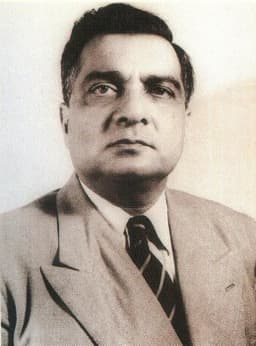
Iskander Mirza
Politician · Modern
48.9Total
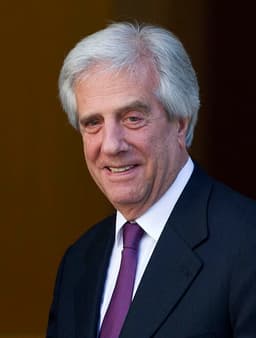
Tabare Vazquez
Politician · Modern
53.6Total
Basic Information
Born
1899
1940
Died
1969
—
Era
Modern
Modern
Nationality
Pakistan
Uruguay
Occupation
Politician
Politician
Civilization
Indian
Western
Score Comparison
Military (10%)
49.6
50.0
Political (20%)
39.4
62.7
Influence (20%)
51.0
53.3
Legacy (20%)
41.7
43.3
Leadership (15%)
58.8
72.0
Strategy (15%)
60.0
42.4
TOTAL
48.9
53.6
Iskander Mirza — Complete Timeline
1956 AD
Appointment as First President of PakistanPolitical Action◆ Major
Iskander Mirza became the first President of Pakistan on March 23, 1956, when the country adopted its first constitution. He had previously served as the last Governor-General. His presidency was marked by political instability and factional infighting.
PresidencyConstitutionPakistan
Impact: national
1958 AD
Imposition of Martial LawPolitical Action
On October 7, 1958, Iskander Mirza abrogated the constitution, dissolved the government, and imposed martial law, appointing General Ayub Khan as Chief Martial Law Administrator. This ended Pakistan's first parliamentary experiment.
Martial LawCoupPakistan
Impact: nationaldestructive
Exile After CoupPolitical Action◆ Major
Within weeks of imposing martial law, Iskander Mirza was forced into exile by Ayub Khan on October 27, 1958. Ayub Khan took over as President, and Mirza lived the rest of his life in London, never returning to Pakistan.
ExileCoupAyub Khan
Impact: nationaltragic
Tabare Vazquez — Complete Timeline
2004 AD
Elected President of UruguayPolitical Action
Tabaré Vázquez was elected president of Uruguay in the 2004 general election as the Broad Front candidate, defeating the Colorado Party candidate. He became the first leftist president in Uruguayan history.
ElectionBroad FrontLeftist Victory
Impact: nationalconstructive
2005 AD
Implemented the Plan de EmergenciaReform◆ Major
Vázquez launched the Plan de Emergencia (Emergency Plan), a social assistance program providing cash transfers to impoverished families. The program aimed to reduce poverty and inequality, reaching over 100,000 households.
Social PolicyPoverty ReductionCash Transfers
Impact: nationalconstructive
2012 AD
Legalized AbortionReform◆ Major
Vázquez signed the law legalizing abortion in Uruguay in October 2012, making it one of the few Latin American countries to do so. The law allowed abortion during the first 12 weeks of pregnancy under certain conditions.
Abortion RightsSocial ReformWomen's Rights
Impact: nationalconstructive
2013 AD
Legalized Same-Sex MarriageReform◆ Major
Vázquez signed the law legalizing same-sex marriage in Uruguay in May 2013, making it the second Latin American country to do so after Argentina. The law granted same-sex couples the same rights as heterosexual couples.
LGBTQ RightsSocial ReformMarriage Equality
Impact: nationalconstructive
2014 AD
Re-elected PresidentPolitical Action◆ Major
Vázquez was re-elected president in the 2014 general election, serving a second term from 2015 to 2020. His re-election confirmed the Broad Front's continued popularity.
Re-electionSecond TermBroad Front
Impact: nationalconstructive
This comparison has not been analyzed yet.
One-time AI generation (~1 minute). Scores and timeline are already available below.
Rankings
🥇
Tabare VazquezLeader
Mil: 50.0Pol: 62.7Inf: 53.3
53.6
🥈
Iskander Mirza
Mil: 49.6Pol: 39.4Inf: 51.0
48.9
+4.7 behind
How This Comparison Works
Algorithm
Each figure is scored on 6 dimensions (0—100 scale) based on structured historical data: Military (10%), Political (20%), Influence (20%), Legacy (20%), Leadership (15%), Strategy (15%). The weighted total produces the final ranking.
Data Sources
Scores are computed from structured sub-indicators in the database. Scale factors adjust for era (Ancient ×0.85, Modern ×1.0) and civilization size (Eastern ×1.05, Other ×0.80) to account for differences in population and military scale.
Maximum 3 Figures
Comparisons are limited to 2—3 figures to ensure readability and statistical meaningfulness.
Error Margins
±5 points per dimension — Sub-scores are derived from historical records with inherent uncertainty. Two figures within 5 points on a dimension should be considered roughly equivalent in that area.
Total Score Accuracy
±3 points overall — The weighted combination of 6 dimensions produces a total score with approximately ±3 points of uncertainty. Differences of less than 3 points are not statistically significant— the figures are effectively tied.
Known Limitations
- Historical records are incomplete and uneven across civilizations
- Figures from oral-tradition societies may be underrepresented
- Occupation labels can misclassify multi-role figures
- Scores measure capability and impact, not moral character
- Quantitative scoring is a comparison tool, not absolute truth
Capability Radar
Military (10%) — Battles & Warfare
Battles
41
30
Win Rate
44
29
Expansion
52
32
Political (20%) — Governance & Reform
Reform
30
60
Diplomacy
35
55
Economy
25
55
Influence (20%) — Cultural & Global Reach
Cultural
20
30
Global
25
30
Legacy (20%) — Historical Impact
Historical
30
35
Longevity
20
25
Leadership (15%) — Power & Stability
Tenure
40
65
Stability
15
60
Strategy (15%) — Tactics & Innovation
Strategy
53
37
Tactics
53
40
Reform
56
45
Similar Comparisons
Comments & Discussion
No comments yet. Be the first to share your thoughts!