Loading...
Ismail I vs Otto I the Great
Otto I the Great leads by 8.0 pts · 2 figures compared
…
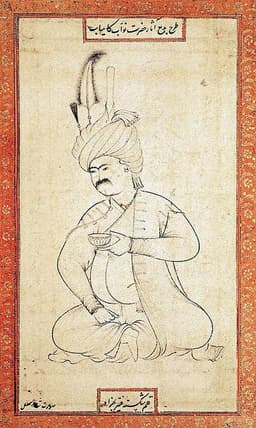
Ismail I
Emperor · Medieval
67.2Total
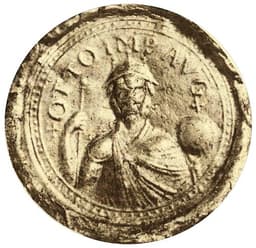
Otto I the Great
Emperor · Medieval
75.2Total
Basic Information
Born
1487
912
Died
1524
973
Era
Medieval
Medieval
Nationality
Persia
Holy Roman Empire
Occupation
Emperor
Emperor
Civilization
Middle Eastern
Western
Score Comparison
Military (10%)
78.0
82.0
Political (20%)
78.0
70.0
Influence (20%)
40.0
88.0
Legacy (20%)
80.0
65.0
Leadership (15%)
72.0
78.0
Strategy (15%)
69.1
65.4
TOTAL
67.2
75.2
Ismail I — Complete Timeline
1501 AD
Proclamation as Shah of IranPolitical Action
Ismail I proclaimed himself Shah of Iran at Tabriz, founding the Safavid dynasty. He declared Twelver Shia Islam the state religion, a move that distinguished Iran from its Sunni neighbors and shaped its religious identity.
FoundingState ReligionShia Islam
Impact: regionalconstructive
1508 AD
Conquest of BaghdadWar◆ Major
Ismail I captured Baghdad from the Aq Qoyunlu confederation. This conquest extended Safavid control over Mesopotamia and secured the shrine cities of Najaf and Karbala, important Shia pilgrimage sites.
ConquestMesopotamiaShia Shrines
Impact: regional
1514 AD
Battle of ChaldiranWar
Ismail I's army was defeated by the Ottoman Empire under Sultan Selim I at Chaldiran. The Ottomans used superior artillery and gunpowder tactics, forcing Ismail to retreat and ending his expansion into Anatolia.
BattleOttoman-Safavid WarMilitary Defeat
Impact: regionaltragic
Otto I the Great — Complete Timeline
951 AD
Diplomatic Marriage to Adelaide of ItalyPolitical Action◆ Major
Otto married Adelaide, the widowed queen of Italy, after intervening in Italian politics. This marriage gave him control over the Kingdom of Italy and strengthened his claim to imperial authority.
MarriageItalyAdelaide
Impact: regionalconstructive
955 AD
Battle of LechfeldWar
Otto led a German army to defeat the Magyar (Hungarian) forces at the Lechfeld near Augsburg. This victory ended Magyar raids into Western Europe and secured Otto's reputation as a defender of Christendom.
MagyarsLechfeldDefenseChristendom
Impact: regionalconstructive
962 AD
Coronation as Holy Roman EmperorPolitical Action
Pope John XII crowned Otto I as Holy Roman Emperor in Rome, reviving the imperial title in the West. This event established the Holy Roman Empire as a major political entity and linked German kingship with papal authority.
CoronationHoly Roman EmpirePapacy
Impact: globalconstructive
Expert Analysis
Ismail I vs Otto I the Great
Ismail I vs Otto I the Great: Historical Comparison
The Safavid founder and the Ottonian empire-builder represent two of the most consequential state-building projects of the medieval world. Ismail I, who proclaimed himself Shah of Iran in 1501 and established Twelver Shia Islam as the state religion, and Otto I the Great, who was crowned Holy Roman Emperor in 962 after crushing the Magyars at Lechfeld, both created political entities that would shape their respective civilizations for centuries. Otto wins the scoring decisively — 75 to 67 — but the dimensions reveal a rivalry more complex than the final score suggests.
Two Founders, Two Worlds
Ismail I was born in 1487 into the Safavid Sufi order, a Shia religious movement that had built a militant following among the Turkic tribes of Azerbaijan and eastern Anatolia. At the age of 14, he led his Qizilbash followers to victory over the Aq Qoyunlu confederation and proclaimed himself Shah at Tabriz. His first act as ruler was to declare Twelver Shia Islam the state religion, forcibly converting a largely Sunni population — a decision whose consequences reverberate through Middle Eastern politics to this day.
Otto I was born in 912, the son of Henry the Fowler, the Saxon duke who had become King of East Francia. Otto inherited a realm that was still struggling to establish its identity after the fragmentation of Charlemagne's empire. His reign was defined by three interrelated challenges: securing his eastern frontier against Magyar raiders, asserting royal authority over rebellious dukes, and establishing a relationship with the papacy that would legitimize his imperial ambitions. His victory at the Battle of Lechfeld in 955 was the military triumph that made everything else possible.
The comparison is fundamentally between a religious revolutionary who built a state (Ismail) and a military aristocrat who transformed a kingdom into an empire (Otto). Both succeeded, but their methods and legacies differed in crucial ways.
Military: Lechfeld vs Chaldiran
The Military dimension is the closest in this comparison: Otto scores 82 to Ismail's 78. Both figures demonstrated significant battlefield leadership, but the nature of their military achievements points to the four-point gap.
Otto's victory at Lechfeld was arguably the most consequential battle in medieval German history. The Magyars — nomadic horsemen from the Eurasian steppe who had raided deep into Western Europe for decades — were not merely defeated but annihilated as a military threat. Otto's heavy cavalry, organized along the lines developed by his father, proved decisive against the mobile Magyar horse archers. The battle ended the Magyar invasions permanently and established Otto's reputation as the defender of Christendom, a reputation that was essential to his imperial coronation seven years later.
Ismail's military record is more mixed. His early campaigns were spectacular — the capture of Tabriz (1501), Baghdad (1508), and the consolidation of Safavid control over the Iranian plateau demonstrated tactical brilliance and the fanatical loyalty of his Qizilbash warriors. But at the Battle of Chaldiran in 1514, Ismail met his match. The Ottoman Sultan Selim I brought superior artillery and disciplined Janissary infantry against the Qizilbash cavalry charge, and the result was a devastating Safavid defeat. Ismail himself was nearly captured and spent the remaining decade of his life in a state of psychological collapse, never again leading troops in battle.
The Military dimension captures this arc: Ismail's peak was higher than Otto's in terms of personal martial prowess and tactical creativity, but Otto's military legacy was more complete — a decisive victory that reshaped the strategic map of Europe rather than a career-defining defeat that ended his expansion.
Political and Institutional Achievement
Otto's Political score of 70 is eight points lower than his Military score, while Ismail's Political score of 78 is slightly higher than his Military score. This inversion tells an important story about the different natures of their state-building.
Ismail's greatest achievement was not military but religious-political: the establishment of Twelver Shia Islam as the state religion of Iran. This was an extraordinary act of political will. The population of the Iranian plateau was predominantly Sunni, and the forced conversion to Shiism created lasting sectarian divisions. But it also gave Iran a distinctive religious identity that differentiated it from the Sunni Ottoman Empire to the west and the Sunni Mughal Empire to the east. This identity has proven remarkably durable — Iran remains a Shia state five centuries later.
Otto's imperial project was, in some ways, more conventional. He revived an existing title (Holy Roman Emperor) and an existing alliance (the German church as a counterweight to ducal power). His genius lay in institutional design rather than ideological innovation. The Ottonian system — which used bishops and abbots as imperial administrators, granting them temporal power in exchange for loyalty — created a governance structure that endured for generations. But it was not as radically transformative as Ismail's confessional state-building.
Legacy and Influence
The Influence dimension is where Otto pulls decisively ahead: 88 to Ismail's 40. This 48-point gap is the largest in any dimension across this comparison and reflects a fundamental asymmetry in the scoring system's conception of influence. Otto I is credited with founding (or at least decisively shaping) the Holy Roman Empire, which survived in some form until 1806 — a political entity that dominated Central European history for nearly a millennium. The institutions he created, the alliance between German kingship and the papacy, and the concept of a Christian Roman Empire in the West all radiated outward through European history.
Ismail's influence, measured by the same criteria, appears narrower. Safavid Iran was a major power, but it did not spawn institutions that shaped global history in the way the Holy Roman Empire did. The scoring system's Influence dimension weighs global and civilizational reach heavily, and by that measure, the founder of the Holy Roman Empire simply matters more than the founder of Safavid Iran.
But there is another way to think about influence. The Shia-Sunni divide that Ismail institutionalized is one of the most consequential fault lines in the modern Middle East. Every conflict between Saudi Arabia and Iran, every sectarian civil war in Iraq or Syria, traces some of its origins to Ismail's decision in 1501. That is influence of a different kind — less institutional, more ideological, but no less real.
The Legacy dimension tells a similar story: Ismail 80 to Otto's 65. This is the one dimension where Ismail leads significantly, and it reflects the scoring system's acknowledgment that the Safavid founder's legacy — a Shia Iran — has proven extraordinarily durable. The Holy Roman Empire, for all its longevity, was dissolved by Napoleon and is now a historical memory. The Islamic Republic of Iran is a living reality.
Conclusion
Otto I the Great wins 75-67, a margin that reflects his broader civilizational impact through the Holy Roman Empire. But the dimension-by-dimension breakdown reveals that this comparison is closer than the headline score suggests. Ismail's Legacy score of 80 — the highest single dimension score for either figure — points to the extraordinary durability of what he created. The Shia identity he imposed on Iran has outlasted empires, revolutions, and the challenge of secular modernity. Otto's Holy Roman Empire, for all its grandeur, is a museum piece. Which of those outcomes constitutes greater historical significance depends on what you think history is ultimately about — the breadth of immediate impact or the depth of lasting transformation.
Rankings
🥇
Otto I the GreatLeader
Mil: 82.0Pol: 70.0Inf: 88.0
75.2
🥈
Ismail I
Mil: 78.0Pol: 78.0Inf: 40.0
67.2
+8.0 behind
How This Comparison Works
Algorithm
Each figure is scored on 6 dimensions (0—100 scale) based on structured historical data: Military (10%), Political (20%), Influence (20%), Legacy (20%), Leadership (15%), Strategy (15%). The weighted total produces the final ranking.
Data Sources
Scores are computed from structured sub-indicators in the database. Scale factors adjust for era (Ancient ×0.85, Modern ×1.0) and civilization size (Eastern ×1.05, Other ×0.80) to account for differences in population and military scale.
Maximum 3 Figures
Comparisons are limited to 2—3 figures to ensure readability and statistical meaningfulness.
Error Margins
±5 points per dimension — Sub-scores are derived from historical records with inherent uncertainty. Two figures within 5 points on a dimension should be considered roughly equivalent in that area.
Total Score Accuracy
±3 points overall — The weighted combination of 6 dimensions produces a total score with approximately ±3 points of uncertainty. Differences of less than 3 points are not statistically significant— the figures are effectively tied.
Known Limitations
- Historical records are incomplete and uneven across civilizations
- Figures from oral-tradition societies may be underrepresented
- Occupation labels can misclassify multi-role figures
- Scores measure capability and impact, not moral character
- Quantitative scoring is a comparison tool, not absolute truth
Capability Radar
Military (10%) — Battles & Warfare
Battles
75
75
Win Rate
80
80
Expansion
80
70
Political (20%) — Governance & Reform
Reform
90
80
Diplomacy
65
85
Economy
60
70
Influence (20%) — Cultural & Global Reach
Cultural
85
65
Global
70
70
Legacy (20%) — Historical Impact
Historical
85
80
Longevity
80
75
Leadership (15%) — Power & Stability
Tenure
70
85
Stability
55
75
Strategy (15%) — Tactics & Innovation
Strategy
75
75
Tactics
70
70
Reform
85
65
Similar Comparisons
Comments & Discussion
PersianHistoryFan7/7/2026
Ismail's Legacy score of 80 vs Otto's 65 is the key stat here. Iran is STILL Shia 500 years later. The Holy Roman Empire was dissolved in 1806. Longevity matters, and on that metric, the Safavid founder wins hands down.
MedievalGermany7/7/2026
Otto at Lechfeld wasn't just a battle — it was THE battle that saved Latin Christendom from steppe nomads. Without it, there's no medieval Germany, no Hanseatic League, maybe no Renaissance in the North. Ismail built a religious state; Otto built a civilization.
中东观察7/7/2026
伊斯玛仪一世的40分Influence vs 奥托的88分——这个差距反映了评分系统严重的欧洲中心主义。萨法维王朝影响了整个伊斯兰世界的宗教格局,这难道不是'全球影响力'吗?把影响力等同于欧洲制度输出,这是一种偏见。
HistoryTeacher7/7/2026
Actually both scores feel right to me. Otto created institutions that shaped Europe for 800+ years. Ismail created a religious identity that shaped Iran. Both are influence, just different kinds. The scoring can't capture everything, but the 75-67 result is defensible.
SafavidScholar7/7/2026
People forget that Ismail was only 14 when he proclaimed himself Shah. FOURTEEN. And he was a poet in both Azerbaijani Turkish and Persian, writing under the pen name Khatai. The man was a military genius, a religious revolutionary, and a literary figure. The scoring underrates his multi-dimensional impact.