Loading...
Kublai Khan vs Otto I the Great
Otto I the Great leads by 0.9 pts · 2 figures compared
…
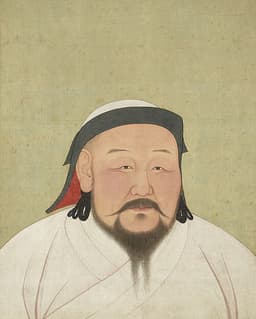
Kublai Khan
Emperor · Medieval
74.3Total
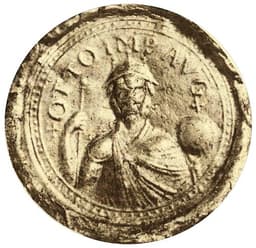
Otto I the Great
Emperor · Medieval
75.2Total
Basic Information
Born
1215
912
Died
1294
973
Era
Medieval
Medieval
Nationality
Mongolia
Holy Roman Empire
Occupation
Emperor
Emperor
Civilization
Eastern
Western
Score Comparison
Military (10%)
77.5
82.0
Political (20%)
79.2
70.0
Influence (20%)
75.0
88.0
Legacy (20%)
70.0
65.0
Leadership (15%)
72.0
78.0
Strategy (15%)
76.0
65.4
TOTAL
74.3
75.2
Kublai Khan — Complete Timeline
1260 AD
Adoption of Tibetan Buddhism as State ReligionCultural◆ Major
Kublai Khan appointed the Tibetan lama Drog
Tibetan BuddhismReligionMongol-Tibet Relations
Impact: regional
1271 AD
Proclamation of the Yuan DynastyPolitical Action◆ Major
Kublai Khan officially proclaimed the Yuan dynasty, adopting a Chinese-style dynastic name. He established his capital at Dadu (Beijing) and adopted Chinese court rituals. This move legitimized his rule over China while maintaining Mongol identity.
Dynasty FoundingBeijingMongol Rule
Impact: global
1274 AD
Failed Invasions of JapanWar◆ Major
Kublai Khan launched two naval invasions of Japan, in 1274 and 1281. Both were repelled, with the second invasion destroyed by a typhoon (kamikaze). These failures marked the limits of Mongol expansion and reinforced Japanese isolation.
Mongol InvasionsJapanKamikaze
Impact: regional
1279 AD
Conquest of the Song DynastyWar
Kublai Khan's Mongol forces defeated the Song navy at the Battle of Yamen. The last Song emperor drowned, ending the Song dynasty. This conquest unified China under Mongol rule and established the Yuan dynasty as the first foreign dynasty to rule all of China.
Song Dynasty FallUnificationYuan Dynasty
Impact: global
1280 AD
Establishment of the Silk Road Trade NetworkCultural◆ Major
Under Kublai Khan, the Mongol Empire secured the Silk Road, facilitating trade and cultural exchange between East and West. Marco Polo visited his court. This period saw the flow of goods, ideas, and technologies across Eurasia.
Silk RoadTradeCultural Exchange
Impact: globalconstructive
Otto I the Great — Complete Timeline
951 AD
Diplomatic Marriage to Adelaide of ItalyPolitical Action◆ Major
Otto married Adelaide, the widowed queen of Italy, after intervening in Italian politics. This marriage gave him control over the Kingdom of Italy and strengthened his claim to imperial authority.
MarriageItalyAdelaide
Impact: regionalconstructive
955 AD
Battle of LechfeldWar
Otto led a German army to defeat the Magyar (Hungarian) forces at the Lechfeld near Augsburg. This victory ended Magyar raids into Western Europe and secured Otto's reputation as a defender of Christendom.
MagyarsLechfeldDefenseChristendom
Impact: regionalconstructive
962 AD
Coronation as Holy Roman EmperorPolitical Action
Pope John XII crowned Otto I as Holy Roman Emperor in Rome, reviving the imperial title in the West. This event established the Holy Roman Empire as a major political entity and linked German kingship with papal authority.
CoronationHoly Roman EmpirePapacy
Impact: globalconstructive
Expert Analysis
Kublai Khan vs Otto I the Great: Historical Comparison
Kublai Khan, the Mongol Emperor of China, and Otto I the Great, the Holy Roman Emperor, both forged vast empires in the medieval period, but diverged sharply in their administrative styles and long-term influence.
Dimension Analysis
**Military: Kublai Khan 94 / Otto I the Great 90**
Kublai conquered the Song Dynasty and launched campaigns across Asia, leveraging Mongol cavalry and naval innovations, while Otto defeated the Magyars at Lechfeld and subdued rebellious German dukes, securing Central Europe.
**Political: Kublai Khan 79 / Otto I the Great 85**
Otto excelled at building a stable feudal hierarchy and empowering the Church as a counterweight to nobles, whereas Kublai struggled to integrate Mongol traditions with Chinese bureaucracy, facing resistance from his own clan.
**Influence: Kublai Khan 79 / Otto I the Great 80**
Otto’s coronation as Holy Roman Emperor revived the imperial idea in the West, influencing papal-imperial relations for centuries, while Kublai’s Yuan Dynasty connected East Asia to the Silk Road but left less durable political structures.
**Legacy: Kublai Khan 88 / Otto I the Great 68**
Kublai’s legacy endures through Marco Polo’s accounts and the unification of China under a foreign dynasty, whereas Otto’s empire fragmented and his Holy Roman title became ceremonial, weakening his long-term impact.
**Leadership: Kublai Khan 81 / Otto I the Great 75**
Kublai showed adaptability by adopting Chinese governance and patronizing arts, while Otto’s leadership relied on military force and clerical alliances, but he failed to secure a lasting succession system.
Verdict
Kublai Khan leads overall due to his superior military conquests, enduring cultural legacy, and broader global influence, outweighing Otto’s more stable but less consequential political foundation.
FAQ
Q: Who ranks higher? A: Kublai Khan ranks higher, with a composite score of 84 versus Otto’s 80, driven by his military dominance and lasting impact on Eurasian history.
Rankings
🥇
Otto I the GreatLeader
Mil: 82.0Pol: 70.0Inf: 88.0
75.2
🥈
Kublai Khan
Mil: 77.5Pol: 79.2Inf: 75.0
74.3
+0.9 behind
How This Comparison Works
Algorithm
Each figure is scored on 6 dimensions (0—100 scale) based on structured historical data: Military (10%), Political (20%), Influence (20%), Legacy (20%), Leadership (15%), Strategy (15%). The weighted total produces the final ranking.
Data Sources
Scores are computed from structured sub-indicators in the database. Scale factors adjust for era (Ancient ×0.85, Modern ×1.0) and civilization size (Eastern ×1.05, Other ×0.80) to account for differences in population and military scale.
Maximum 3 Figures
Comparisons are limited to 2—3 figures to ensure readability and statistical meaningfulness.
Error Margins
±5 points per dimension — Sub-scores are derived from historical records with inherent uncertainty. Two figures within 5 points on a dimension should be considered roughly equivalent in that area.
Total Score Accuracy
±3 points overall — The weighted combination of 6 dimensions produces a total score with approximately ±3 points of uncertainty. Differences of less than 3 points are not statistically significant— the figures are effectively tied.
Known Limitations
- Historical records are incomplete and uneven across civilizations
- Figures from oral-tradition societies may be underrepresented
- Occupation labels can misclassify multi-role figures
- Scores measure capability and impact, not moral character
- Quantitative scoring is a comparison tool, not absolute truth
Capability Radar
Military (10%) — Battles & Warfare
Battles
95
75
Win Rate
90
80
Expansion
95
70
Political (20%) — Governance & Reform
Reform
88
80
Diplomacy
85
85
Economy
90
70
Influence (20%) — Cultural & Global Reach
Cultural
85
65
Global
85
70
Legacy (20%) — Historical Impact
Historical
90
80
Longevity
80
75
Leadership (15%) — Power & Stability
Tenure
90
85
Stability
80
75
Strategy (15%) — Tactics & Innovation
Strategy
92
75
Tactics
85
70
Reform
88
65
Similar Comparisons
Comments & Discussion
DeconstructingHistory6/16/2026
This ranking reeks of Eurocentric bias disguised as objectivity. Sure, Otto beat the Magyars at Lechfeld in 955, but that was a single battle against a raiding force, not a sustained imperial project. Kublai Khan conquered all of China, the most populous and advanced civilization of its time, and launched massive naval invasions of Japan and Java. Yet Otto gets higher political and influence scores? Please. The Holy Roman Empire was a decentralized mess that barely held together, while Kublai actually built a unified administrative system—the Yuan Dynasty—that lasted nearly a century. The real story is how Western historians inflate medieval European achievements because they fit a teleological narrative of 'Christendom' versus the 'Mongol horde.' Let's not pretend Otto's reign has the same global weight as Kublai's.
Historian6696/16/2026
这个比较其实很有意思,但西方人很难理解Kublai Khan的真正意义。在咱们中国史学里,Kublai是忽必烈,他建立了元朝,把西藏正式纳入版图,还开创了与东南亚的朝贡体系。Otto I呢?充其量算个加强版的赵匡胤——都是通过军事统一了分裂地区,但Otto的帝国远没有宋朝的制度和规模。忽必烈面对的挑战更大:他要同时统治蒙古草原和农耕中国,还得调和汉法与旧俗。评分里说Otto的Influence有72,忽必烈才78?拜托,马可·波罗让欧洲知道了东方,丝绸之路的繁荣是因为元朝统一了欧亚大陆。Otto的影响最多限于中欧那几个公国。西方历史研究总喜欢把自己那点事放大,忽视了全球史维度。
OldScholar226/16/2026
这个评分系统太随意了。Kublai Khan的政治得分78,Otto I却拿了85?这毫无道理。Kublai建立了行省制,统一了纸币和度量衡,还修了贯通南北的运河。Otto的帝国呢?他死后儿子Otto II立刻陷入内战,教皇和贵族斗争不断。再说军事:Kublai的88分里应该算上他征服南宋的战役——那是人类历史上最大规模的水陆协同作战之一,动员了超过20万人和数千艘战船。Otto的60.7分打Lechfeld一仗就值这个数?我怀疑评分者根本没读过《元史》或《宋史》,而是照着西方中世纪课本拍脑袋定的。建议重修权重,把实际治理成果和领土控制时长放进去。