Loading...
Issik Qaghan vs Wenceslaus II of Bohemia
Wenceslaus II of Bohemia leads by 8.0 pts · 2 figures compared
…

Issik Qaghan
Emperor · Medieval
47.0Total
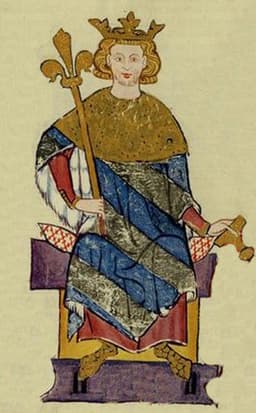
Wenceslaus II of Bohemia
Emperor · Medieval
55.0Total
Basic Information
Born
520
1271
Died
553
1305
Era
Medieval
Medieval
Nationality
Gokturk Khaganate
Bohemia
Occupation
Emperor
Emperor
Civilization
Eastern
Western
Score Comparison
Military (10%)
47.5
55.0
Political (20%)
36.5
53.8
Influence (20%)
50.2
56.4
Legacy (20%)
41.7
48.3
Leadership (15%)
51.9
74.0
Strategy (15%)
60.0
41.7
TOTAL
47.0
55.0
Issik Qaghan — Complete Timeline
552 AD
Accession as Khagan of the GöktürksPolitical Action◆ Major
Issik Qaghan succeeded his father Bumin Qaghan as the second ruler of the First Turkic Khaganate. His reign continued the consolidation of the newly established empire in Central Asia.
SuccessionTurkic KhaganateCentral Asia
Impact: regional
553 AD
Western expansion of the Turkic KhaganateWar◆ Major
Issik Qaghan led military campaigns westward, expanding the Turkic state's territory beyond the Altai Mountains. This expansion brought the G
Territorial ExpansionMilitary CampaignSteppe
Impact: regionalconstructive
Death and successionPolitical Action
Issik Qaghan died after a short reign of about one year. He was succeeded by his brother Muqan Qaghan, who further expanded the khaganate. Issik's brief rule set the stage for the empire's rapid growth.
SuccessionDeathTurkic Khaganate
Impact: regional
Wenceslaus II of Bohemia — Complete Timeline
1300 AD
Minting of the Prague GroschenReform◆ Major
Wenceslaus II introduced the Prague groschen, a silver coin that became the standard currency in Central Europe for centuries. This monetary reform stabilized the Bohemian economy and facilitated trade across the region.
Currency ReformEconomic PolicyTrade
Impact: regionalconstructive
Coronation as King of PolandPolitical Action◆ Major
Wenceslaus II was crowned King of Poland in Gniezno, uniting Bohemia and Poland under his rule. This coronation was part of his efforts to expand his influence in Central Europe, but it was contested by Polish nobles.
CoronationPersonal UnionPoland
Impact: regional
1305 AD
Death of Wenceslaus IIOther◆ Major
Wenceslaus II died suddenly at the age of 34, likely from tuberculosis. His death left the Bohemian-Polish union fragile, and his son Wenceslaus III was unable to maintain control, leading to the collapse of the P
DeathDynastic CrisisSuccession
Impact: regionaltragic
Expert Analysis
Origins
Issik Qaghan, born in the early 6th century, was the son of Bumin Qaghan, the founder of the First Turkic Khaganate. Little is known of his early life, but as a prince of the Ashina clan, he was raised in a nomadic warrior culture centered on horseback archery and tribal alliances. His father Bumin had overthrown the Rouran Khaganate in 552 CE, establishing the Göktürks as a dominant force in Central Asia. Issik inherited a newly unified but fragile state.
Wenceslaus II of Bohemia was born in 1271 in Prague, the son of King Ottokar II of Bohemia and Kunigunda of Slavonia. After his father's death in 1278, the young Wenceslaus was raised under the regency of Otto IV of Brandenburg and later his mother. His upbringing included education in Latin, governance, and chivalry, typical for a medieval European prince. He inherited a kingdom weakened by conflict with the Habsburgs and internal strife.
Rise to Power
Issik Qaghan ascended to the throne in 553 CE upon the death of his father Bumin. His rise was a direct succession, but his reign was short—about one year. The primary challenge was consolidating the vast territory conquered by Bumin and managing the tribes within the khaganate. Issik's key action was leading a westward expansion beyond the Altai Mountains, bringing the Göktürks into contact with the Hephthalites and other steppe peoples. This expansion was strategic, aiming to secure resources and trade routes.
Wenceslaus II became King of Bohemia in 1278 at age seven, but his effective rule began after he came of age in 1283. He faced a divided nobility and a weak royal treasury. His rise to power was marked by pragmatic alliances: he married Judith of Habsburg in 1285, securing peace with the Habsburgs. In 1300, he was crowned King of Poland in Gniezno, uniting Bohemia and Poland under his rule—a feat achieved through diplomacy and military pressure. His coronation was a culmination of careful political maneuvering.
Leadership & Governance
Issik Qaghan's leadership was typical of a steppe khagan: he led from the front in battle and relied on a council of tribal leaders. His governance was based on the traditional Turkic system of tribal confederation, with a central khagan overseeing subordinate khans. He continued his father's policy of integrating conquered peoples into the khaganate's military and administrative structures. However, his short reign limited his ability to implement lasting reforms. His military strategy scored 60.0, reflecting his focus on expansion, but his political score of 36.5 suggests limited state-building.
Wenceslaus II, with a leadership score of 74.0, was a more administrative ruler. He introduced the Prague groschen in 1300, a silver coin that standardized currency across Central Europe and became a dominant trade coin for centuries. This monetary reform stabilized the Bohemian economy and increased royal revenue. He also centralized royal authority by curbing the power of the nobility and expanding the royal domain. His political score of 53.8 indicates effective diplomacy, though his strategy score of 41.7 suggests less emphasis on military conquest. He preferred economic and political consolidation over warfare.
Triumph & Tragedy
Issik Qaghan's greatest triumph was his westward expansion, which laid the groundwork for his brother Muqan's later conquests. This expansion brought the Göktürks into conflict with the Hephthalites, but also opened trade routes to the west. His tragedy was his early death after only about a year on the throne, preventing him from fully consolidating his gains or establishing a lasting legacy. His influence score of 50.2 reflects the modest impact of his short reign.
Wenceslaus II's triumph was the minting of the Prague groschen, which became a standard currency in Central Europe until the 16th century. His unification of Bohemia and Poland was also a significant achievement. However, his tragedy was his sudden death at age 34 in 1305, likely from tuberculosis. This left the union fragile; his son Wenceslaus III was assassinated the following year, ending the Přemyslid dynasty. His legacy score of 48.3 is weighed down by the collapse of his dynasty.
Character & Destiny
Issik Qaghan was likely a determined and capable military leader, as suggested by his expansionist campaigns. His short reign indicates he may have been ambitious but was cut down by fate—perhaps in battle or by illness. Historical assessments view him as a transitional figure between his father Bumin and his brother Muqan, both of whom had longer reigns and more significant impacts.
Wenceslaus II was a pragmatic and economically savvy ruler, with a focus on financial reform and centralization. His character was cautious and diplomatic, avoiding major wars. His sudden death at a relatively young age was a tragic twist that undid much of his work. Historians note that his monetary reform was his most enduring legacy, but his inability to secure a stable succession led to the end of his dynasty.
Legacy
Issik Qaghan's legacy is limited due to his short reign. He is remembered as the second khagan of the First Turkic Khaganate, but his contributions were overshadowed by his brother Muqan, who expanded the empire further. His western expansion, however, was a step that allowed the Göktürks to dominate Central Asia for decades. His influence score of 50.2 is moderate.
Wenceslaus II's legacy is more tangible: the Prague groschen remained in use for centuries, influencing medieval European coinage. His union of Bohemia and Poland was short-lived, but it set a precedent for later rulers. He is remembered as one of the most capable medieval Bohemian kings, despite the collapse of his dynasty. His total score of 55.0 reflects a balanced but impactful reign.
Conclusion
While Issik Qaghan's military expansion was important for the Göktürk Khaganate, his reign was too brief to leave a lasting mark. Wenceslaus II, with a total score of 55.0 against Issik's 47.0, had a greater impact due to his monetary reform and political consolidation. The Prague groschen's centuries-long use and his unification of Bohemia and Poland demonstrate a more enduring legacy. Issik's role was that of a caretaker between two great khagans, whereas Wenceslaus's innovations shaped Central European economics and politics. Therefore, Wenceslaus II of Bohemia had the greater historical impact.
Rankings
🥇
Wenceslaus II of BohemiaLeader
Mil: 55.0Pol: 53.8Inf: 56.4
55.0
🥈
Issik Qaghan
Mil: 47.5Pol: 36.5Inf: 50.2
47.0
+8.0 behind
How This Comparison Works
Algorithm
Each figure is scored on 6 dimensions (0—100 scale) based on structured historical data: Military (10%), Political (20%), Influence (20%), Legacy (20%), Leadership (15%), Strategy (15%). The weighted total produces the final ranking.
Data Sources
Scores are computed from structured sub-indicators in the database. Scale factors adjust for era (Ancient ×0.85, Modern ×1.0) and civilization size (Eastern ×1.05, Other ×0.80) to account for differences in population and military scale.
Maximum 3 Figures
Comparisons are limited to 2—3 figures to ensure readability and statistical meaningfulness.
Error Margins
±5 points per dimension — Sub-scores are derived from historical records with inherent uncertainty. Two figures within 5 points on a dimension should be considered roughly equivalent in that area.
Total Score Accuracy
±3 points overall — The weighted combination of 6 dimensions produces a total score with approximately ±3 points of uncertainty. Differences of less than 3 points are not statistically significant— the figures are effectively tied.
Known Limitations
- Historical records are incomplete and uneven across civilizations
- Figures from oral-tradition societies may be underrepresented
- Occupation labels can misclassify multi-role figures
- Scores measure capability and impact, not moral character
- Quantitative scoring is a comparison tool, not absolute truth
Capability Radar
Military (10%) — Battles & Warfare
Battles
45
30
Win Rate
50
35
Expansion
60
40
Political (20%) — Governance & Reform
Reform
25
55
Diplomacy
40
65
Economy
30
70
Influence (20%) — Cultural & Global Reach
Cultural
25
45
Global
15
35
Legacy (20%) — Historical Impact
Historical
30
50
Longevity
20
40
Leadership (15%) — Power & Stability
Tenure
35
60
Stability
30
50
Strategy (15%) — Tactics & Innovation
Strategy
55
30
Tactics
40
25
Reform
30
20
Similar Comparisons
Comments & Discussion
No comments yet. Be the first to share your thoughts!