Loading...
Wenceslaus II of Bohemia vs William II Rufus
Wenceslaus II of Bohemia leads by 5.2 pts · 2 figures compared
…
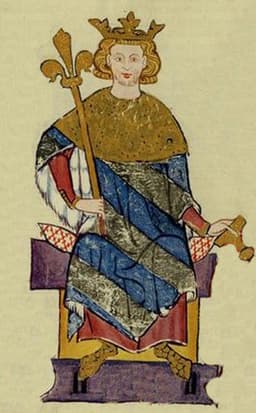
Wenceslaus II of Bohemia
Emperor · Medieval
55.0Total
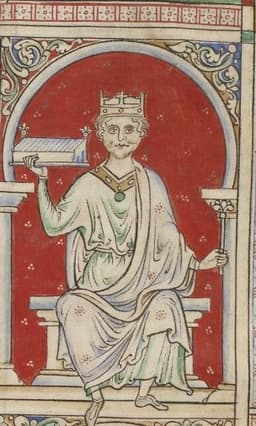
William II Rufus
Emperor · Medieval
49.8Total
Basic Information
Born
1271
1056
Died
1305
1100
Era
Medieval
Medieval
Nationality
Bohemia
England
Occupation
Emperor
Emperor
Civilization
Western
Western
Score Comparison
Military (10%)
55.0
55.0
Political (20%)
53.8
48.0
Influence (20%)
56.4
50.2
Legacy (20%)
48.3
41.7
Leadership (15%)
74.0
64.0
Strategy (15%)
41.7
45.0
TOTAL
55.0
49.8
Wenceslaus II of Bohemia — Complete Timeline
1300 AD
Minting of the Prague GroschenReform◆ Major
Wenceslaus II introduced the Prague groschen, a silver coin that became the standard currency in Central Europe for centuries. This monetary reform stabilized the Bohemian economy and facilitated trade across the region.
Currency ReformEconomic PolicyTrade
Impact: regionalconstructive
Coronation as King of PolandPolitical Action◆ Major
Wenceslaus II was crowned King of Poland in Gniezno, uniting Bohemia and Poland under his rule. This coronation was part of his efforts to expand his influence in Central Europe, but it was contested by Polish nobles.
CoronationPersonal UnionPoland
Impact: regional
1305 AD
Death of Wenceslaus IIOther◆ Major
Wenceslaus II died suddenly at the age of 34, likely from tuberculosis. His death left the Bohemian-Polish union fragile, and his son Wenceslaus III was unable to maintain control, leading to the collapse of the P
DeathDynastic CrisisSuccession
Impact: regionaltragic
William II Rufus — Complete Timeline
1087 AD
Coronation of William IIPolitical Action◆ Major
William was crowned king of England on September 26, 1087, after the death of his father William the Conqueror. He inherited the English throne while his brother Robert Curthose received Normandy.
CoronationSuccessionNorman Dynasty
Impact: national
1088 AD
Rebellion of 1088War◆ Major
William faced a rebellion led by Norman barons supporting his brother Robert Curthose. William suppressed the revolt by promising reforms and confiscating rebel lands.
RebellionCivil WarBarons
Impact: nationaldestructive
1097 AD
Conflict with Anselm of CanterburyPolitical Action◆ Major
William quarreled with Archbishop Anselm over church revenues and authority. Anselm went into exile in 1097, and William seized the revenues of the archbishopric.
Church-State ConflictExilePower Struggle
Impact: nationaldestructive
1100 AD
Death of William IIPolitical Action◆ Major
William was killed by an arrow while hunting in the New Forest on August 2, 1100. The circumstances were suspicious, and his brother Henry I quickly seized the throne.
DeathHunting AccidentSuccession
Impact: nationaltragic
Expert Analysis
Origins
Wenceslaus II of Bohemia was born in 1271 into the Přemyslid dynasty, one of the most powerful ruling families in Central Europe. His father, Ottokar II, died in battle when Wenceslaus was seven, leaving him a minor under the regency of Otto of Brandenburg. This instability shaped his early years, as he was held captive for a time. Despite this, he received a thorough education in governance and chivalry. William II Rufus, born around 1056, was the third son of William the Conqueror and Matilda of Flanders. His father's conquest of England in 1066 provided a backdrop of Norman dominance. Unlike Wenceslaus, William was not expected to rule – his older brothers Robert and Richard were ahead. He grew up in the harsh Norman court, learning military and administrative skills from his father.
Rise to Power
Wenceslaus II began his independent rule in 1283 after years of regency. He quickly consolidated power by marrying Judith of Habsburg, daughter of King Rudolf I, forging an alliance with the Habsburgs. His major breakthrough came in 1300 when he was invited to claim the Polish throne after the death of Przemysł II. He was crowned King of Poland in Gniezno in 1300, uniting Bohemia and Poland under his rule. This was a significant expansion of his influence. William II Rufus, on the other hand, rose to power through inheritance and cunning. Upon William the Conqueror's death in 1087, the eldest son Robert Curthose inherited Normandy, while William Rufus seized the English throne. He was crowned on September 26, 1087. Immediately, he faced a rebellion in 1088 led by Norman barons supporting Robert. William suppressed it by promising reforms and confiscating lands, solidifying his rule.
Leadership & Governance
Wenceslaus II's leadership focused on economic and administrative reforms. His most notable achievement was the introduction of the Prague groschen in 1300, a silver coin that became the standard currency in Central Europe for centuries, facilitating trade and stabilizing the economy. He also implemented a unified legal code and promoted mining, especially silver from Kutná Hora. His governance was centralized but pragmatic, relying on a loyal nobility. In contrast, William II Rufus ruled with a heavy hand, often clashing with the church and barons. He levied heavy taxes and seized church revenues during vacancies. His conflict with Archbishop Anselm of Canterbury, who went into exile in 1097, exemplified his contentious relationship with ecclesiastical authority. William's leadership score of 64.0 reflects his ability to maintain control, but his political score of 48.0 indicates his divisive methods.
Triumph & Tragedy
Wenceslaus II's triumphs include his coronation as King of Poland and the successful monetary reform that boosted the Bohemian economy. His political score of 53.8 and military score of 55.0 show balanced capabilities. However, his tragic death at age 34 in 1305, likely from tuberculosis, left his kingdom vulnerable. His son Wenceslaus III was assassinated a year later, ending the Přemyslid dynasty. William II Rufus's greatest success was suppressing the 1088 rebellion and maintaining control over England despite baronial unrest. He also secured control of Normandy from his brother Robert through the Treaty of Caen (1091). Yet his death in a hunting accident in 1100, under suspicious circumstances, allowed his brother Henry I to seize the throne. The mystery surrounding his death overshadows his reign. William's legacy score of 41.7 is lower than Wenceslaus's 48.3.
Character & Destiny
Wenceslaus II was described as pious and cultured, a patron of literature and the arts. His character was shaped by his early captivity, making him cautious and diplomatic. He preferred economic and administrative consolidation over military expansion, with a strategy score of 41.7. His sudden death cut short his vision. William II Rufus was known for his harsh temper, greed, and irreligious behavior – he was often criticized by chroniclers for his court's decadence. His leadership style was confrontational, leading to constant strife with the church. His strategy score of 45.0 indicates a more direct approach. His death in the New Forest, possibly an assassination, reflected the dangerous politics of the time.
Legacy
Wenceslaus II's legacy is primarily economic: the Prague groschen remained in use for over 400 years, and his monetary reforms shaped Central European finance. His union of Bohemia and Poland was short-lived but set a precedent for future rulers. His overall score of 55.0 reflects a moderate but significant impact. William II Rufus's legacy is more mixed. He is remembered for his contentious rule and mysterious death, which allowed Henry I to implement administrative reforms. His reign was a continuation of Norman consolidation, but he left no lasting institutions. His total score of 49.8 places him below Wenceslaus.
Conclusion
Wenceslaus II of Bohemia had a greater impact than William II Rufus, as evidenced by his higher total score of 55.0 versus 49.8. While both faced challenges and died young, Wenceslaus's economic reforms – particularly the Prague groschen – had a lasting influence on Central Europe for centuries. William's reign, though significant in Norman history, was marred by conflict and ended in a succession crisis. Wenceslaus's ability to unite Bohemia and Poland, albeit briefly, and his monetary innovations give him the edge. Therefore, Wenceslaus II emerges as the more consequential ruler.
Rankings
🥇
Wenceslaus II of BohemiaLeader
Mil: 55.0Pol: 53.8Inf: 56.4
55.0
🥈
William II Rufus
Mil: 55.0Pol: 48.0Inf: 50.2
49.8
+5.2 behind
How This Comparison Works
Algorithm
Each figure is scored on 6 dimensions (0—100 scale) based on structured historical data: Military (10%), Political (20%), Influence (20%), Legacy (20%), Leadership (15%), Strategy (15%). The weighted total produces the final ranking.
Data Sources
Scores are computed from structured sub-indicators in the database. Scale factors adjust for era (Ancient ×0.85, Modern ×1.0) and civilization size (Eastern ×1.05, Other ×0.80) to account for differences in population and military scale.
Maximum 3 Figures
Comparisons are limited to 2—3 figures to ensure readability and statistical meaningfulness.
Error Margins
±5 points per dimension — Sub-scores are derived from historical records with inherent uncertainty. Two figures within 5 points on a dimension should be considered roughly equivalent in that area.
Total Score Accuracy
±3 points overall — The weighted combination of 6 dimensions produces a total score with approximately ±3 points of uncertainty. Differences of less than 3 points are not statistically significant— the figures are effectively tied.
Known Limitations
- Historical records are incomplete and uneven across civilizations
- Figures from oral-tradition societies may be underrepresented
- Occupation labels can misclassify multi-role figures
- Scores measure capability and impact, not moral character
- Quantitative scoring is a comparison tool, not absolute truth
Capability Radar
Military (10%) — Battles & Warfare
Battles
30
35
Win Rate
35
40
Expansion
40
30
Political (20%) — Governance & Reform
Reform
55
40
Diplomacy
65
45
Economy
70
50
Influence (20%) — Cultural & Global Reach
Cultural
45
25
Global
35
15
Legacy (20%) — Historical Impact
Historical
50
30
Longevity
40
20
Leadership (15%) — Power & Stability
Tenure
60
55
Stability
50
40
Strategy (15%) — Tactics & Innovation
Strategy
30
35
Tactics
25
30
Reform
20
20
Similar Comparisons
Comments & Discussion
No comments yet. Be the first to share your thoughts!