Loading...
Istvan Szechenyi vs Jacques Chirac
Jacques Chirac leads by 2.5 pts · 2 figures compared
…
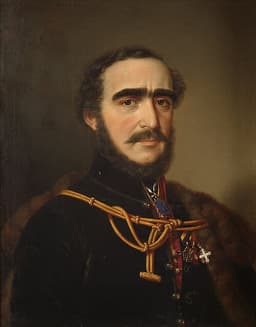
Istvan Szechenyi
Politician · Modern
58.2Total
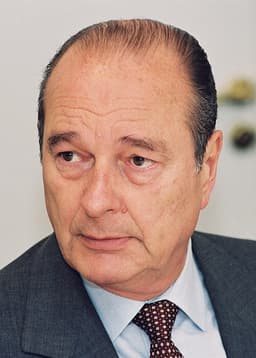
Jacques Chirac
Politician · Modern
60.7Total
Basic Information
Born
1791
1932
Died
1860
—
Era
Modern
Modern
Nationality
Hungary
France
Occupation
Politician
Politician
Civilization
Western
Western
Score Comparison
Military (10%)
49.7
10.0
Political (20%)
72.0
72.0
Influence (20%)
56.7
82.0
Legacy (20%)
55.0
50.0
Leadership (15%)
68.0
78.0
Strategy (15%)
43.2
41.7
TOTAL
58.2
60.7
Istvan Szechenyi — Complete Timeline
1825 AD
Founding of the Hungarian Academy of SciencesCultural◆ Major
Istvan Szechenyi donated a year's income to found the Hungarian Academy of Sciences. The institution promoted scientific and cultural development in Hungary.
AcademyScienceCulture
Impact: nationalconstructive
1830 AD
Publication of 'Credit'Cultural◆ Major
Istvan Szechenyi published 'Credit', a book advocating for economic reforms in Hungary. The work argued for the abolition of serfdom and the modernization of agriculture.
PublicationReformEconomy
Impact: nationalconstructive
1849 AD
Chain Bridge ConstructionOther◆ Major
Istvan Szechenyi oversaw the construction of the Chain Bridge across the Danube in Budapest. The bridge connected Buda and Pest, symbolizing modernization and national unity.
InfrastructureBridgeModernization
Impact: nationalconstructive
1860 AD
SuicideOther◆ Major
Istvan Szechenyi died by suicide at the D
SuicideDeath
Impact: nationaltragic
Jacques Chirac — Complete Timeline
1995 AD
Election as President of FrancePolitical Action◆ Major
Chirac was elected President of France, defeating Socialist candidate Lionel Jospin. His victory ended 14 years of Socialist presidency under Mitterrand, and he promised to reduce unemployment and social divisions.
ElectionPresidencyPolitical Change
Impact: national
Recognition of France's Role in the HolocaustPolitical Action◆ Major
Chirac officially recognized the French state's responsibility for the deportation of Jews during World War II, reversing the previous official position that the Vichy regime was not legitimate. This marked a significant shift in French historical memory.
HolocaustVichy FranceHistorical Memory
Impact: nationalconstructive
2003 AD
Opposition to the Iraq WarPolitical Action◆ Major
Chirac led France's opposition to the US-led invasion of Iraq, threatening to veto a UN Security Council resolution authorizing force. His stance garnered international support and strained Franco-American relations, but was popular in France and the Arab world.
Iraq WarForeign PolicyUN Security Council
Impact: global
Expert Analysis
Origins
Istvan Szechenyi was born in 1791 into one of Hungary's wealthiest aristocratic families. Educated at home and later in Vienna, he served in the Napoleonic Wars, which exposed him to Western European ideas. His travels to England and France convinced him of the need for Hungary to modernize economically and socially. In contrast, Jacques Chirac was born in 1932 in Paris, the son of a bank executive. He studied at Sciences Po and the École Nationale d'Administration (ÉNA), the elite school for French civil servants. Chirac's early career included military service in Algeria and rapid ascent in the French bureaucracy under Prime Minister Georges Pompidou.
Rise to Power
Szechenyi rose to prominence through his writings and philanthropy. In 1825, he donated his entire year's income (60,000 florins) to found the Hungarian Academy of Sciences, a move that established him as a leading reformer. His 1830 book 'Credit' argued for the abolition of serfdom and the modernization of agriculture, making him a national figure. He also initiated the construction of the Chain Bridge (completed 1849), which physically and symbolically connected Buda and Pest. Chirac's rise was political: he served as Mayor of Paris (1977-1995), Prime Minister (1974-1976, 1986-1988), and finally President of France in 1995, defeating Socialist Lionel Jospin. His political career was marked by pragmatism and adaptability, shifting from Gaullist to centrist positions.
Leadership & Governance
Szechenyi's leadership style was reformist and gradualist. He believed in top-down modernization through infrastructure, education, and economic reform. He championed steam navigation on the Danube, improved roads, and introduced modern agricultural techniques. However, his opposition to radical nationalism and his cautious approach put him at odds with more revolutionary figures like Lajos Kossuth. In governance, he scored 72.0 in political effectiveness, reflecting his influence on policy. Chirac's governance was more confrontational. As President, he pursued economic liberalization but faced mass protests against pension and labor reforms. His decision to dissolve parliament in 1997 backfired, leading to a defeat and a period of cohabitation with Socialist Prime Minister Lionel Jospin. Chirac's leadership score of 78.0 reflects his ability to maintain power despite political setbacks.
Triumph & Tragedy
Szechenyi's greatest triumph was the founding of the Hungarian Academy of Sciences, which became a center of Hungarian intellectual life. His development projects, especially the Chain Bridge, remain iconic. However, his tragedy was his inability to prevent the 1848 Hungarian Revolution, which he opposed. The revolution and subsequent repression led to his mental breakdown and suicide in 1860 at the Döbling asylum. Chirac's triumph was his opposition to the 2003 Iraq War, which boosted France's global standing and his popularity at home. He also recognized France's role in the Holocaust in 1995, a major moral step. His tragedy was his conviction for corruption in 2011 (related to his time as Mayor of Paris), which tarnished his legacy. He received a two-year suspended sentence.
Character & Destiny
Szechenyi was a visionary pragmatist, deeply influenced by Western liberalism. His character was marked by idealism but also by a fatalistic streak that led to despair when his gradual reforms were overtaken by revolution. His destiny was to be a catalyst for modernization, but he was ultimately overshadowed by more radical figures. Chirac was a charismatic and shrewd politician, known for his larger-than-life personality and political survival skills. His character was pragmatic to the point of opportunism, shifting policies as needed. His destiny was to lead France in a period of transition, but his legacy is mixed due to corruption and economic stagnation. Historians often note Chirac's ability to connect with ordinary citizens, a trait Szechenyi lacked.
Legacy
Szechenyi's legacy is profound in Hungary: he is considered the 'Greatest Hungarian' for his role in modernizing the nation. The Academy of Sciences, the Chain Bridge, and his economic reforms laid the groundwork for Hungary's development. His influence score of 56.7 reflects his enduring cultural impact. Chirac's legacy is more contested. He is remembered for his opposition to the Iraq War and his Holocaust recognition, but also for corruption and failed reforms. His legacy score of 50.0 reflects this ambiguity. In global terms, Chirac's stance on Iraq boosted French soft power, but domestically, he left few lasting structural changes.
Conclusion
Comparing Szechenyi (total score 58.2) and Chirac (60.7), the score gap is narrow, but their contexts differ vastly. Szechenyi's impact on Hungary was transformative and foundational, while Chirac's impact on France and the world was significant but less enduring. Taking a stance: Szechenyi had a greater impact relative to his nation's needs and constraints. His reforms created institutions that persist today, and his vision of a modern Hungary shaped national identity. Chirac, despite higher scores in influence and leadership, failed to achieve deep structural change. Therefore, Szechenyi's legacy is more profound in terms of national transformation.
Rankings
🥇
Jacques ChiracLeader
Mil: 10.0Pol: 72.0Inf: 82.0
60.7
🥈
Istvan Szechenyi
Mil: 49.7Pol: 72.0Inf: 56.7
58.2
+2.5 behind
How This Comparison Works
Algorithm
Each figure is scored on 6 dimensions (0—100 scale) based on structured historical data: Military (10%), Political (20%), Influence (20%), Legacy (20%), Leadership (15%), Strategy (15%). The weighted total produces the final ranking.
Data Sources
Scores are computed from structured sub-indicators in the database. Scale factors adjust for era (Ancient ×0.85, Modern ×1.0) and civilization size (Eastern ×1.05, Other ×0.80) to account for differences in population and military scale.
Maximum 3 Figures
Comparisons are limited to 2—3 figures to ensure readability and statistical meaningfulness.
Error Margins
±5 points per dimension — Sub-scores are derived from historical records with inherent uncertainty. Two figures within 5 points on a dimension should be considered roughly equivalent in that area.
Total Score Accuracy
±3 points overall — The weighted combination of 6 dimensions produces a total score with approximately ±3 points of uncertainty. Differences of less than 3 points are not statistically significant— the figures are effectively tied.
Known Limitations
- Historical records are incomplete and uneven across civilizations
- Figures from oral-tradition societies may be underrepresented
- Occupation labels can misclassify multi-role figures
- Scores measure capability and impact, not moral character
- Quantitative scoring is a comparison tool, not absolute truth
Capability Radar
Military (10%) — Battles & Warfare
Battles
31
0
Win Rate
32
0
Expansion
33
0
Political (20%) — Governance & Reform
Reform
85
60
Diplomacy
60
70
Economy
80
55
Influence (20%) — Cultural & Global Reach
Cultural
70
50
Global
55
60
Legacy (20%) — Historical Impact
Historical
75
55
Longevity
65
40
Leadership (15%) — Power & Stability
Tenure
55
75
Stability
50
65
Strategy (15%) — Tactics & Innovation
Strategy
41
0
Tactics
40
0
Reform
45
5
Similar Comparisons
Comments & Discussion
No comments yet. Be the first to share your thoughts!