Loading...
Ivan Asen I vs Julius Caesar
Julius Caesar leads by 19.3 pts · 2 figures compared
…
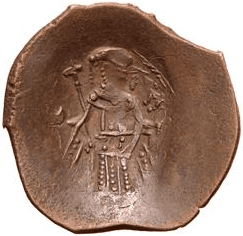
Ivan Asen I
Emperor · Medieval
63.5Total

Julius Caesar
General · Ancient
82.8Total
Basic Information
Born
1160
-100
Died
1196
-44
Era
Medieval
Ancient
Nationality
Bulgaria
Roman Republic
Occupation
Emperor
General
Civilization
Western
Western
Score Comparison
Military (10%)
61.7
88.0
Political (20%)
68.0
78.0
Influence (20%)
62.0
85.0
Legacy (20%)
58.0
82.0
Leadership (15%)
74.0
80.0
Strategy (15%)
60.7
85.0
TOTAL
63.5
82.8
Ivan Asen I — Complete Timeline
1185 AD
Uprising against Byzantine rule (1185)War
Ivan Asen I, along with his brother Peter IV, led a successful uprising of Bulgarians and Vlachs against Byzantine rule. The rebellion began in Tarnovo and quickly spread, leading to the restoration of the Bulgarian state.
UprisingByzantine-Bulgar WarsSecond Bulgarian Empire
Impact: regionalconstructive
Founding of the Second Bulgarian EmpirePolitical Action
Ivan Asen I and his brother Peter IV established the Second Bulgarian Empire with its capital at Tarnovo. They were crowned co-emperors, marking the restoration of Bulgarian independence after nearly 170 years of Byzantine rule.
FoundingBulgarian EmpireIndependence
Impact: regionalconstructive
1196 AD
Assassination by a boyarPolitical Action◆ Major
Ivan Asen I was assassinated by his cousin Ivanko, a boyar, during a period of internal conflict. His death temporarily destabilized the Second Bulgarian Empire, but his brother Peter IV continued to rule.
AssassinationInternal ConflictBulgarian Empire
Impact: nationaltragic
Julius Caesar — Complete Timeline
58 BC
Gallic WarsWar◆ Major
Caesar, as proconsul of Gaul, launched a series of campaigns that conquered all of Gaul (modern France, Belgium, and parts of Switzerland). He fought numerous battles, including against the Helvetii, the Belgae, and the Gallic chieftain Vercingetorix. The wars brought immense wealth and a loyal army to Caesar.
Gallic WarsConquestRoman Expansion
Impact: regional
49 BC
Crossing the RubiconPolitical Action◆ Major
Caesar led Legio XIII across the Rubicon River into Italy, defying the Roman Senate's order to disband his army. This act triggered a civil war against Pompey and the Optimates, ultimately leading to Caesar's dictatorship and the end of the Roman Republic.
Roman Civil WarEnd of RepublicPower Struggle
Impact: global
48 BC
Battle of PharsalusWar◆ Major
Caesar's outnumbered army defeated the larger forces of Pompey the Great at Pharsalus in Greece. Caesar's tactical use of a reserve line to counter Pompey's cavalry charge proved decisive. Pompey fled to Egypt, where he was assassinated, leaving Caesar as the undisputed master of the Roman world.
Roman Civil WarBattleDecisive Victory
Impact: regional
44 BC
Appointment as Dictator for LifePolitical Action◆ Major
The Roman Senate appointed Caesar dictator perpetuo (dictator for life), granting him unprecedented personal power. This move concentrated military, legislative, and judicial authority in one person, effectively ending the Roman Republic's traditional system of checks and balances and alarming many senators.
DictatorshipEnd of RepublicPower Consolidation
Impact: regionaldestructive
Assassination on the Ides of MarchPolitical Action◆ Major
A group of Roman senators, led by Marcus Junius Brutus and Gaius Cassius Longinus, stabbed Caesar to death at a meeting of the Senate in the Theatre of Pompey. The assassination was intended to restore the Republic, but instead triggered another civil war that led to the rise of the Roman Empire.
AssassinationRoman PoliticsEnd of Republic
Impact: globaldestructive
Expert Analysis
ivan-asen-i-vs-julius-caesar
# The Crossing and the Uprising
On a winter night in 49 BCE, Julius Caesar stood at the banks of the Rubicon River in northern Italy, knowing that crossing it with his army would mean civil war and the end of the Roman Republic. He made his choice, reportedly declaring, "The die is cast." Just over twelve centuries later, in 1185, two Bulgarian brothers—Ivan Asen I and his brother Peter IV—stood before their people in the Church of St. Demetrius in Tarnovo, declaring that the time had come to throw off Byzantine rule. Both men were rebels against the established order. Both would reshape their worlds. But one would become a name whispered across millennia, while the other remains known only to scholars. Why? The answer lies not in their deeds alone, but in the soil from which they grew.
Origins
Julius Caesar was born into the patrician Julian clan in 100 BCE, a family claiming descent from the goddess Venus. Yet his was not a life of effortless privilege. Rome’s nobility was a knife-fight of alliances and debts, and young Caesar watched his uncle Marius and rival Sulla tear the Republic apart. He learned early that in Rome, survival meant ambition, and ambition meant risking everything. His education in rhetoric, law, and military command was the standard for a Roman aristocrat—but Caesar’s hunger was not.
Ivan Asen I emerged from a different world entirely. Born around 1160, he was a Bulgarian noble—or perhaps a Vlach chieftain, as Byzantine chroniclers dismissively called his people. The Second Bulgarian Empire did not yet exist. For nearly two centuries, the once-proud Bulgarian state had been crushed under Byzantine boots, its patriarchate abolished, its tsars forgotten. The Asen brothers were not scions of a golden lineage; they were provincial leaders whose people had been taxed into desperation and denied even the right to marry without imperial permission. Where Caesar’s Rome was a stage of marble and ambition, Ivan Asen’s Bulgaria was a landscape of ash and simmering rage.
Rise to Power
Caesar’s path to power was a masterpiece of calculated risk. He climbed the Roman *cursus honorum*—quaestor, aedile, praetor—spending fortunes he did not have on games and bribes, then fleeing to Spain to pay his debts through conquest. His appointment as governor of Gaul in 58 BCE gave him the weapon he needed: a massive army. Over eight years, he conquered what is now France and Belgium, crossed the Rhine into Germany, and even invaded Britain. Every victory made him richer, more beloved by his soldiers, and more feared by his rivals in the Senate.
Ivan Asen’s rise was far more direct—and far more desperate. In 1185, the Byzantine emperor Isaac II Angelos imposed a heavy tax on the Bulgarians and Vlachs to fund his wedding. When the Asen brothers came to negotiate, Isaac had one of them slapped. That humiliation, combined with a rumor that the saint Demetrius had abandoned the Byzantines for the Bulgarians, sparked an uprising. The brothers raised a banner of rebellion not with legions, but with peasants armed with scythes and axes. Within months, they had liberated Tarnovo and proclaimed the restoration of the Bulgarian Empire. Ivan Asen I was crowned co-emperor alongside his brother.
Leadership & Governance
Caesar governed as a revolutionary who understood that power was not merely won but institutionalized. As dictator, he reformed the calendar (giving us the Julian calendar), expanded citizenship to provincials, launched massive public works, and centralized tax collection. His military genius was inseparable from his political vision: every legionary knew that Caesar’s victory meant land, loot, and a stake in Rome’s future. Yet his rule remained personal, not institutional. He packed the Senate with his supporters, minted coins with his own face, and accepted the title "dictator for life." He was building not a new republic, but a monarchy—and everyone knew it.
Ivan Asen I governed as a warrior-king of a fragile state. His military strategy was defensive and opportunistic: he raided Byzantine territories, ambushed imperial armies, and slowly expanded his borders. In 1190, he ambushed and routed a Byzantine expedition in the Balkan passes, a victory that secured Bulgarian independence. But his rule lacked Caesar’s institutional genius. The Second Bulgarian Empire was held together by loyalty to the Asen brothers personally, not by laws or bureaucracy. Ivan Asen I was a liberator, but not a reformer. He could break chains; he could not yet build a state.
Triumph & Tragedy
Caesar’s greatest triumph was also his greatest tragedy: the conquest of Gaul. It made him immortal, but it also made him a tyrant in the eyes of his enemies. When he crossed the Rubicon in 49 BCE, he plunged Rome into a civil war that ended with his sole rule. His assassination on the Ides of March in 44 BCE—stabbed twenty-three times by senators he had pardoned—was the final act of a drama he had written himself. His tragedy was not that he died, but that he could not see that his success had made his death inevitable.
Ivan Asen I’s triumph was the liberation of Bulgaria itself—a feat that had seemed impossible. But his tragedy came from within. In 1196, he was assassinated by his own cousin, the boyar Ivanko, during a period of internal conflict. Unlike Caesar, who was killed by his political enemies, Ivan Asen was betrayed by his own blood. His death temporarily threw Bulgaria into chaos, though his brother Peter IV rallied the state. The fragility of his empire, bound by personal loyalty, was exposed.
Character & Destiny
Caesar’s character was a paradox: generous to his enemies, ruthless to his rivals; a brilliant writer who chronicled his own conquests in the third person; a man who wept at the death of his political foe Pompey, but ordered the execution of 53,000 Gauls after a single siege. He believed in his own destiny—and made sure everyone else did too. His fatal flaw was not arrogance, but clarity: he saw that the Republic was dead and that only a strongman could save Rome. He was right, but he paid for that truth with his life.
Ivan Asen I’s character was forged in resistance. He was no philosopher-king; he was a man of action, a leader who could rally shepherds and farmers to fight an empire. His fatal flaw was trust—trust that his own family would stand with him, trust that victory alone was enough. He did not build the institutions that might have saved him. He was a flame in the dark, but flames burn out.
Legacy
Caesar’s legacy is the Roman Empire itself. His adopted heir, Octavian, became Augustus, the first emperor. The title "Caesar" became synonymous with imperial power, echoing through the ages as *kaiser* and *tsar*. His writings are still read in classrooms; his name is still a byword for ambition. He transformed the West, for better and worse.
Ivan Asen I’s legacy is the Second Bulgarian Empire, which endured for two more centuries and restored Bulgarian identity, language, and Orthodox Christianity. Yet his name is obscure outside the Balkans. He is remembered not as a world-shaker, but as a founder—a necessary, noble, but limited figure. His empire eventually fell to the Ottomans, and his story became a footnote in someone else’s history.
Conclusion
Standing at the Rubicon and standing in a rebel church in Tarnovo—both were acts of defiance. But Caesar crossed his river knowing that Rome would never be the same, and he was right. Ivan Asen raised his banner knowing that Bulgaria might be free, and he was right too. The difference between them is not talent or courage, but scale and context. Caesar inherited a world empire and broke it to remake it. Ivan Asen inherited a memory and built a kingdom from ashes. One changed history; the other saved his people. Both were assassinated by those they trusted. Both died for what they built. The difference is that Caesar’s story became the story of the West, while Ivan Asen’s became the story of Bulgaria—and that, in the end, is not a judgment of worth, but of history’s cruel lottery.
Rankings
🥇
Julius CaesarLeader
Mil: 88.0Pol: 78.0Inf: 85.0
82.8
🥈
Ivan Asen I
Mil: 61.7Pol: 68.0Inf: 62.0
63.5
+19.3 behind
How This Comparison Works
Algorithm
Each figure is scored on 6 dimensions (0—100 scale) based on structured historical data: Military (10%), Political (20%), Influence (20%), Legacy (20%), Leadership (15%), Strategy (15%). The weighted total produces the final ranking.
Data Sources
Scores are computed from structured sub-indicators in the database. Scale factors adjust for era (Ancient ×0.85, Modern ×1.0) and civilization size (Eastern ×1.05, Other ×0.80) to account for differences in population and military scale.
Maximum 3 Figures
Comparisons are limited to 2—3 figures to ensure readability and statistical meaningfulness.
Error Margins
±5 points per dimension — Sub-scores are derived from historical records with inherent uncertainty. Two figures within 5 points on a dimension should be considered roughly equivalent in that area.
Total Score Accuracy
±3 points overall — The weighted combination of 6 dimensions produces a total score with approximately ±3 points of uncertainty. Differences of less than 3 points are not statistically significant— the figures are effectively tied.
Known Limitations
- Historical records are incomplete and uneven across civilizations
- Figures from oral-tradition societies may be underrepresented
- Occupation labels can misclassify multi-role figures
- Scores measure capability and impact, not moral character
- Quantitative scoring is a comparison tool, not absolute truth
Capability Radar
Military (10%) — Battles & Warfare
Battles
65
95
Win Rate
70
92
Expansion
70
97
Political (20%) — Governance & Reform
Reform
65
90
Diplomacy
60
85
Economy
55
82
Influence (20%) — Cultural & Global Reach
Cultural
55
88
Global
45
94
Legacy (20%) — Historical Impact
Historical
65
95
Longevity
60
96
Leadership (15%) — Power & Stability
Tenure
60
75
Stability
50
60
Strategy (15%) — Tactics & Innovation
Strategy
65
94
Tactics
60
96
Reform
55
88
Similar Comparisons
Comments & Discussion
Caesaricus Maximus6/17/2026
This comparison is absurd. Caesar crossed the Rubicon with a veteran army and changed the course of Western civilization. Ivan Asen? A local chieftain who rebelled against a crumbling Byzantine Empire. One ended the Roman Republic, the other barely kept Bulgaria independent for a few decades. Let's not pretend these are equivalent historical figures.
古代罗马之眼6/17/2026
毫无可比性。凯撒面对的是罗马军团内部的生死抉择,他的一句话直接终结了共和制;而伊凡·阿森不过是在拜占庭帝国衰落时钻了个空子。凯撒的名字传遍欧亚非三大洲,阿森连巴尔干半岛都没走出。把两者相提并论,是对罗马史的侮辱。
The Numerate Historian6/17/2026
Let's look at the stats. Caesar conquered Gaul in 8 years, wrote bestsellers, and changed Rome's system permanently. Asen? Bulgaria gained independence for about 200 years, then fell to the Ottomans. That's a C-tier result. Caesar's impact is measurable in continents and centuries; Asen's in a small Balkan state for two generations. Numbers don't lie.
史料考据狂魔6/17/2026
细究史料可知,伊凡·阿森在1185年起义时用的理由——圣德米特里的庇护——根本是政治宣传。拜占庭记载指出,所谓"解放"不过是瓦拉几亚贵族争夺税收权。而凯撒的《高卢战记》可是亲自撰写的第一手资料,军事和政治智慧高下立判。阿森连自己的名字都没留下可靠文献,别再抬举他了。
Legionary's Ghost6/17/2026
Brothers and barbarians? Please. Caesar commanded legions that built roads, aqueducts, and law across Europe. The Asen brothers led a peasant rebellion that briefly liberated some mountains. I'd rather follow a man who wrote Latin, conquered cities, and faced Pompey than some local strongman who sacked a few Byzantine villages. Quality over quantity.
世界史搬运工6/17/2026
不能忽略时空背景。凯撒面对的是成型的罗马帝国体系,他的每步棋都是全球性的。伊凡·阿森面对的拜占庭当时已内忧外患——第四次十字军快要来了,帝国分裂在即。阿森不过是顺势而为的游击队领袖,而凯撒是主动创造历史的战略家。前者搭顺风车,后者自己开车。高下立判。