Loading...
Ivan III the Great vs Muawiyah I
Muawiyah I leads by 1.0 pts · 2 figures compared
…
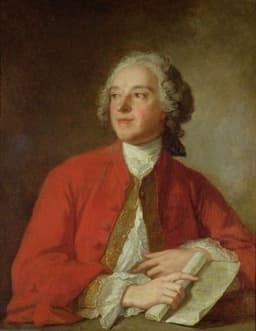
Ivan III the Great
Emperor · Medieval
75.3Total
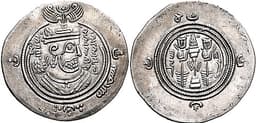
Muawiyah I
Emperor · Medieval
76.3Total
Basic Information
Born
1440
602
Died
1505
680
Era
Medieval
Medieval
Nationality
Muscovy
Umayyad Caliphate
Occupation
Emperor
Emperor
Civilization
Western
Middle Eastern
Score Comparison
Military (10%)
76.0
76.0
Political (20%)
70.0
75.0
Influence (20%)
75.0
75.0
Legacy (20%)
80.0
80.0
Leadership (15%)
78.0
78.0
Strategy (15%)
67.2
70.0
TOTAL
75.3
76.3
Ivan III the Great — Complete Timeline
1472 AD
Marriage to Sophia PalaiologinaPolitical Action◆ Major
Ivan III married Sophia (Zoe) Palaiologina, niece of the last Byzantine emperor. This marriage allowed Ivan to claim succession to the Byzantine Empire, adopt the double-headed eagle as a symbol, and promote Moscow as the Third Rome.
ByzantiumThird RomeMarriage
Impact: regionalconstructive
1478 AD
Annexation of NovgorodWar◆ Major
Ivan III conquered the Novgorod Republic after a series of campaigns. He abolished the veche (assembly) and removed the veche bell, incorporating Novgorod's vast territories into the Grand Principality of Moscow.
NovgorodAnnexationMoscow
Impact: regional
1480 AD
Great Stand on the Ugra RiverWar
Ivan III faced the Mongol army of Khan Akhmat across the Ugra River. After weeks of stalemate, the Mongols withdrew without battle. This event ended 240 years of Mongol suzerainty over Russia.
Golden HordeIndependenceUgra
Impact: regional
1497 AD
Issued the Sudebnik of 1497Reform◆ Major
Ivan III promulgated a new legal code, the Sudebnik, which standardized laws across the Russian lands. It restricted peasant mobility by limiting the time for transfer between landowners, a step toward serfdom.
Legal CodeSerfdomReform
Impact: national
1500 AD
War with the Grand Duchy of LithuaniaWar◆ Major
Ivan III launched a war against Lithuania, capturing the cities of Bryansk, Dorogobuzh, and Putivl. The war ended with the Truce of 1503, which ceded significant territories to Moscow.
LithuaniaTerritorial ExpansionWar
Impact: regional
Muawiyah I — Complete Timeline
640 AD
Governorship of SyriaPolitical Action◆ Major
Muawiyah I was appointed governor of Syria by Caliph Umar. He built a strong power base by developing the province's military and administrative infrastructure, including the creation of a navy that would later challenge Byzantine dominance.
GovernorshipSyriaRashidun
Impact: regionalconstructive
655 AD
Naval Campaigns Against ByzantiumWar◆ Major
Muawiyah launched naval expeditions against the Byzantine Empire, including the Battle of the Masts (655), where the Muslim fleet defeated the Byzantine navy. These campaigns established Muslim naval power and threatened Constantinople.
Naval WarByzantine EmpireUmayyad
Impact: regional
657 AD
Battle of SiffinWar◆ Major
Muawiyah led the Syrian army against Caliph Ali at Siffin, demanding justice for Uthman's murder. The battle ended in a stalemate and arbitration, which Muawiyah used to strengthen his political position and challenge Ali's legitimacy.
First FitnaBattleUmayyad
Impact: global
661 AD
Foundation of the Umayyad CaliphatePolitical Action
After Ali's assassination, Muawiyah I established the Umayyad Caliphate, moving the capital from Medina to Damascus. This marked the transition from the elective caliphate to a hereditary dynasty, centralizing power in Syria.
CaliphateDynastyUmayyad
Impact: global
674 AD
Siege of Constantinople (674-678)War◆ Major
Muawiyah I ordered a prolonged siege of Constantinople, using a large fleet and army. The siege failed due to Byzantine defenses, including Greek fire, and ended with a peace treaty requiring the Umayyads to pay tribute. It was a rare setback.
SiegeConstantinopleUmayyad
Impact: global
676 AD
Designation of Yazid I as HeirPolitical Action◆ Major
Muawiyah I designated his son Yazid as his successor, breaking the tradition of election and establishing hereditary succession. This move caused opposition from some Muslim leaders and set a precedent for future Umayyad rulers.
SuccessionHereditaryUmayyad
Impact: global
Expert Analysis
Origins
Muawiyah I was born into the powerful Umayyad clan of the Quraysh tribe in Mecca. He embraced Islam early and became a scribe for the Prophet Muhammad. His father, Abu Sufyan, initially opposed Muhammad but later converted. Muawiyah's lineage and early political acumen positioned him as a key figure in the early Islamic state. In contrast, Ivan III was born in Moscow into the Rurikid dynasty, which had ruled various Russian principalities for centuries. His father, Vasily II, faced a bitter civil war, but Ivan inherited a relatively stable principality. Both men came from elite families, but Muawiyah's rise was more meteoric due to the rapid expansion of Islam, while Ivan's path was rooted in the gradual consolidation of Russian lands.
Rise to Power
Muawiyah's rise began with his appointment as governor of Syria under Caliph Uthman. He skillfully built a loyal army and administration, turning Syria into a power base. After Uthman's assassination, Muawiyah challenged Caliph Ali, leading to the Battle of Siffin (657 CE). The arbitration that followed split the Muslim community, and Muawiyah eventually claimed the caliphate after Ali's assassination, founding the Umayyad dynasty in 661 CE. Ivan III became Grand Prince of Moscow in 1462 after his father's death. He continued the policy of 'gathering the Russian lands' by annexing rival principalities like Novgorod (1478) and Tver (1485). His marriage to Sophia Palaiologina, niece of the last Byzantine emperor, enhanced his prestige and claimed continuity with the Roman Empire. Ivan's defining moment came in 1480 with the Great Stand on the Ugra River, which ended Mongol suzerainty without a battle, establishing Moscow's independence.
Leadership & Governance
Muawiyah centralized the caliphate in Damascus, establishing a hereditary monarchy. He reformed the bureaucracy, postal system, and army, and initiated naval campaigns against Byzantium, including the siege of Constantinople (674-678). His governance was pragmatic, often using diplomacy and bribery to secure loyalty. Ivan III centralized the Russian state, curbing the power of boyars and issuing a new law code, the Sudebnik of 1497, which standardized legal practices and began to tie peasants to the land. He also expanded Moscow's territory through wars with Lithuania and Livonia. Both rulers were effective administrators, but Muawiyah's empire was larger and more diverse, requiring more complex governance. Ivan's focus was on internal consolidation and ending foreign domination.
Triumph & Tragedy
Muawiyah's greatest triumph was founding the Umayyad Caliphate, which expanded Islamic rule from Spain to India. His naval campaigns weakened Byzantium and secured Muslim dominance in the Mediterranean. However, his reign was marred by the ongoing conflict with the Shia faction, leading to a permanent schism in Islam. Ivan's triumph was the liberation from Mongol rule and the unification of Russian lands. The annexation of Novgorod and the defeat of the Golden Horde were monumental. Yet, his later years saw family strife, including a succession crisis after the death of his heir, leading to a period of instability. Both leaders faced tragic consequences of their success: Muawiyah's dynasty eventually fell to internal revolts, and Ivan's centralized state struggled with succession issues after his death.
Character & Destiny
Muawiyah was known for his cunning, patience, and political savvy. He was a master of realpolitik, often prioritizing stability over ideology. His destiny was to create a dynasty that shaped Islamic history for centuries. Ivan III was also shrewd and calculating, earning the title 'the Great' by consolidating power and asserting Moscow's independence. His destiny was to lay the foundations for the Russian Empire, adopting the title 'Tsar' and the double-headed eagle symbol. Both men were ambitious and ruthless when necessary, but Muawiyah's legacy is more controversial due to the Sunni-Shia split, while Ivan is universally celebrated in Russian history.
Legacy
Muawiyah's legacy is complex: he is revered by Sunnis as a just ruler and reviled by Shias as a usurper. His administrative reforms and military campaigns had lasting impacts on the Islamic world. The Umayyad Caliphate he founded became a model for later empires. Ivan III's legacy is more straightforward: he is considered the founder of the modern Russian state. His policies of centralization and expansion set the stage for Ivan the Terrible and the Romanovs. The 'Third Rome' concept and the autocratic tradition in Russia trace back to him. Both men transformed their realms, but Ivan's impact on Russian identity is more enduring, while Muawiyah's influence is spread across multiple cultures and regions.
Conclusion
Both Muawiyah I and Ivan III were exceptional rulers who founded dynasties and transformed their civilizations. Muawiyah scores slightly higher overall (76 vs 75), reflecting his broader geopolitical impact and the scale of his empire. However, Ivan's role in liberating Russia and creating a centralized state is equally significant. In a direct comparison, Muawiyah's leadership in founding a vast, multicultural caliphate and his military innovations give him a narrow edge. Yet, Ivan's legacy of ending Mongol rule and building a unified Russian state is arguably more foundational for his nation. Ultimately, both deserve their titles as 'great' in their respective historical contexts. **Scores: Muawiyah: 76, Ivan: 75**
Rankings
🥇
Muawiyah ILeader
Mil: 76.0Pol: 75.0Inf: 75.0
76.3
🥈
Ivan III the Great
Mil: 76.0Pol: 70.0Inf: 75.0
75.3
+1.0 behind
How This Comparison Works
Algorithm
Each figure is scored on 6 dimensions (0—100 scale) based on structured historical data: Military (10%), Political (20%), Influence (20%), Legacy (20%), Leadership (15%), Strategy (15%). The weighted total produces the final ranking.
Data Sources
Scores are computed from structured sub-indicators in the database. Scale factors adjust for era (Ancient ×0.85, Modern ×1.0) and civilization size (Eastern ×1.05, Other ×0.80) to account for differences in population and military scale.
Maximum 3 Figures
Comparisons are limited to 2—3 figures to ensure readability and statistical meaningfulness.
Error Margins
±5 points per dimension — Sub-scores are derived from historical records with inherent uncertainty. Two figures within 5 points on a dimension should be considered roughly equivalent in that area.
Total Score Accuracy
±3 points overall — The weighted combination of 6 dimensions produces a total score with approximately ±3 points of uncertainty. Differences of less than 3 points are not statistically significant— the figures are effectively tied.
Known Limitations
- Historical records are incomplete and uneven across civilizations
- Figures from oral-tradition societies may be underrepresented
- Occupation labels can misclassify multi-role figures
- Scores measure capability and impact, not moral character
- Quantitative scoring is a comparison tool, not absolute truth
Capability Radar
Military (10%) — Battles & Warfare
Battles
75
75
Win Rate
80
80
Expansion
85
85
Political (20%) — Governance & Reform
Reform
80
90
Diplomacy
85
95
Economy
70
85
Influence (20%) — Cultural & Global Reach
Cultural
70
75
Global
70
75
Legacy (20%) — Historical Impact
Historical
85
85
Longevity
80
80
Leadership (15%) — Power & Stability
Tenure
85
85
Stability
75
80
Strategy (15%) — Tactics & Innovation
Strategy
85
85
Tactics
70
70
Reform
65
80
Similar Comparisons
Comments & Discussion
No comments yet. Be the first to share your thoughts!