Loading...
Ivan III the Great vs Rudrama Devi
Ivan III the Great leads by 17.4 pts · 2 figures compared
…
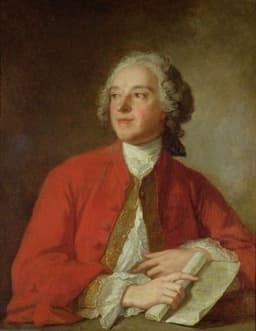
Ivan III the Great
Emperor · Medieval
75.3Total
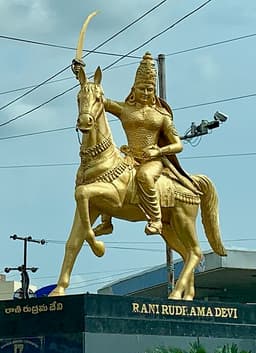
Rudrama Devi
Emperor · Medieval
57.9Total
Basic Information
Born
1440
1262
Died
1505
1289
Era
Medieval
Medieval
Nationality
Muscovy
India
Occupation
Emperor
Emperor
Civilization
Western
Indian
Score Comparison
Military (10%)
76.0
70.0
Political (20%)
70.0
45.0
Influence (20%)
75.0
59.0
Legacy (20%)
80.0
50.0
Leadership (15%)
78.0
72.0
Strategy (15%)
67.2
60.7
TOTAL
75.3
57.9
Ivan III the Great — Complete Timeline
1472 AD
Marriage to Sophia PalaiologinaPolitical Action◆ Major
Ivan III married Sophia (Zoe) Palaiologina, niece of the last Byzantine emperor. This marriage allowed Ivan to claim succession to the Byzantine Empire, adopt the double-headed eagle as a symbol, and promote Moscow as the Third Rome.
ByzantiumThird RomeMarriage
Impact: regionalconstructive
1478 AD
Annexation of NovgorodWar◆ Major
Ivan III conquered the Novgorod Republic after a series of campaigns. He abolished the veche (assembly) and removed the veche bell, incorporating Novgorod's vast territories into the Grand Principality of Moscow.
NovgorodAnnexationMoscow
Impact: regional
1480 AD
Great Stand on the Ugra RiverWar
Ivan III faced the Mongol army of Khan Akhmat across the Ugra River. After weeks of stalemate, the Mongols withdrew without battle. This event ended 240 years of Mongol suzerainty over Russia.
Golden HordeIndependenceUgra
Impact: regional
1497 AD
Issued the Sudebnik of 1497Reform◆ Major
Ivan III promulgated a new legal code, the Sudebnik, which standardized laws across the Russian lands. It restricted peasant mobility by limiting the time for transfer between landowners, a step toward serfdom.
Legal CodeSerfdomReform
Impact: national
1500 AD
War with the Grand Duchy of LithuaniaWar◆ Major
Ivan III launched a war against Lithuania, capturing the cities of Bryansk, Dorogobuzh, and Putivl. The war ended with the Truce of 1503, which ceded significant territories to Moscow.
LithuaniaTerritorial ExpansionWar
Impact: regional
Rudrama Devi — Complete Timeline
1262 AD
Accession as Kakatiya queenPolitical Action◆ Major
Rudrama Devi became the Kakatiya ruler after the death of her father Ganapati Deva. She was one of the few female rulers in Indian history and faced opposition from nobles who questioned her authority.
KakatiyaFemale RulerSuccession
Impact: regionalconstructive
1270 AD
Defense against the Seuna YadavasWar◆ Major
Rudrama Devi successfully defended the Kakatiya kingdom against an invasion by the Seuna Yadava king Mahadeva. She led her army in battle and repelled the attack, securing her position as ruler.
KakatiyaSeuna YadavaDefense
Impact: regionalconstructive
1275 AD
Suppression of internal rebellionsWar
Rudrama Devi faced rebellions from feudal lords who opposed her rule. She crushed these uprisings with military force, executing rebel leaders and consolidating her control over the kingdom.
KakatiyaRebellionSuppression
Impact: regionaldestructive
1289 AD
Death in battleWar◆ Major
Rudrama Devi was killed in battle while fighting against the Seuna Yadava king Ramachandra. Her death marked the end of her reign and led to the succession of her grandson Prataparudra II.
KakatiyaDeathBattle
Impact: regionaltragic
Expert Analysis
Origins
Ivan III Vasilyevich, born in 1440 in Moscow, was the son of Vasily II of Moscow. He grew up during the Muscovite civil war, gaining early experience in politics and warfare. His father blinded him in a power struggle, but Ivan emerged as a capable heir. He received a traditional education in Orthodox theology and statecraft. In contrast, Rudrama Devi was born around 1260 in the Kakatiya dynasty of South India. She was the daughter of King Ganapati Deva, who had no sons. Recognizing her potential, Ganapati Deva trained her in administration and military arts, preparing her to rule. She was formally designated as heir, a rare move in patriarchal medieval India.
Rise to Power
Ivan III became Grand Prince of Moscow in 1462 after his father's death. He consolidated power by subduing rival principalities like Tver and Ryazan. His first major challenge was the Novgorod Republic, which he conquered in 1478 after two campaigns. He abolished the veche and exiled the leading boyars. The turning point came in 1480 with the Great Stand on the Ugra River. Ivan faced the Mongol army of Khan Akhmat; after a stalemate, the Mongols withdrew, effectively ending Mongol suzerainty over Russia. Rudrama Devi ascended the throne in 1262 after her father's death. She faced immediate opposition from feudal lords who resented a female ruler. She suppressed rebellions with military force, executing rebel leaders and confiscating their lands. Her position was strengthened by military victories against the Seuna Yadavas, who invaded in the 1270s. Rudrama Devi personally led her army and repelled the invasion.
Leadership & Governance
Ivan III centralized governance by reducing the power of the boyars and appointing loyal officials. He issued the Sudebnik of 1497, a legal code that standardized laws and restricted peasant mobility, laying the groundwork for serfdom. He also reformed the military, introducing a system of land grants (pomestie) in exchange for service, creating a loyal cavalry force. His marriage to Sophia Palaiologina in 1472 allowed him to claim Byzantine heritage and adopt the double-headed eagle as his symbol. Rudrama Devi maintained the Kakatiya administrative structure but faced constant rebellions. She relied on loyal generals and forts to control her territory. She promoted trade and patronized Hindu temples, but her military focus was defensive. She scored 45.0 in political governance, reflecting limited institutional reforms.
Triumph & Tragedy
Ivan III's greatest triumph was ending Mongol rule and unifying most of the Russian lands under Moscow. He tripled the territory of Muscovy and established the foundations of the Russian state. His greatest failure was the incomplete centralization; the boyars retained significant power, leading to future conflicts. He also failed to secure a warm-water port, limiting Russia's trade. Rudrama Devi's triumph was defending her kingdom against the Seuna Yadavas and ruling successfully as a female monarch for over two decades. Her tragedy was her death in battle around 1289, fighting the Seuna Yadava king Ramachandra. Her death led to the succession of her grandson and the eventual decline of the Kakatiya dynasty.
Character & Destiny
Ivan III was cautious, calculating, and patient. He preferred diplomacy and strategic maneuvering over direct confrontation, as seen in the Ugra standoff. His character allowed him to build a stable state but also made him ruthless, as shown in the treatment of Novgorod. Rudrama Devi was brave and determined, leading her armies in person. Her gender made her rule precarious, and she had to constantly assert her authority. Her destiny was shaped by the need to prove herself, leading to a warrior's death.
Legacy
Ivan III is remembered as the 'Gatherer of the Russian Lands' and the founder of the Russian tsardom. His policies influenced Ivan the Terrible and later Russian rulers. The legal code and administrative reforms endured for centuries. He scored 80.0 in legacy, the highest among his scores. Rudrama Devi is a symbol of female empowerment in Indian history, but her dynasty declined soon after her death. Her legacy is more cultural, inspiring later queens, but her political impact was limited. She scored 50.0 in legacy.
Conclusion
Ivan III had a greater and more lasting impact. His unification of Russia and end of Mongol rule shaped the course of Eastern Europe. Rudrama Devi's reign was notable for her gender but did not transform her kingdom. With a total score of 75.3 against 57.9, Ivan III clearly surpasses Rudrama Devi in historical significance. While her military leadership was commendable, Ivan's political and institutional reforms created a state that would become a major world power.
Rankings
🥇
Ivan III the GreatLeader
Mil: 76.0Pol: 70.0Inf: 75.0
75.3
🥈
Rudrama Devi
Mil: 70.0Pol: 45.0Inf: 59.0
57.9
+17.4 behind
How This Comparison Works
Algorithm
Each figure is scored on 6 dimensions (0—100 scale) based on structured historical data: Military (10%), Political (20%), Influence (20%), Legacy (20%), Leadership (15%), Strategy (15%). The weighted total produces the final ranking.
Data Sources
Scores are computed from structured sub-indicators in the database. Scale factors adjust for era (Ancient ×0.85, Modern ×1.0) and civilization size (Eastern ×1.05, Other ×0.80) to account for differences in population and military scale.
Maximum 3 Figures
Comparisons are limited to 2—3 figures to ensure readability and statistical meaningfulness.
Error Margins
±5 points per dimension — Sub-scores are derived from historical records with inherent uncertainty. Two figures within 5 points on a dimension should be considered roughly equivalent in that area.
Total Score Accuracy
±3 points overall — The weighted combination of 6 dimensions produces a total score with approximately ±3 points of uncertainty. Differences of less than 3 points are not statistically significant— the figures are effectively tied.
Known Limitations
- Historical records are incomplete and uneven across civilizations
- Figures from oral-tradition societies may be underrepresented
- Occupation labels can misclassify multi-role figures
- Scores measure capability and impact, not moral character
- Quantitative scoring is a comparison tool, not absolute truth
Capability Radar
Military (10%) — Battles & Warfare
Battles
75
65
Win Rate
80
70
Expansion
85
50
Political (20%) — Governance & Reform
Reform
80
70
Diplomacy
85
65
Economy
70
60
Influence (20%) — Cultural & Global Reach
Cultural
70
50
Global
70
35
Legacy (20%) — Historical Impact
Historical
85
55
Longevity
80
45
Leadership (15%) — Power & Stability
Tenure
85
75
Stability
75
55
Strategy (15%) — Tactics & Innovation
Strategy
85
65
Tactics
70
60
Reform
65
55
Similar Comparisons
Comments & Discussion
No comments yet. Be the first to share your thoughts!