Loading...
Osman I vs Rudrama Devi
Rudrama Devi leads by 1.8 pts · 2 figures compared
…
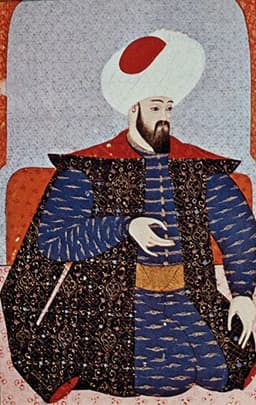
Osman I
Emperor · Medieval
56.1Total
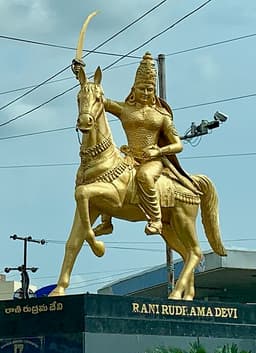
Rudrama Devi
Emperor · Medieval
57.9Total
Basic Information
Born
1258
1262
Died
1326
1289
Era
Medieval
Medieval
Nationality
Ottoman Empire
India
Occupation
Emperor
Emperor
Civilization
Middle Eastern
Indian
Score Comparison
Military (10%)
20.0
70.0
Political (20%)
45.1
45.0
Influence (20%)
65.0
59.0
Legacy (20%)
68.0
50.0
Leadership (15%)
65.0
72.0
Strategy (15%)
43.3
60.7
TOTAL
56.1
57.9
Osman I — Complete Timeline
1299 AD
Foundation of the Ottoman BeylikPolitical Action
Osman I declared independence from the Seljuk Sultanate of Rum, establishing his own beylik (principality) in northwestern Anatolia. This act is traditionally considered the founding of the Ottoman state, which would later grow into a vast empire.
FoundationOttoman EmpireIndependence
Impact: globalconstructive
1302 AD
Battle of BapheusWar◆ Major
Osman I led his forces to victory against a Byzantine army at Bapheus near Nicomedia. This battle established Osman's reputation as a ghazi warrior and marked the beginning of Ottoman expansion into Byzantine territory in northwestern Anatolia.
BattleByzantineGhazi
Impact: regional
1308 AD
Alliance with the Byzantine EmperorPolitical Action
Osman I formed a temporary alliance with the Byzantine emperor Andronikos II against the Catalan Company. This pragmatic relationship allowed Osman to gain resources and recognition while expanding his territory.
AllianceByzantineDiplomacy
1326 AD
Siege of BursaWar◆ Major
Osman I initiated the siege of the Byzantine city of Bursa, though it was captured by his son Orhan after Osman's death. The conquest of Bursa provided the Ottomans with their first major urban center and capital.
SiegeBursaCapital
Impact: regional
Rudrama Devi — Complete Timeline
1262 AD
Accession as Kakatiya queenPolitical Action◆ Major
Rudrama Devi became the Kakatiya ruler after the death of her father Ganapati Deva. She was one of the few female rulers in Indian history and faced opposition from nobles who questioned her authority.
KakatiyaFemale RulerSuccession
Impact: regionalconstructive
1270 AD
Defense against the Seuna YadavasWar◆ Major
Rudrama Devi successfully defended the Kakatiya kingdom against an invasion by the Seuna Yadava king Mahadeva. She led her army in battle and repelled the attack, securing her position as ruler.
KakatiyaSeuna YadavaDefense
Impact: regionalconstructive
1275 AD
Suppression of internal rebellionsWar
Rudrama Devi faced rebellions from feudal lords who opposed her rule. She crushed these uprisings with military force, executing rebel leaders and consolidating her control over the kingdom.
KakatiyaRebellionSuppression
Impact: regionaldestructive
1289 AD
Death in battleWar◆ Major
Rudrama Devi was killed in battle while fighting against the Seuna Yadava king Ramachandra. Her death marked the end of her reign and led to the succession of her grandson Prataparudra II.
KakatiyaDeathBattle
Impact: regionaltragic
Expert Analysis
Origins
**Osman I** (c. 1258–1324) was born into the Kayı tribe of Oghuz Turks in the region of Söğüt, northwestern Anatolia. His father, Ertuğrul, led the tribe as a frontier vassal of the Seljuk Sultanate of Rum. Osman inherited a small beylik (principality) with limited resources but strategic location near Byzantine territories. His early life involved raiding Byzantine settlements and building alliances with local Turkmen groups.
**Rudrama Devi** (c. 1259–1289) was the daughter of Kakatiya king Ganapati Deva, who ruled from Warangal in present-day Telangana, India. As Ganapati had no sons, he designated Rudrama as his heir, training her in administration and warfare. She ascended the throne in 1262, becoming one of the few female rulers in medieval Indian history. Her early reign was challenged by nobles who opposed female rule.
Rise to Power
Osman I rose to prominence after the decline of the Seljuk Sultanate around 1300. He declared independence from the Seljuks, founding the Ottoman Beylik. His victory at the Battle of Bapheus in 1302 against a Byzantine army established his reputation as a ghazi warrior. He expanded his territory through raids and alliances, attracting followers from other Turkmen tribes. His pragmatic diplomacy included a temporary alliance with Byzantine emperor Andronikos II against the Catalan Company in 1305.
Rudrama Devi's accession in 1262 was controversial. She faced immediate rebellions from feudal lords (nayakas) who refused to accept a female ruler. She suppressed these uprisings with military force, executing rebel leaders and consolidating her power. Her father Ganapati Deva had already strengthened the kingdom, but Rudrama had to prove her capability. She adopted the title 'Rudrama-devi Maharaja' and presented herself as a male ruler in official documents to assert authority.
Leadership & Governance
Osman I's governance was characterized by decentralized frontier rule. He relied on ghazi ethos, granting conquered lands to his followers as timars (military fiefs). He did not establish a centralized bureaucracy; instead, he led a coalition of semi-independent tribes. His leadership style was personal and charismatic, with decisions made in council (divan). Osman's military strategy focused on swift raids and sieges, notably initiating the siege of Bursa (captured later by his son Orhan). His political score of 45.1 reflects limited state-building during his lifetime.
Rudrama Devi's leadership was more centralized and administrative. She reformed the feudal system by reducing the power of rebellious nayakas and appointing loyal officials. She promoted trade and agriculture, strengthening the Kakatiya economy. Her military strategy was defensive but effective: she repelled invasions from the Seuna Yadavas, notably defeating King Mahadeva in 1270. She maintained a standing army and fortifications. Her leadership score of 72.0 and strategy score of 60.7 indicate competent governance.
Triumph & Tragedy
Osman I's greatest triumph was founding the Ottoman dynasty, which would evolve into a vast empire. His military victory at Bapheus (1302) secured his legitimacy as a ghazi leader. However, his greatest failure was not capturing Bursa, which fell after his death. His state remained small and vulnerable; he lacked the administrative capacity to build enduring institutions. His military score of 20.0 is low because his victories were limited to small-scale raids.
Rudrama Devi's triumph was successfully defending her kingdom against the Seuna Yadavas, preserving Kakatiya independence for her reign. She also suppressed internal rebellions, maintaining stability. Her tragedy was dying in battle around 1289 against the Seuna Yadava king Ramachandra. Her death led to a succession crisis, and the Kakatiya dynasty declined soon after. Her military score of 70.0 reflects her active battlefield leadership.
Character & Destiny
Osman I was pragmatic and patient, focusing on long-term expansion through gradual conquest. He was a charismatic leader who inspired loyalty among his followers. His destiny was to found a dynasty that would become a world power, but he did not live to see its full potential. His character suited the frontier environment, but his lack of administrative ambition limited immediate impact.
Rudrama Devi was determined and assertive, breaking gender norms to rule effectively. She was a capable military commander and administrator. Her destiny was to defend her kingdom against external threats, but she ultimately fell in battle. Her character earned her respect, but her death cut short her reign.
Legacy
Osman I's legacy is immense: he founded the Ottoman Empire, which lasted over 600 years and at its peak controlled much of Southeast Europe, West Asia, and North Africa. His name became synonymous with the dynasty. His influence score of 65.0 reflects his foundational role, though his personal achievements were limited. The Ottoman state's institutions developed after his death.
Rudrama Devi's legacy is as one of the few female rulers in Indian history who successfully held power. She is remembered as a warrior queen who defended her kingdom. Her legacy score of 50.0 is moderate because the Kakatiya dynasty declined after her death, and her impact was regional. However, she inspired later female rulers and is a symbol of female empowerment in India.
Conclusion
Osman I and Rudrama Devi had different types of impact. Osman I founded a dynasty that shaped world history for centuries, while Rudrama Devi was a competent ruler who preserved her kingdom temporarily. Osman's total score of 56.1 is slightly lower than Rudrama's 57.9, but his legacy score of 68.0 exceeds her 50.0. In terms of long-term historical impact, Osman I is more significant because the Ottoman Empire became a major world power, influencing multiple continents. Rudrama Devi's achievements were notable but did not create lasting change beyond her reign. Therefore, Osman I had greater historical impact.
Rankings
🥇
Rudrama DeviLeader
Mil: 70.0Pol: 45.0Inf: 59.0
57.9
🥈
Osman I
Mil: 20.0Pol: 45.1Inf: 65.0
56.1
+1.8 behind
How This Comparison Works
Algorithm
Each figure is scored on 6 dimensions (0—100 scale) based on structured historical data: Military (10%), Political (20%), Influence (20%), Legacy (20%), Leadership (15%), Strategy (15%). The weighted total produces the final ranking.
Data Sources
Scores are computed from structured sub-indicators in the database. Scale factors adjust for era (Ancient ×0.85, Modern ×1.0) and civilization size (Eastern ×1.05, Other ×0.80) to account for differences in population and military scale.
Maximum 3 Figures
Comparisons are limited to 2—3 figures to ensure readability and statistical meaningfulness.
Error Margins
±5 points per dimension — Sub-scores are derived from historical records with inherent uncertainty. Two figures within 5 points on a dimension should be considered roughly equivalent in that area.
Total Score Accuracy
±3 points overall — The weighted combination of 6 dimensions produces a total score with approximately ±3 points of uncertainty. Differences of less than 3 points are not statistically significant— the figures are effectively tied.
Known Limitations
- Historical records are incomplete and uneven across civilizations
- Figures from oral-tradition societies may be underrepresented
- Occupation labels can misclassify multi-role figures
- Scores measure capability and impact, not moral character
- Quantitative scoring is a comparison tool, not absolute truth
Capability Radar
Military (10%) — Battles & Warfare
Battles
35
65
Win Rate
40
70
Expansion
50
50
Political (20%) — Governance & Reform
Reform
40
70
Diplomacy
50
65
Economy
35
60
Influence (20%) — Cultural & Global Reach
Cultural
60
50
Global
65
35
Legacy (20%) — Historical Impact
Historical
70
55
Longevity
80
45
Leadership (15%) — Power & Stability
Tenure
55
75
Stability
45
55
Strategy (15%) — Tactics & Innovation
Strategy
45
65
Tactics
30
60
Reform
30
55
Similar Comparisons
Comments & Discussion
No comments yet. Be the first to share your thoughts!