Loading...
Ivan the Terrible vs Philip of Hesse
Ivan the Terrible leads by 15.6 pts · 2 figures compared
…
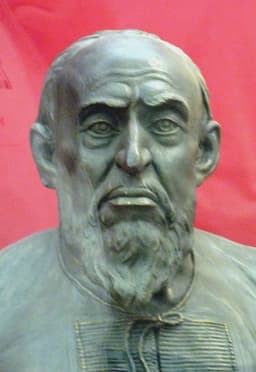
Ivan the Terrible
Emperor · Modern
65.0Total
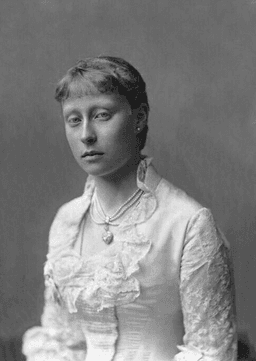
Philip of Hesse
Emperor · Modern
49.4Total
Basic Information
Born
1530
1504
Died
1584
1567
Era
Modern
Modern
Nationality
Russia
Hesse
Occupation
Emperor
Emperor
Civilization
Western
Western
Score Comparison
Military (10%)
74.7
10.0
Political (20%)
60.0
62.7
Influence (20%)
72.0
60.0
Legacy (20%)
55.0
50.0
Leadership (15%)
68.0
53.2
Strategy (15%)
66.3
35.0
TOTAL
65.0
49.4
Ivan the Terrible — Complete Timeline
1547 AD
Coronation as First Tsar of RussiaPolitical Action
Ivan IV was crowned as the first Tsar of All Russia, adopting the title of Caesar. This coronation asserted Russia's independence from Mongol influence and claimed imperial status. It marked the beginning of centralized autocratic rule in Russia.
CoronationTsarAutocracy
Impact: national
1552 AD
Conquest of KazanWar◆ Major
Ivan IV led a Russian army to conquer the Khanate of Kazan, ending Tatar rule in the Volga region. The siege lasted several weeks and resulted in the annexation of the khanate. This victory opened the way for Russian expansion into Siberia and the Caspian region.
ConquestKazanExpansion
Impact: regional
1558 AD
Livonian WarWar◆ Major
Ivan IV launched a war against the Livonian Confederation to gain access to the Baltic Sea. The war lasted 25 years and involved Poland-Lithuania, Sweden, and Denmark. It ended in Russian defeat, with Ivan failing to secure a Baltic port.
WarBalticDefeat
Impact: regionaldestructive
1565 AD
Establishment of the OprichninaReform
Ivan IV created the Oprichnina, a separate territory and state apparatus under his direct control. He used the Oprichniki, a corps of secret police, to eliminate his political opponents. This policy led to widespread terror, executions, and confiscation of lands.
TerrorOprichninaRepression
Impact: nationaldestructive
1570 AD
Massacre of NovgorodWar◆ Major
Ivan IV led the Oprichniki in a brutal campaign against the city of Novgorod, suspected of treason. Thousands of inhabitants were killed, and the city was looted and destroyed. This massacre broke the power of Novgorod and terrorized the Russian population.
MassacreNovgorodTerror
Impact: regionaldestructive
1581 AD
Killing of His Son IvanOther◆ Major
Ivan IV struck and killed his eldest son and heir, Ivan Ivanovich, during an argument. The tsarevich died from his injuries days later. This event left Russia without a capable successor and contributed to the Time of Troubles after Ivan's death.
PatricideSuccessionTragedy
Impact: nationaltragic
Philip of Hesse — Complete Timeline
1524 AD
Introduced the Reformation in HesseReform◆ Major
Philip introduced the Protestant Reformation in the Landgraviate of Hesse, adopting Lutheran doctrines and dissolving monasteries. He established a state church under his control, making Hesse a center of the Reformation and a model for other Protestant territories.
ReformationLutheranism
Impact: regionalprogressive
1527 AD
Founded the University of MarburgCultural◆ Major
Philip founded the University of Marburg, the first Protestant university in the world. It became a leading center for Lutheran theology and humanist studies, training clergy and scholars for the Reformation movement across Germany.
UniversityEducation
Impact: regionalconstructive
1531 AD
Organized the Schmalkaldic LeaguePolitical Action◆ Major
Philip was a key organizer of the Schmalkaldic League, a defensive alliance of Protestant princes and cities within the Holy Roman Empire. The league aimed to protect Lutheran territories from the Catholic Emperor Charles V, and it became the main military force of the Reformation.
Schmalkaldic LeagueProtestant Alliance
Impact: regional
1540 AD
Married Margarethe von der Saale in BigamyPolitical Action◆ Major
Philip entered into a bigamous marriage with Margarethe von der Saale, with the consent of Martin Luther and other reformers. This scandal weakened his political standing and gave his enemies, including Charles V, leverage against him, leading to his eventual imprisonment.
BigamyScandal
Impact: regionaldestructive
1547 AD
Captured at the Battle of MühlbergWar◆ Major
Philip was captured by Imperial forces at the Battle of M
Schmalkaldic WarDefeat
Impact: regionaltragic
1552 AD
Released from ImprisonmentPolitical Action◆ Major
Philip was released from Imperial captivity after the Treaty of Passau, which granted religious toleration to Lutherans. His release was part of a broader settlement that recognized the Protestant faith in the Empire, paving the way for the Peace of Augsburg.
Treaty of PassauRelease
Impact: regionalconstructive
Expert Analysis
Origins
Ivan IV Vasilyevich, born in 1530, became Grand Prince of Moscow at age three after his father's death. His mother, Elena Glinskaya, ruled as regent until her suspected poisoning in 1538. Ivan grew up amid boyar factionalism, which instilled in him a deep distrust of the nobility. He was crowned the first Tsar of All Russia in 1547, adopting the title of Caesar to assert Russia's independence from Mongol influence.
Philip I, Landgrave of Hesse, was born in 1504 into the House of Hesse. He succeeded his father as Landgrave in 1509 at age five, with his mother Anna of Mecklenburg acting as regent. Philip received a humanist education and was influenced by the early Reformation. He met Martin Luther in 1521 and became a committed Lutheran, introducing the Reformation in Hesse in 1524.
Rise to Power
Ivan's early reign was marked by reforms and military successes. He convened the first Zemsky Sobor in 1549, a parliament of nobles and clergy, and issued a new law code in 1550. His military campaigns expanded Russia: he conquered the Khanate of Kazan in 1552 and the Astrakhan Khanate in 1556, opening the Volga River to Russian trade. These victories enhanced his prestige and central authority.
Philip of Hesse rose to prominence as a leading Protestant prince. He founded the University of Marburg in 1527, the first Protestant university, which became a center for Lutheran theology. In 1529, he organized the Marburg Colloquy to unify Protestant factions, though it failed to reconcile Luther and Zwingli. In 1531, Philip was a key organizer of the Schmalkaldic League, a defensive alliance of Protestant states against the Catholic Holy Roman Emperor Charles V. His political maneuvering made him a central figure in the Reformation.
Leadership & Governance
Ivan's governance shifted dramatically after 1560. Following the death of his wife Anastasia, he became increasingly paranoid. In 1565, he established the Oprichnina—a separate territory and state apparatus under his direct control, policed by the Oprichniki, a corps of secret police. They terrorized the boyar class, confiscating lands and executing thousands. Ivan's centralization broke the power of the nobility but created a climate of fear. His Livonian War (1558–1583) aimed to gain Baltic access but drained resources and ended in failure.
Philip governed Hesse as a model Protestant state. He dissolved monasteries, confiscated church lands, and used the revenue to fund education and social welfare. He established a state church and promoted literacy. Politically, Philip sought to balance the power of the Emperor and the Catholic princes. His leadership in the Schmalkaldic League demonstrated his diplomatic skills, but his bigamous marriage in 1540—approved by Luther and Melanchthon—scandalized both Protestant and Catholic rulers, weakening his moral authority.
Triumph & Tragedy
Ivan's greatest triumph was the conquest of Kazan, which eliminated a major Tatar threat and opened Siberia to Russian expansion. His centralization of power laid the foundations for the Russian autocratic state. However, his tragedies include the Massacre of Novgorod in 1570, where he led the Oprichniki to slaughter thousands suspected of treason, and the accidental killing of his own son and heir, Ivan Ivanovich, in 1581. These acts plunged Russia into a succession crisis and contributed to the Time of Troubles after his death.
Philip's triumphs include the introduction of the Reformation in Hesse and the founding of the University of Marburg, which advanced Protestant education. The Schmaldalkic League initially deterred Imperial aggression. However, his tragedy came in 1547 when he was captured at the Battle of Mühlberg, where the League was crushed by Charles V. Philip was imprisoned for five years, and his political influence collapsed. His bigamy also damaged the Protestant cause, giving Catholics a propaganda tool.
Character & Destiny
Ivan was intelligent and cultured but increasingly paranoid and cruel. His early reforms gave way to a reign of terror. Historians assess him as a complex figure: a reformer who modernized Russia but also a tyrant who destabilized it. His character shaped his fate—his suspicion led to the Oprichnina, which ultimately weakened the state. He scored 74.7 in military and 60.0 in political, reflecting his mixed record.
Philip was pragmatic and diplomatic, earning the epithet 'the Magnanimous.' He prioritized Protestant unity but made strategic errors, such as the bigamy that eroded his credibility. His defeat at Mühlberg and subsequent imprisonment ended his active role. Philip's scores: political 62.7, leadership 53.2, strategy 35.0—showing his strength in diplomacy but weakness in military matters.
Legacy
Ivan's legacy is profound: he established the autocratic tradition in Russia that lasted until 1917. His centralization and terror created a model of absolute rule. The conquest of Kazan opened the path to Russian expansion into Siberia. However, his cruelty and the Time of Troubles tarnished his reputation. He is remembered as 'Ivan the Terrible' (Grozný meaning 'awe-inspiring' or 'terrible').
Philip's legacy is tied to the Reformation. Hesse became a bastion of Lutheranism, and the University of Marburg shaped Protestant thought. The Schmalkaldic League, though defeated, set a precedent for Protestant resistance. However, his personal scandals limited his long-term influence. He is remembered as a capable but flawed prince.
Conclusion
Ivan the Terrible had a greater impact on history than Philip of Hesse. Ivan's centralization and expansion fundamentally shaped Russia's development as a major power, while Philip's role, though significant, was confined to the German Reformation. Ivan's total score of 65.0 surpasses Philip's 49.4, reflecting his higher military, influence, and legacy scores. Despite his tyranny, Ivan's actions had broader geopolitical consequences. Philip, while important in religious history, lacked the scale and lasting institutional impact of Ivan. Thus, Ivan the Terrible emerges as the more influential figure.
Rankings
🥇
Ivan the TerribleLeader
Mil: 74.7Pol: 60.0Inf: 72.0
65.0
🥈
Philip of Hesse
Mil: 10.0Pol: 62.7Inf: 60.0
49.4
+15.6 behind
How This Comparison Works
Algorithm
Each figure is scored on 6 dimensions (0—100 scale) based on structured historical data: Military (10%), Political (20%), Influence (20%), Legacy (20%), Leadership (15%), Strategy (15%). The weighted total produces the final ranking.
Data Sources
Scores are computed from structured sub-indicators in the database. Scale factors adjust for era (Ancient ×0.85, Modern ×1.0) and civilization size (Eastern ×1.05, Other ×0.80) to account for differences in population and military scale.
Maximum 3 Figures
Comparisons are limited to 2—3 figures to ensure readability and statistical meaningfulness.
Error Margins
±5 points per dimension — Sub-scores are derived from historical records with inherent uncertainty. Two figures within 5 points on a dimension should be considered roughly equivalent in that area.
Total Score Accuracy
±3 points overall — The weighted combination of 6 dimensions produces a total score with approximately ±3 points of uncertainty. Differences of less than 3 points are not statistically significant— the figures are effectively tied.
Known Limitations
- Historical records are incomplete and uneven across civilizations
- Figures from oral-tradition societies may be underrepresented
- Occupation labels can misclassify multi-role figures
- Scores measure capability and impact, not moral character
- Quantitative scoring is a comparison tool, not absolute truth
Capability Radar
Military (10%) — Battles & Warfare
Battles
75
45
Win Rate
65
50
Expansion
80
35
Political (20%) — Governance & Reform
Reform
90
55
Diplomacy
40
65
Economy
50
50
Influence (20%) — Cultural & Global Reach
Cultural
60
55
Global
65
45
Legacy (20%) — Historical Impact
Historical
75
60
Longevity
70
50
Leadership (15%) — Power & Stability
Tenure
85
60
Stability
20
40
Strategy (15%) — Tactics & Innovation
Strategy
70
45
Tactics
60
40
Reform
85
30
Similar Comparisons
Comments & Discussion
No comments yet. Be the first to share your thoughts!