Loading...
Ivan the Terrible vs Umberto II of Italy
Ivan the Terrible leads by 23.8 pts · 2 figures compared
…
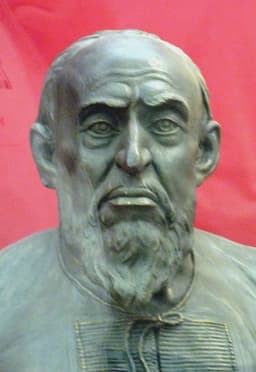
Ivan the Terrible
Emperor · Modern
65.0Total
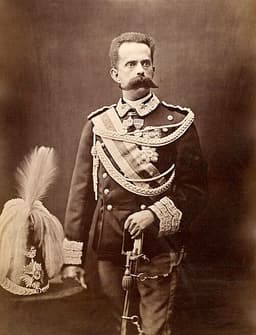
Umberto II of Italy
Emperor · Modern
41.2Total
Basic Information
Born
1530
1904
Died
1584
1983
Era
Modern
Modern
Nationality
Russia
Italy
Occupation
Emperor
Emperor
Civilization
Western
Western
Score Comparison
Military (10%)
74.7
46.1
Political (20%)
60.0
45.1
Influence (20%)
72.0
45.5
Legacy (20%)
55.0
35.8
Leadership (15%)
68.0
33.6
Strategy (15%)
66.3
45.0
TOTAL
65.0
41.2
Ivan the Terrible — Complete Timeline
1547 AD
Coronation as First Tsar of RussiaPolitical Action
Ivan IV was crowned as the first Tsar of All Russia, adopting the title of Caesar. This coronation asserted Russia's independence from Mongol influence and claimed imperial status. It marked the beginning of centralized autocratic rule in Russia.
CoronationTsarAutocracy
Impact: national
1552 AD
Conquest of KazanWar◆ Major
Ivan IV led a Russian army to conquer the Khanate of Kazan, ending Tatar rule in the Volga region. The siege lasted several weeks and resulted in the annexation of the khanate. This victory opened the way for Russian expansion into Siberia and the Caspian region.
ConquestKazanExpansion
Impact: regional
1558 AD
Livonian WarWar◆ Major
Ivan IV launched a war against the Livonian Confederation to gain access to the Baltic Sea. The war lasted 25 years and involved Poland-Lithuania, Sweden, and Denmark. It ended in Russian defeat, with Ivan failing to secure a Baltic port.
WarBalticDefeat
Impact: regionaldestructive
1565 AD
Establishment of the OprichninaReform
Ivan IV created the Oprichnina, a separate territory and state apparatus under his direct control. He used the Oprichniki, a corps of secret police, to eliminate his political opponents. This policy led to widespread terror, executions, and confiscation of lands.
TerrorOprichninaRepression
Impact: nationaldestructive
1570 AD
Massacre of NovgorodWar◆ Major
Ivan IV led the Oprichniki in a brutal campaign against the city of Novgorod, suspected of treason. Thousands of inhabitants were killed, and the city was looted and destroyed. This massacre broke the power of Novgorod and terrorized the Russian population.
MassacreNovgorodTerror
Impact: regionaldestructive
1581 AD
Killing of His Son IvanOther◆ Major
Ivan IV struck and killed his eldest son and heir, Ivan Ivanovich, during an argument. The tsarevich died from his injuries days later. This event left Russia without a capable successor and contributed to the Time of Troubles after Ivan's death.
PatricideSuccessionTragedy
Impact: nationaltragic
Umberto II of Italy — Complete Timeline
1946 AD
Accession to the ThronePolitical Action◆ Major
Umberto II became King of Italy upon his father Victor Emmanuel III's abdication. His reign lasted only 34 days, from May 9 to June 12, 1946, during the constitutional referendum on the monarchy.
MonarchySuccession
Impact: national
1946 Italian Institutional ReferendumPolitical Action
Umberto II accepted the results of the referendum that abolished the monarchy in favor of a republic. He went into exile in Portugal, never returning to Italy, ending the Savoy dynasty's rule.
ReferendumRepublicExile
Impact: national
Exile in CascaisPolitical Action
Umberto II settled in Cascais, Portugal, after the monarchy was abolished. He lived there for the rest of his life, never abdicating his claim to the throne, and became a symbolic figure for Italian monarchists.
ExileMonarchy
Impact: national
Expert Analysis
Origins
Ivan IV Vasilyevich, born in 1530, was the son of Grand Prince Vasily III and Elena Glinskaya. His father died when Ivan was three, and his mother died when he was eight, leaving him in the care of boyars who fought for power. This turbulent childhood fostered his distrust of the nobility. Umberto II of Italy, born in 1904, was the son of King Victor Emmanuel III and Queen Elena. He received a military education and served in the army, but his role was largely ceremonial. Unlike Ivan, Umberto grew up in a stable monarchy, but one weakened by World War I and the rise of fascism.
Rise to Power
Ivan was crowned the first Tsar of All Russia in 1547 at age 16, adopting the title of Caesar to assert independence from Mongol influence and elevate Moscow's status. He initially ruled with the help of a reform council, but after the death of his wife Anastasia in 1560, he became increasingly paranoid. Umberto II became king on May 9, 1946, after his father abdicated in a failed attempt to save the monarchy. His reign lasted only 34 days, ending with the institutional referendum on June 2 that abolished the monarchy. Umberto accepted the result and went into exile.
Leadership & Governance
Ivan centralized power through terror. In 1565, he established the Oprichnina, a separate state within Russia under his direct control, using the Oprichniki—a secret police force—to crush dissent. He confiscated lands, executed boyars, and massacred civilians, as in Novgorod in 1570 where thousands were killed. His governance was brutal but effective in breaking the power of the aristocracy. Umberto II, in contrast, had no real governance role. His brief tenure was consumed by the referendum campaign. He attempted to rally monarchist support but failed to sway public opinion. His leadership score of 33.6 reflects his inability to influence events.
Triumph & Tragedy
Ivan's greatest triumph was the conquest of the Khanate of Kazan in 1552, ending Tatar dominance in the Volga region and opening Siberia for expansion. His military score of 74.7 reflects this success. However, the Livonian War (1558–1583) was a disaster, lasting 25 years and draining resources without gaining Baltic access. His massacre of Novgorod and the reign of terror left Russia weakened. Umberto's triumph, if any, was his dignified acceptance of the referendum result, avoiding civil war. His tragedy was being king for only 34 days, a symbol of monarchy's irrelevance in post-war Italy.
Character & Destiny
Ivan was paranoid, volatile, and increasingly unstable after his wife's death. His character led him to murder his own son in a fit of rage in 1581, ending the Rurik dynasty. His destiny was to create a centralized autocracy but at immense human cost. Umberto was a constitutional monarch, bound by duty. His character was passive; he accepted the referendum result without significant resistance. His destiny was to be the last king of Italy, overshadowed by his father's collaboration with Mussolini.
Legacy
Ivan's legacy is profound: he established the Tsarist autocracy that lasted until 1917, expanded Russian territory, and set a precedent for brutal centralized rule. His total score of 65.0 reflects his enduring impact. However, his legacy is mixed: he is remembered as both a unifier and a tyrant. Umberto's legacy is minimal. His score of 41.2 reflects his brief reign and lack of influence. He is a footnote in Italian history, remembered only as the "May King."
Conclusion
Ivan the Terrible had a far greater impact on history than Umberto II. With a total score of 65.0 against Umberto's 41.2, Ivan's actions shaped Russia for centuries, while Umberto's reign was a brief transition. Ivan's centralized autocracy and territorial expansion left a lasting imprint, whereas Umberto's legacy is negligible. The score gap of 23.8 points underscores the disparity in influence and leadership. Ivan, for all his brutality, was a transformative figure; Umberto was a symbol of a dying institution.
Rankings
🥇
Ivan the TerribleLeader
Mil: 74.7Pol: 60.0Inf: 72.0
65.0
🥈
Umberto II of Italy
Mil: 46.1Pol: 45.1Inf: 45.5
41.2
+23.8 behind
How This Comparison Works
Algorithm
Each figure is scored on 6 dimensions (0—100 scale) based on structured historical data: Military (10%), Political (20%), Influence (20%), Legacy (20%), Leadership (15%), Strategy (15%). The weighted total produces the final ranking.
Data Sources
Scores are computed from structured sub-indicators in the database. Scale factors adjust for era (Ancient ×0.85, Modern ×1.0) and civilization size (Eastern ×1.05, Other ×0.80) to account for differences in population and military scale.
Maximum 3 Figures
Comparisons are limited to 2—3 figures to ensure readability and statistical meaningfulness.
Error Margins
±5 points per dimension — Sub-scores are derived from historical records with inherent uncertainty. Two figures within 5 points on a dimension should be considered roughly equivalent in that area.
Total Score Accuracy
±3 points overall — The weighted combination of 6 dimensions produces a total score with approximately ±3 points of uncertainty. Differences of less than 3 points are not statistically significant— the figures are effectively tied.
Known Limitations
- Historical records are incomplete and uneven across civilizations
- Figures from oral-tradition societies may be underrepresented
- Occupation labels can misclassify multi-role figures
- Scores measure capability and impact, not moral character
- Quantitative scoring is a comparison tool, not absolute truth
Capability Radar
Military (10%) — Battles & Warfare
Battles
75
23
Win Rate
65
28
Expansion
80
33
Political (20%) — Governance & Reform
Reform
90
0
Diplomacy
40
10
Economy
50
0
Influence (20%) — Cultural & Global Reach
Cultural
60
5
Global
65
5
Legacy (20%) — Historical Impact
Historical
75
10
Longevity
70
5
Leadership (15%) — Power & Stability
Tenure
85
5
Stability
20
5
Strategy (15%) — Tactics & Innovation
Strategy
70
32
Tactics
60
34
Reform
85
36
Similar Comparisons
Comments & Discussion
No comments yet. Be the first to share your thoughts!