Loading...
Jagjivan Ram vs Paul Keating
Paul Keating leads by 0.3 pts · 2 figures compared
…

Jagjivan Ram
Politician · Modern
59.0Total
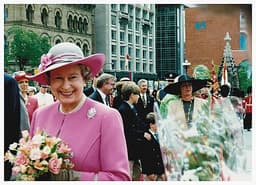
Paul Keating
Politician · Modern
59.3Total
Basic Information
Born
1908
1944
Died
1986
—
Era
Modern
Modern
Nationality
India
Australia
Occupation
Politician
Politician
Civilization
Indian
Western
Score Comparison
Military (10%)
39.1
49.4
Political (20%)
65.0
72.0
Influence (20%)
60.0
62.0
Legacy (20%)
54.0
52.0
Leadership (15%)
72.0
72.0
Strategy (15%)
60.0
42.8
TOTAL
59.0
59.3
Jagjivan Ram — Complete Timeline
1971 AD
Served as Defence Minister during 1971 WarWar◆ Major
As Defence Minister, Ram oversaw India's military operations during the Indo-Pakistani War of 1971, which led to the creation of Bangladesh. He was responsible for the strategic planning and execution of the campaign.
WarBangladesh LiberationDefence
Impact: regionalconstructive
1974 AD
Led the 1974 Railway StrikePolitical Action◆ Major
As Minister of Railways, Ram supported the demands of railway workers during the 1974 strike, which involved over 1.7 million employees. The strike was crushed by the government, leading to mass arrests and Ram's subsequent resignation from the cabinet.
Labour StrikeRailwaysResignation
Impact: nationaldestructive
1977 AD
Resigned from Congress in 1977Political Action◆ Major
Ram resigned from the Indian National Congress and joined the Janata Party coalition ahead of the 1977 general election. His departure was a major blow to Indira Gandhi's government and contributed to the Congress defeat.
Party SwitchElectionJanata Party
Impact: nationalconstructive
Appointed Deputy Prime MinisterPolitical Action
Ram was appointed Deputy Prime Minister of India in the Janata Party government under Prime Minister Morarji Desai. He held the portfolio of Defence and was a key figure in the coalition.
Deputy PMCoalition Government
Impact: nationalconstructive
Paul Keating — Complete Timeline
1991 AD
Became Prime Minister of AustraliaPolitical Action◆ Major
Keating successfully challenged Bob Hawke for the leadership of the Australian Labor Party, becoming prime minister. His victory marked the beginning of a period of intense economic reform and a push for an Australian republic.
LeadershipLabor PartyPrime Minister
Impact: national
1992 AD
Introduced Superannuation GuaranteeReform◆ Major
Keating's government introduced the Superannuation Guarantee, requiring employers to contribute to employees' retirement savings. This policy created a compulsory national savings system, transforming Australia's retirement income landscape.
SuperannuationRetirementEconomic Reform
Impact: nationalconstructive
Delivered the Redfern SpeechCultural◆ Major
Keating delivered a landmark speech at Redfern Park in Sydney, acknowledging the dispossession and suffering of Indigenous Australians. The speech was a powerful call for reconciliation and marked a shift in official discourse on Aboriginal issues.
IndigenousReconciliationSpeech
Impact: nationalprogressive
1993 AD
Promoted Australian RepublicanismPolitical Action◆ Major
Keating established the Republic Advisory Committee to explore options for Australia becoming a republic. He argued that a republic was necessary for Australia to have a fully independent identity, though the proposal was not implemented during his term.
RepublicConstitutional ReformIdentity
Impact: nationalprogressive
1996 AD
Defeated in 1996 ElectionPolitical Action◆ Major
Keating's Labor government was defeated by John Howard's Liberal-National coalition in the 1996 federal election. The loss ended 13 years of Labor rule and marked the beginning of a long period of conservative government.
ElectionDefeatLiberal Party
Impact: nationaltragic
Expert Analysis
Origins
Jagjivan Ram was born on April 5, 1908, in Chandwa, Bihar, into a Dalit (untouchable) family. His father, Shobhi Ram, was a small farmer. Despite caste discrimination, he gained access to education, attending Banaras Hindu University and later the University of Calcutta. His early experiences with caste prejudice shaped his lifelong commitment to social justice. Paul Keating was born on January 18, 1944, in Bankstown, Sydney, into a working-class Irish-Australian family. His father, Matt Keating, was a boilermaker. He left school at 14 to work, but his interest in politics led him to join the Australian Labor Party. He became a research assistant and later a union official, developing a sharp intellect and combative style.
Rise to Power
Jagjivan Ram's political rise began in the 1930s when he joined the Indian National Congress and became a key figure in the Dalit movement. He was elected to the Bihar Legislative Assembly in 1937. After independence, he held various ministerial posts, including Minister of Railways (1956-1962). His major breakthrough came during the 1971 Indo-Pakistani War as Defence Minister, where he oversaw India's military success. He resigned from Congress in 1977, joining the Janata Party, and became Deputy Prime Minister. Paul Keating entered federal parliament in 1969 as the member for Blaxland. He served as Treasurer under Prime Minister Bob Hawke from 1983 to 1991, overseeing economic reforms including deregulation and tax reform. He successfully challenged Hawke for the Labor leadership in December 1991, becoming Prime Minister. His rise was marked by strategic maneuvering and a reputation for aggressive rhetoric.
Leadership & Governance
Jagjivan Ram's leadership was characterized by coalition-building and advocacy for Dalits. As Minister of Railways, he supported the 1974 railway strike, demanding better conditions for workers, but the strike was suppressed by the government. His governance style was consultative, often seeking consensus. As Defence Minister, he ensured smooth military operations in 1971. Paul Keating was a transformative leader focused on economic restructuring and national identity. He introduced the Superannuation Guarantee (1992), requiring employer contributions to retirement funds, creating a national savings pool. He also promoted Australian republicanism, arguing for a break from the British monarchy. His leadership style was direct and confrontational, often clashing with opponents. Keating's governance scored 72.0 in leadership, while Ram scored 72.0 as well, but Keating's political score (72.0) edged Ram's (65.0).
Triumph & Tragedy
Jagjivan Ram's greatest triumph was his role in the 1971 war, leading to Bangladesh's creation. He also successfully represented Dalit interests in government. His tragedy was the failure of the 1974 railway strike, which damaged his reputation within the Congress party. He was often sidelined despite his seniority. Paul Keating's triumph was the economic transformation of Australia, including the Superannuation Guarantee and microeconomic reform. His Redfern Speech (1992) was a landmark in Indigenous reconciliation. His tragedy was the defeat in the 1996 election, losing to John Howard after 13 years of Labor rule. Keating's influence score (62.0) slightly exceeds Ram's (60.0), but both faced significant political setbacks.
Character & Destiny
Jagjivan Ram was known as a pragmatic and patient politician, able to navigate multiple governments. His Dalit background made him a symbol of social mobility, but also limited his power within the Congress hierarchy. He was often described as 'indispensable' yet never became Prime Minister. Paul Keating was charismatic and intellectually sharp, but also abrasive and arrogant. His aggressive style alienated allies, leading to his downfall after the 1996 defeat. Historians note that Keating's vision for Australia was ahead of its time, but his personality limited his political longevity. Ram's character was more conciliatory, allowing him to serve under five Prime Ministers, but he lacked the drive to reach the top.
Legacy
Jagjivan Ram's legacy is as a pioneer for Dalit representation in Indian politics. He inspired future Dalit leaders and his contributions to the 1971 war are remembered. However, his political influence waned after 1977. Paul Keating's legacy includes the Superannuation Guarantee, which has grown to over AUD 3 trillion in assets, and his push for a republic. The Redfern Speech remains a touchstone for Indigenous policy. Keating's legacy score (52.0) is slightly lower than Ram's (54.0), but his economic reforms have had a lasting structural impact on Australia.
Conclusion
While both figures achieved significant political influence, Paul Keating had a greater transformative impact on his nation's economy and identity. His scores in political (72.0 vs 65.0) and influence (62.0 vs 60.0) reflect his ability to enact lasting change. Jagjivan Ram's role was more as a representative and administrator, with less enduring structural impact. Keating's total score of 59.3 edges Ram's 59.0, and his legacy of economic reform and republicanism gives him a clearer claim to greater historical significance. Therefore, Paul Keating is the more impactful figure.
Rankings
🥇
Paul KeatingLeader
Mil: 49.4Pol: 72.0Inf: 62.0
59.3
🥈
Jagjivan Ram
Mil: 39.1Pol: 65.0Inf: 60.0
59.0
+0.3 behind
How This Comparison Works
Algorithm
Each figure is scored on 6 dimensions (0—100 scale) based on structured historical data: Military (10%), Political (20%), Influence (20%), Legacy (20%), Leadership (15%), Strategy (15%). The weighted total produces the final ranking.
Data Sources
Scores are computed from structured sub-indicators in the database. Scale factors adjust for era (Ancient ×0.85, Modern ×1.0) and civilization size (Eastern ×1.05, Other ×0.80) to account for differences in population and military scale.
Maximum 3 Figures
Comparisons are limited to 2—3 figures to ensure readability and statistical meaningfulness.
Error Margins
±5 points per dimension — Sub-scores are derived from historical records with inherent uncertainty. Two figures within 5 points on a dimension should be considered roughly equivalent in that area.
Total Score Accuracy
±3 points overall — The weighted combination of 6 dimensions produces a total score with approximately ±3 points of uncertainty. Differences of less than 3 points are not statistically significant— the figures are effectively tied.
Known Limitations
- Historical records are incomplete and uneven across civilizations
- Figures from oral-tradition societies may be underrepresented
- Occupation labels can misclassify multi-role figures
- Scores measure capability and impact, not moral character
- Quantitative scoring is a comparison tool, not absolute truth
Capability Radar
Military (10%) — Battles & Warfare
Battles
43
29
Win Rate
46
32
Expansion
52
36
Political (20%) — Governance & Reform
Reform
75
75
Diplomacy
70
70
Economy
60
80
Influence (20%) — Cultural & Global Reach
Cultural
55
55
Global
45
55
Legacy (20%) — Historical Impact
Historical
65
60
Longevity
50
50
Leadership (15%) — Power & Stability
Tenure
85
65
Stability
65
60
Strategy (15%) — Tactics & Innovation
Strategy
55
37
Tactics
54
43
Reform
59
44
Similar Comparisons
Comments & Discussion
No comments yet. Be the first to share your thoughts!