Loading...
Billy Hughes vs Paul Keating
Paul Keating leads by 2.4 pts · 2 figures compared
…
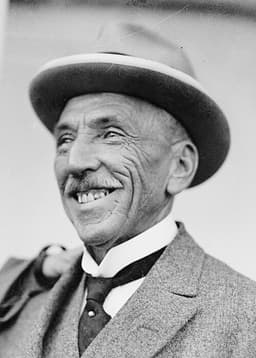
Billy Hughes
Politician · Modern
56.9Total
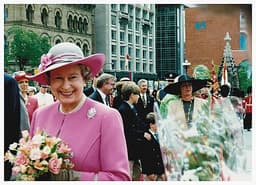
Paul Keating
Politician · Modern
59.3Total
Basic Information
Born
1862
1944
Died
1952
—
Era
Modern
Modern
Nationality
Australia
Australia
Occupation
Politician
Politician
Civilization
Western
Western
Score Comparison
Military (10%)
49.4
49.4
Political (20%)
72.0
72.0
Influence (20%)
59.0
62.0
Legacy (20%)
49.2
52.0
Leadership (15%)
66.0
72.0
Strategy (15%)
41.8
42.8
TOTAL
56.9
59.3
Billy Hughes — Complete Timeline
1915 AD
Became Prime Minister of AustraliaPolitical Action◆ Major
Billy Hughes became Prime Minister of Australia on October 27, 1915, succeeding Andrew Fisher. He led the country through the remainder of World War I, becoming a dominant figure in Australian politics.
Prime MinisterWorld War ILeadership
Impact: national
1916 AD
Conscription Referendums (1916 and 1917)Political Action◆ Major
Hughes held two national referendums on conscription for overseas military service during WWI, in 1916 and 1917. Both were narrowly defeated, causing a split in the Labor Party. Hughes and his supporters left to form the Nationalist Party.
ConscriptionReferendumLabor Split
Impact: nationaldestructive
Expelled from Labor PartyPolitical Action◆ Major
Following the defeat of the first conscription referendum, Hughes was expelled from the Australian Labor Party in November 1916. He then formed the National Labor Party, which later merged with the Liberal Party to become the Nationalist Party.
ExpulsionLabor PartyParty Split
Impact: nationaldestructive
1919 AD
Attended Paris Peace ConferencePolitical Action◆ Major
Hughes represented Australia at the Paris Peace Conference in 1919. He argued strongly for Australian interests, including control over former German colonies in the Pacific and reparations from Germany. He also secured Australia's separate membership in the League of Nations.
Paris Peace ConferenceLeague of NationsWorld War I
Impact: globalconstructive
Paul Keating — Complete Timeline
1991 AD
Became Prime Minister of AustraliaPolitical Action◆ Major
Keating successfully challenged Bob Hawke for the leadership of the Australian Labor Party, becoming prime minister. His victory marked the beginning of a period of intense economic reform and a push for an Australian republic.
LeadershipLabor PartyPrime Minister
Impact: national
1992 AD
Introduced Superannuation GuaranteeReform◆ Major
Keating's government introduced the Superannuation Guarantee, requiring employers to contribute to employees' retirement savings. This policy created a compulsory national savings system, transforming Australia's retirement income landscape.
SuperannuationRetirementEconomic Reform
Impact: nationalconstructive
Delivered the Redfern SpeechCultural◆ Major
Keating delivered a landmark speech at Redfern Park in Sydney, acknowledging the dispossession and suffering of Indigenous Australians. The speech was a powerful call for reconciliation and marked a shift in official discourse on Aboriginal issues.
IndigenousReconciliationSpeech
Impact: nationalprogressive
1993 AD
Promoted Australian RepublicanismPolitical Action◆ Major
Keating established the Republic Advisory Committee to explore options for Australia becoming a republic. He argued that a republic was necessary for Australia to have a fully independent identity, though the proposal was not implemented during his term.
RepublicConstitutional ReformIdentity
Impact: nationalprogressive
1996 AD
Defeated in 1996 ElectionPolitical Action◆ Major
Keating's Labor government was defeated by John Howard's Liberal-National coalition in the 1996 federal election. The loss ended 13 years of Labor rule and marked the beginning of a long period of conservative government.
ElectionDefeatLiberal Party
Impact: nationaltragic
Expert Analysis
Origins
Billy Hughes was born in London in 1862 and migrated to Australia in 1884. He worked as a laborer and union organizer, entering politics as a member of the Australian Labor Party in 1901. His early life was marked by poverty and a fierce determination to improve workers' conditions.
Paul Keating was born in Sydney in 1944, the son of a boilermaker. He left school at 14 to work and became involved in Labor Party politics, winning a seat in the House of Representatives in 1969 at age 25. His background in working-class Labor circles shaped his political identity.
Rise to Power
Hughes rose through the union movement and served as Attorney-General before becoming Prime Minister in 1915, succeeding Andrew Fisher. His wartime leadership and advocacy for conscription defined his tenure, but his expulsion from the Labor Party in 1916 forced him to form a coalition government. He remained prime minister until 1923.
Keating entered parliament in 1969 and served as Treasurer under Bob Hawke from 1983 to 1991, overseeing financial deregulation and tax reform. In 1991, he successfully challenged Hawke for the leadership, becoming Prime Minister. His rise was marked by economic restructuring and internal party maneuvering.
Leadership & Governance
Hughes governed during World War I, focusing on national security and war mobilization. He pursued conscription through two referendums in 1916 and 1917, both narrowly defeated. His leadership was combative and divisive, often clashing with opponents and former allies. He centralized power and used wartime regulations to control the economy.
Keating's governance emphasized economic reform and social change. He introduced the Superannuation Guarantee in 1992, requiring employer contributions to retirement savings, and promoted deregulation. He also advocated for an Australian republic and delivered the Redfern Speech in 1992, acknowledging Indigenous dispossession. His style was confrontational, earning him the nickname "the brawler."
Triumph & Tragedy
Hughes's greatest success was representing Australia at the Paris Peace Conference in 1919, securing control over former German territories in New Guinea. However, his failure to pass conscription referendums split the Labor Party and weakened his political base. He also oversaw the introduction of the first federal income tax in 1915.
Keating's triumphs include the Superannuation Guarantee, which created a national retirement savings system, and his push for reconciliation with Indigenous Australians. His government also enacted the Native Title Act after the Mabo decision. However, his failure to achieve a republic and his defeat in the 1996 election, after 13 years of Labor rule, were significant setbacks.
Character & Destiny
Hughes was tenacious and combative, traits that helped him lead during war but also isolated him. His stubbornness on conscription ultimately cost him the Labor Party support. He was known for his sharp tongue and political agility, surviving as prime minister through coalition.
Keating was intellectually confident and bold, but his abrasive style alienated many. He was a master of policy detail, particularly economics, but struggled with public relations. His destiny was shaped by his ambitious reforms; while transformative, they also contributed to his electoral defeat.
Legacy
Hughes is remembered as a wartime leader who expanded Australia's international role. His advocacy for national conscription left a divisive legacy, but his representation at Versailles established Australia's independent voice in foreign affairs. His political scores: Military 49.4, Political 72.0, Influence 59.0, Legacy 49.2, Leadership 66.0, Strategy 41.8, Total 56.9.
Keating's legacy is tied to economic reform and Indigenous recognition. The Superannuation Guarantee transformed retirement savings, and his republicanism sparked ongoing debate. His scores: Military 49.4, Political 72.0, Influence 62.0, Legacy 52.0, Leadership 72.0, Strategy 42.8, Total 59.3.
Conclusion
While Hughes shaped Australia's wartime identity, Keating's economic and social reforms have had a more enduring impact on daily life. Keating's higher total score (59.3 vs 56.9) reflects his greater influence and leadership, particularly in economic restructuring. His policies continue to affect Australians, whereas Hughes's legacy is more narrowly tied to a specific historical period. Therefore, Paul Keating had greater impact.
Rankings
🥇
Paul KeatingLeader
Mil: 49.4Pol: 72.0Inf: 62.0
59.3
🥈
Billy Hughes
Mil: 49.4Pol: 72.0Inf: 59.0
56.9
+2.4 behind
How This Comparison Works
Algorithm
Each figure is scored on 6 dimensions (0—100 scale) based on structured historical data: Military (10%), Political (20%), Influence (20%), Legacy (20%), Leadership (15%), Strategy (15%). The weighted total produces the final ranking.
Data Sources
Scores are computed from structured sub-indicators in the database. Scale factors adjust for era (Ancient ×0.85, Modern ×1.0) and civilization size (Eastern ×1.05, Other ×0.80) to account for differences in population and military scale.
Maximum 3 Figures
Comparisons are limited to 2—3 figures to ensure readability and statistical meaningfulness.
Error Margins
±5 points per dimension — Sub-scores are derived from historical records with inherent uncertainty. Two figures within 5 points on a dimension should be considered roughly equivalent in that area.
Total Score Accuracy
±3 points overall — The weighted combination of 6 dimensions produces a total score with approximately ±3 points of uncertainty. Differences of less than 3 points are not statistically significant— the figures are effectively tied.
Known Limitations
- Historical records are incomplete and uneven across civilizations
- Figures from oral-tradition societies may be underrepresented
- Occupation labels can misclassify multi-role figures
- Scores measure capability and impact, not moral character
- Quantitative scoring is a comparison tool, not absolute truth
Capability Radar
Military (10%) — Battles & Warfare
Battles
30
29
Win Rate
34
32
Expansion
32
36
Political (20%) — Governance & Reform
Reform
60
75
Diplomacy
70
70
Economy
55
80
Influence (20%) — Cultural & Global Reach
Cultural
40
55
Global
55
55
Legacy (20%) — Historical Impact
Historical
55
60
Longevity
40
50
Leadership (15%) — Power & Stability
Tenure
65
65
Stability
50
60
Strategy (15%) — Tactics & Innovation
Strategy
35
37
Tactics
43
43
Reform
42
44
Similar Comparisons
Comments & Discussion
No comments yet. Be the first to share your thoughts!