Loading...
This comparison has not been analyzed yet.
One-time AI generation (~1 minute). Scores and timeline are already available below.
Jagjivan Ram vs Souphanouvong
Jagjivan Ram leads by 5.0 pts · 2 figures compared
…

Jagjivan Ram
Politician · Modern
59.0Total
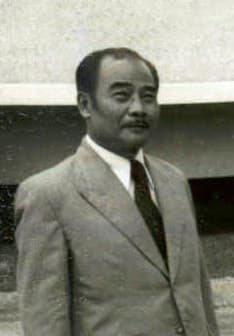
Souphanouvong
Politician · Modern
54.0Total
Basic Information
Born
1908
1909
Died
1986
1995
Era
Modern
Modern
Nationality
India
Laos
Occupation
Politician
Politician
Civilization
Indian
Eastern
Score Comparison
Military (10%)
39.1
36.6
Political (20%)
65.0
68.0
Influence (20%)
60.0
55.7
Legacy (20%)
54.0
44.2
Leadership (15%)
72.0
65.0
Strategy (15%)
60.0
54.1
TOTAL
59.0
54.0
Jagjivan Ram — Complete Timeline
1971 AD
Served as Defence Minister during 1971 WarWar◆ Major
As Defence Minister, Ram oversaw India's military operations during the Indo-Pakistani War of 1971, which led to the creation of Bangladesh. He was responsible for the strategic planning and execution of the campaign.
WarBangladesh LiberationDefence
Impact: regionalconstructive
1974 AD
Led the 1974 Railway StrikePolitical Action◆ Major
As Minister of Railways, Ram supported the demands of railway workers during the 1974 strike, which involved over 1.7 million employees. The strike was crushed by the government, leading to mass arrests and Ram's subsequent resignation from the cabinet.
Labour StrikeRailwaysResignation
Impact: nationaldestructive
1977 AD
Resigned from Congress in 1977Political Action◆ Major
Ram resigned from the Indian National Congress and joined the Janata Party coalition ahead of the 1977 general election. His departure was a major blow to Indira Gandhi's government and contributed to the Congress defeat.
Party SwitchElectionJanata Party
Impact: nationalconstructive
Appointed Deputy Prime MinisterPolitical Action
Ram was appointed Deputy Prime Minister of India in the Janata Party government under Prime Minister Morarji Desai. He held the portfolio of Defence and was a key figure in the coalition.
Deputy PMCoalition Government
Impact: nationalconstructive
Souphanouvong — Complete Timeline
1950 AD
Led the Pathet LaoPolitical Action◆ Major
Souphanouvong became the leader of the Pathet Lao, the communist revolutionary movement in Laos. He organized armed resistance against the French colonial forces and later the Royal Lao Government, with support from North Vietnam and the Soviet Union.
RevolutionLaosCommunism
Impact: regional
1973 AD
Signed the Vientiane AgreementPolitical Action◆ Major
Souphanouvong signed the Vientiane Agreement, a ceasefire that ended the Laotian Civil War. The agreement established a coalition government between the Pathet Lao and the Royal Lao Government, but it ultimately paved the way for the communist takeover in 1975.
Peace AgreementLaosCivil War
Impact: national
1975 AD
Became President of LaosPolitical Action
Souphanouvong was appointed the first President of the Lao People's Democratic Republic after the communist Pathet Lao seized power. His presidency marked the end of the Laotian Civil War and the establishment of a one-party socialist state.
LeadershipLaosCommunist Revolution
Impact: national
1991 AD
Resigned as PresidentPolitical Action◆ Major
Souphanouvong resigned as President of Laos due to poor health. His resignation marked the end of his active political role, but he remained a symbolic figure in the Lao communist movement until his death in 1995.
ResignationLaosLeadership
Impact: national
This comparison has not been analyzed yet.
One-time AI generation (~1 minute). Scores and timeline are already available below.
Rankings
🥇
Jagjivan RamLeader
Mil: 39.1Pol: 65.0Inf: 60.0
59.0
🥈
Souphanouvong
Mil: 36.6Pol: 68.0Inf: 55.7
54.0
+5.0 behind
How This Comparison Works
Algorithm
Each figure is scored on 6 dimensions (0—100 scale) based on structured historical data: Military (10%), Political (20%), Influence (20%), Legacy (20%), Leadership (15%), Strategy (15%). The weighted total produces the final ranking.
Data Sources
Scores are computed from structured sub-indicators in the database. Scale factors adjust for era (Ancient ×0.85, Modern ×1.0) and civilization size (Eastern ×1.05, Other ×0.80) to account for differences in population and military scale.
Maximum 3 Figures
Comparisons are limited to 2—3 figures to ensure readability and statistical meaningfulness.
Error Margins
±5 points per dimension — Sub-scores are derived from historical records with inherent uncertainty. Two figures within 5 points on a dimension should be considered roughly equivalent in that area.
Total Score Accuracy
±3 points overall — The weighted combination of 6 dimensions produces a total score with approximately ±3 points of uncertainty. Differences of less than 3 points are not statistically significant— the figures are effectively tied.
Known Limitations
- Historical records are incomplete and uneven across civilizations
- Figures from oral-tradition societies may be underrepresented
- Occupation labels can misclassify multi-role figures
- Scores measure capability and impact, not moral character
- Quantitative scoring is a comparison tool, not absolute truth
Capability Radar
Military (10%) — Battles & Warfare
Battles
43
15
Win Rate
46
10
Expansion
52
10
Political (20%) — Governance & Reform
Reform
75
55
Diplomacy
70
65
Economy
60
30
Influence (20%) — Cultural & Global Reach
Cultural
55
40
Global
45
35
Legacy (20%) — Historical Impact
Historical
65
45
Longevity
50
30
Leadership (15%) — Power & Stability
Tenure
85
60
Stability
65
20
Strategy (15%) — Tactics & Innovation
Strategy
55
25
Tactics
54
20
Reform
59
10
Similar Comparisons
Comments & Discussion
No comments yet. Be the first to share your thoughts!