Loading...
This comparison has not been analyzed yet.
One-time AI generation (~1 minute). Scores and timeline are already available below.
Jakaya Kikwete vs Turki al-Faisal
Turki al-Faisal leads by 3.0 pts · 2 figures compared
…
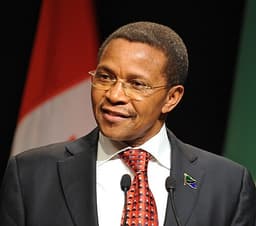
Jakaya Kikwete
Politician · Modern
50.6Total
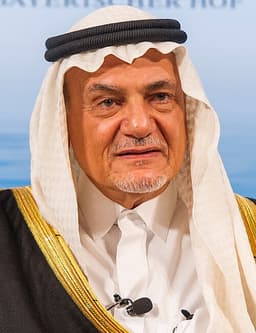
Turki al-Faisal
Politician · Modern
53.6Total
Basic Information
Born
1950
1945
Died
—
—
Era
Modern
Modern
Nationality
Tanzania
Saudi Arabia
Occupation
Politician
Politician
Civilization
Other
Middle Eastern
Score Comparison
Military (10%)
40.0
50.0
Political (20%)
53.8
61.3
Influence (20%)
54.1
54.1
Legacy (20%)
41.7
41.7
Leadership (15%)
72.0
74.0
Strategy (15%)
38.3
43.1
TOTAL
50.6
53.6
Jakaya Kikwete — Complete Timeline
2005 AD
Became President of TanzaniaPolitical Action◆ Major
Jakaya Kikwete was elected President of Tanzania, succeeding Benjamin Mkapa. He won with over 80% of the vote, continuing the dominance of the Chama Cha Mapinduzi (CCM) party. His presidency focused on economic growth, infrastructure, and social services.
PresidencyElectionCCM
Impact: nationalconstructive
2009 AD
Launched Kilimo Kwanza (Agriculture First) InitiativeReform◆ Major
Kikwete launched the Kilimo Kwanza initiative to modernize agriculture, increase productivity, and ensure food security. The program aimed to transform Tanzania into a regional food exporter by providing subsidies, irrigation, and access to credit for farmers.
AgricultureKilimo KwanzaFood Security
Impact: nationalconstructive
2010 AD
Oversaw Economic Growth and Gas DiscoveriesOther◆ Major
Under Kikwete, Tanzania experienced sustained economic growth averaging 6-7% annually, driven by mining, tourism, and construction. Major natural gas discoveries off the coast of Mtwara raised hopes for energy exports, but development was slow due to regulatory and investment challenges.
Economic GrowthNatural GasEnergy
Impact: nationalconstructive
2015 AD
Faced Zanzibar Political CrisisPolitical Action
Kikwete's government faced a political crisis in Zanzibar after disputed elections in 2015, which were annulled by the Zanzibar Electoral Commission. The opposition Civic United Front (CUF) boycotted the rerun, leading to a one-party government in Zanzibar and increased tensions.
ZanzibarElection DisputePolitical Crisis
Impact: regionaldestructive
Stepped Down After Two TermsPolitical Action◆ Major
Kikwete stepped down after completing his two-term limit, handing power to his successor, John Magufuli. His peaceful transfer of power reinforced Tanzania's reputation for political stability in a region often marked by coups and extended presidencies.
Term LimitsSuccessionDemocracy
Impact: nationalconstructive
Turki al-Faisal — Complete Timeline
1979 AD
Director of General IntelligencePolitical Action◆ Major
Turki al-Faisal was appointed Director of Saudi Arabia's General Intelligence Directorate (GID), a position he held for 24 years. He oversaw intelligence operations during the Soviet-Afghan War and the rise of al-Qaeda.
IntelligenceSecurityForeign Policy
Impact: regional
1980 AD
Role in Afghan JihadWar◆ Major
Turki coordinated Saudi support for the Afghan mujahideen fighting the Soviet Union, including funding and arms supplies. This involvement had long-term consequences, including the rise of extremist groups.
Afghan WarCold WarProxy War
Impact: global
2005 AD
Ambassador to the United StatesPolitical Action◆ Major
Turki served as Saudi Ambassador to the United States from 2005 to 2007, focusing on repairing relations damaged by the 9/11 attacks. He advocated for the Arab Peace Initiative and counter-terrorism cooperation.
DiplomacyUS-Saudi RelationsMiddle East Peace
Impact: global
This comparison has not been analyzed yet.
One-time AI generation (~1 minute). Scores and timeline are already available below.
Rankings
🥇
Turki al-FaisalLeader
Mil: 50.0Pol: 61.3Inf: 54.1
53.6
🥈
Jakaya Kikwete
Mil: 40.0Pol: 53.8Inf: 54.1
50.6
+3.0 behind
How This Comparison Works
Algorithm
Each figure is scored on 6 dimensions (0—100 scale) based on structured historical data: Military (10%), Political (20%), Influence (20%), Legacy (20%), Leadership (15%), Strategy (15%). The weighted total produces the final ranking.
Data Sources
Scores are computed from structured sub-indicators in the database. Scale factors adjust for era (Ancient ×0.85, Modern ×1.0) and civilization size (Eastern ×1.05, Other ×0.80) to account for differences in population and military scale.
Maximum 3 Figures
Comparisons are limited to 2—3 figures to ensure readability and statistical meaningfulness.
Error Margins
±5 points per dimension — Sub-scores are derived from historical records with inherent uncertainty. Two figures within 5 points on a dimension should be considered roughly equivalent in that area.
Total Score Accuracy
±3 points overall — The weighted combination of 6 dimensions produces a total score with approximately ±3 points of uncertainty. Differences of less than 3 points are not statistically significant— the figures are effectively tied.
Known Limitations
- Historical records are incomplete and uneven across civilizations
- Figures from oral-tradition societies may be underrepresented
- Occupation labels can misclassify multi-role figures
- Scores measure capability and impact, not moral character
- Quantitative scoring is a comparison tool, not absolute truth
Capability Radar
Military (10%) — Battles & Warfare
Battles
0
22
Win Rate
0
26
Expansion
0
27
Political (20%) — Governance & Reform
Reform
55
30
Diplomacy
65
65
Economy
55
35
Influence (20%) — Cultural & Global Reach
Cultural
30
25
Global
35
40
Legacy (20%) — Historical Impact
Historical
30
30
Longevity
20
20
Leadership (15%) — Power & Stability
Tenure
60
40
Stability
60
45
Strategy (15%) — Tactics & Innovation
Strategy
0
30
Tactics
0
34
Reform
10
37
Similar Comparisons
Comments & Discussion
No comments yet. Be the first to share your thoughts!