Loading...
This comparison has not been analyzed yet.
One-time AI generation (~1 minute). Scores and timeline are already available below.
James Brooke vs Johannes Rau
Johannes Rau leads by 2.2 pts · 2 figures compared
…
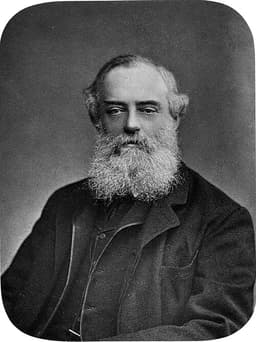
James Brooke
Politician · Modern
54.2Total

Johannes Rau
Politician · Modern
56.4Total
Basic Information
Born
1803
1931
Died
1868
—
Era
Modern
Modern
Nationality
Great Britain
Germany
Occupation
Politician
Politician
Civilization
Western
Western
Score Comparison
Military (10%)
38.3
37.9
Political (20%)
62.7
53.8
Influence (20%)
56.4
57.2
Legacy (20%)
49.2
49.2
Leadership (15%)
68.0
79.8
Strategy (15%)
43.3
60.0
TOTAL
54.2
56.4
James Brooke — Complete Timeline
1841 AD
Appointed Rajah of SarawakPolitical Action◆ Major
Brooke was granted the title of Rajah of Sarawak by the Sultan of Brunei on September 24, 1841, after helping suppress a rebellion. He established the White Rajah dynasty, ruling Sarawak as an independent kingdom under British protection.
ColonialismBorneoDynasty
Impact: regional
1843 AD
Suppression of Piracy in BorneoWar◆ Major
Brooke led naval campaigns against Dayak and Malay pirates along the Borneo coast from 1843 to 1849. With British naval support, he destroyed pirate strongholds, securing trade routes and consolidating his control over Sarawak.
PiracyBorneoNaval Campaign
Impact: regional
1846 AD
Cession of Labuan to BritainPolitical Action
Brooke negotiated the cession of the island of Labuan to the British Crown in 1846. The island became a British colony and coaling station, strengthening British naval presence in the South China Sea and enhancing Brooke's position.
ColonialismLabuanTreaty
Impact: regional
1847 AD
Appointed Governor of Labuan and Consul-GeneralPolitical Action
Brooke was appointed Governor of Labuan and British Consul-General for Borneo in 1847. This formalized his role as a British official while he remained Rajah of Sarawak, creating a dual authority that lasted until his death.
ColonialismBorneoAppointment
Impact: regional
Johannes Rau — Complete Timeline
1999 AD
Elected President of GermanyPolitical Action◆ Major
Johannes Rau was elected as the eighth President of Germany by the Federal Assembly. He served from 1999 to 2004, representing the Social Democratic Party (SPD). His presidency focused on social justice and reconciliation.
PresidencySPDGerman Politics
Impact: nationalconstructive
2000 AD
Delivered 'Berlin Address' on IntegrationCultural
President Rau delivered a major speech in Berlin calling for improved integration of immigrants into German society. He emphasized the need for mutual respect and cultural exchange, influencing national discourse on immigration policy.
IntegrationImmigrationSpeech
Impact: nationalconstructive
2005 AD
Addressed the Bundestag on 60th Anniversary of End of WWIICultural
As former president, Rau addressed the German Bundestag on the 60th anniversary of the end of World War II. He called for remembrance and reconciliation, acknowledging Germany's historical responsibility.
World War IIRemembranceReconciliation
Impact: nationalconstructive
This comparison has not been analyzed yet.
One-time AI generation (~1 minute). Scores and timeline are already available below.
Rankings
🥇
Johannes RauLeader
Mil: 37.9Pol: 53.8Inf: 57.2
56.4
🥈
James Brooke
Mil: 38.3Pol: 62.7Inf: 56.4
54.2
+2.2 behind
How This Comparison Works
Algorithm
Each figure is scored on 6 dimensions (0—100 scale) based on structured historical data: Military (10%), Political (20%), Influence (20%), Legacy (20%), Leadership (15%), Strategy (15%). The weighted total produces the final ranking.
Data Sources
Scores are computed from structured sub-indicators in the database. Scale factors adjust for era (Ancient ×0.85, Modern ×1.0) and civilization size (Eastern ×1.05, Other ×0.80) to account for differences in population and military scale.
Maximum 3 Figures
Comparisons are limited to 2—3 figures to ensure readability and statistical meaningfulness.
Error Margins
±5 points per dimension — Sub-scores are derived from historical records with inherent uncertainty. Two figures within 5 points on a dimension should be considered roughly equivalent in that area.
Total Score Accuracy
±3 points overall — The weighted combination of 6 dimensions produces a total score with approximately ±3 points of uncertainty. Differences of less than 3 points are not statistically significant— the figures are effectively tied.
Known Limitations
- Historical records are incomplete and uneven across civilizations
- Figures from oral-tradition societies may be underrepresented
- Occupation labels can misclassify multi-role figures
- Scores measure capability and impact, not moral character
- Quantitative scoring is a comparison tool, not absolute truth
Capability Radar
Military (10%) — Battles & Warfare
Battles
35
49
Win Rate
40
47
Expansion
55
55
Political (20%) — Governance & Reform
Reform
55
55
Diplomacy
65
65
Economy
50
55
Influence (20%) — Cultural & Global Reach
Cultural
40
40
Global
40
35
Legacy (20%) — Historical Impact
Historical
50
45
Longevity
45
40
Leadership (15%) — Power & Stability
Tenure
60
60
Stability
45
70
Strategy (15%) — Tactics & Innovation
Strategy
50
57
Tactics
45
62
Reform
30
61
Similar Comparisons
Comments & Discussion
No comments yet. Be the first to share your thoughts!