Loading...
James Brooke vs Napoleon Bonaparte
Napoleon Bonaparte leads by 16.7 pts · 2 figures compared
…
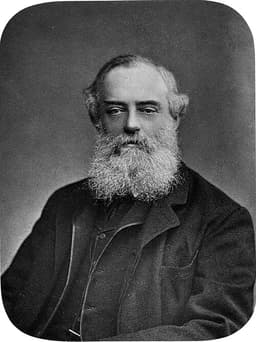
James Brooke
Politician · Modern
54.2Total

Napoleon Bonaparte
General · Modern
70.9Total
Basic Information
Born
1803
1769
Died
1868
1821
Era
Modern
Modern
Nationality
Great Britain
France
Occupation
Politician
General
Civilization
Western
Western
Score Comparison
Military (10%)
38.3
94.0
Political (20%)
62.7
72.0
Influence (20%)
56.4
40.0
Legacy (20%)
49.2
80.0
Leadership (15%)
68.0
78.0
Strategy (15%)
43.3
90.0
TOTAL
54.2
70.9
James Brooke — Complete Timeline
1841 AD
Appointed Rajah of SarawakPolitical Action◆ Major
Brooke was granted the title of Rajah of Sarawak by the Sultan of Brunei on September 24, 1841, after helping suppress a rebellion. He established the White Rajah dynasty, ruling Sarawak as an independent kingdom under British protection.
ColonialismBorneoDynasty
Impact: regional
1843 AD
Suppression of Piracy in BorneoWar◆ Major
Brooke led naval campaigns against Dayak and Malay pirates along the Borneo coast from 1843 to 1849. With British naval support, he destroyed pirate strongholds, securing trade routes and consolidating his control over Sarawak.
PiracyBorneoNaval Campaign
Impact: regional
1846 AD
Cession of Labuan to BritainPolitical Action
Brooke negotiated the cession of the island of Labuan to the British Crown in 1846. The island became a British colony and coaling station, strengthening British naval presence in the South China Sea and enhancing Brooke's position.
ColonialismLabuanTreaty
Impact: regional
1847 AD
Appointed Governor of Labuan and Consul-GeneralPolitical Action
Brooke was appointed Governor of Labuan and British Consul-General for Borneo in 1847. This formalized his role as a British official while he remained Rajah of Sarawak, creating a dual authority that lasted until his death.
ColonialismBorneoAppointment
Impact: regional
Napoleon Bonaparte — Complete Timeline
1799 AD
Coup of 18 BrumaireOther◆ Major
Napoleon Bonaparte, with support from his brother Lucien and key political figures, overthrew the Directory in a bloodless coup. He established the Consulate with himself as First Consul, effectively becoming the ruler of France. This event ended the French Revolution's most unstable period.
French RevolutionCoupRise to Power
Impact: regional
1804 AD
Promulgation of the Napoleonic CodeOther◆ Major
Napoleon enacted the Civil Code of the French, known as the Napoleonic Code, a comprehensive set of laws that replaced the fragmented feudal legal systems. The code established legal equality, protected property rights, and secularized law. It became the basis for legal systems in many European and world countries.
Legal ReformNapoleonic CodeCivil Law
Impact: globalconstructive
1805 AD
Battle of AusterlitzWar◆ Major
Napoleon's Grande Arm
Napoleonic WarsBattleDecisive Victory
Impact: global
1812 AD
Invasion of RussiaWar◆ Major
Napoleon led the Grande Arm
Napoleonic WarsInvasionDisaster
Impact: globaldestructive
1815 AD
Battle of WaterlooWar◆ Major
Napoleon's French army was defeated by the combined forces of the Duke of Wellington's Anglo-Allied army and Gebhard Leberecht von Bl
Napoleonic WarsBattleFinal Defeat
Impact: globaldestructive
Expert Analysis
james-brooke-vs-napoleon-bonaparte
The Emperor and the Rajah
On a June morning in 1815, Napoleon Bonaparte watched his Imperial Guard march toward the ridge of Mont-Saint-Jean, their blue coats a final, desperate gamble for glory. Twenty-six years later, on a September day in 1841, James Brooke accepted a silver kris from the Sultan of Brunei, the blade symbolizing his new title: Rajah of Sarawak. One man sought to remake Europe in his image; the other, to carve a kingdom from the jungles of Borneo. Both were adventurers, both wielded power with audacity, yet their fates could not have diverged more starkly. Why did Napoleon, the military titan with a score of 94 in strategy, end his days a prisoner on a remote Atlantic island, while Brooke, whose military rating languishes at a mere 30.9, died in his bed, his dynasty secure? The answer lies not in their talents, but in the worlds they chose to conquer.
Origins
Napoleon was born in 1769 on Corsica, an island recently annexed by France, into a minor noble family struggling to prove its loyalty. He was a child of the Enlightenment, educated at French military academies where he devoured history and mathematics, and a product of the Revolution, which shattered the old order and opened paths for ambitious men like him. The French Revolution was his forge: it gave him chaos as his raw material and ambition as his hammer. James Brooke, born in 1803 in India to a British judge, was a son of the Empire, not its upheaval. His father served the East India Company, and young James inherited a world of order, where power was a matter of patronage and patience. He was a sickly child, sent to England for schooling, but he left at sixteen, restless and eager. Where Napoleon sought to break the world, Brooke sought to enter it. Their eras shaped their ambitions: Napoleon’s France was a volcano, erupting with new ideas; Brooke’s Britain was a fortress, stable and expanding.
Rise to Power
Napoleon’s ascent was a whirlwind of battlefield triumphs. At twenty-four, he drove the British from Toulon; at twenty-six, he crushed a royalist uprising in Paris with a “whiff of grapeshot”; at twenty-seven, he led a ragged army across the Alps into Italy, winning victory after victory. The Directory, desperate for a hero, gave him command, and he took it all. By 1804, he crowned himself Emperor, his power built on cannon and charisma. His key turning point was the Italian campaign of 1796–97, where he proved that audacity and speed could shatter larger armies.
Brooke’s rise was quieter, slower, and more diplomatic. In 1838, he sailed his private schooner, the *Royalist*, to Borneo, a region of pirate-infested waters and crumbling sultanates. He offered his services to the Sultan of Brunei, who was struggling with a rebellion in Sarawak. Brooke helped suppress the revolt, not with Napoleonic brilliance but with tact, patience, and a few British guns. On September 24, 1841, the Sultan appointed him Rajah of Sarawak. Where Napoleon seized power with a sword, Brooke negotiated it with a handshake. The difference was not just temperament but opportunity: Napoleon’s Europe was a battlefield; Brooke’s Borneo was a chessboard.
Leadership & Governance
Napoleon ruled like a storm. His military genius—rated 93 in strategy—allowed him to conquer most of Europe, from Madrid to Moscow. He reformed France with the Napoleonic Code, a legal system that enshrined merit over birth, and centralized the state with ruthless efficiency. Yet his political score of 75 reflects a fatal flaw: he could not stop fighting. He believed that victory was the only diplomacy, and each conquest bred new enemies. His leadership was brilliant but brittle, inspiring devotion in his soldiers but fear in his rivals.
Brooke governed like a planter. His military score of 30.9 is almost a confession: he was no general. Instead, he ruled through alliances, suppressing piracy along the Borneo coast from 1843 to 1849 with British naval support, not his own genius. His political score of 72.2 reflects his skill in navigating local politics, balancing Malay chiefs, Dayak tribes, and British interests. He built a stable, paternalistic state, expanding his territory not by conquest but by negotiation. His leadership was adaptive and patient, earning him the respect of his subjects, who called him “Rajah Brooke” with a loyalty that lasted generations.
Triumph & Tragedy
Napoleon’s greatest moment was Austerlitz in 1805, where he crushed the Russian and Austrian armies, cementing his empire. His most devastating failure was the invasion of Russia in 1812, where 600,000 men marched east and fewer than 100,000 returned. The tragedy was not just military but psychological: he could not accept limits. His final defeat at Waterloo in 1815, where his own generals hesitated and his Guard broke, was a shattering of the myth that he was invincible.
Brooke’s triumph was the suppression of piracy, which opened Sarawak to trade and peace. His tragedy was the “Borneo scandal” of the 1850s, when British officials accused him of excessive violence against Dayak tribes. He was investigated and cleared, but the ordeal tarnished his reputation. Unlike Napoleon, Brooke’s failures were moral, not existential. He never faced a Waterloo because he never sought to conquer the world—only a small corner of it.
Character & Destiny
Napoleon was a man of insatiable will. “Impossible is a word to be found only in the dictionary of fools,” he once said. His personality was a furnace of ambition, driving him to remake Europe, but also to overreach. He could not delegate, could not compromise, could not rest. His destiny was to rise to the heavens and then fall, because he could not imagine a world where he was not at the center.
Brooke was a man of measured ambition. He wrote, “I have no desire to be a great man, but I wish to be a useful one.” His personality was pragmatic and patient, content to build slowly. He could delegate, negotiate, and accept limits. His destiny was to found a dynasty that lasted a century, precisely because he did not seek to conquer the globe. Character, in the end, shaped history: Napoleon’s pride built an empire that collapsed with him; Brooke’s humility built a kingdom that outlived him.
Legacy
Napoleon left a Europe reshaped by his wars and his laws. The Napoleonic Code influences legal systems from France to Louisiana. His legend is immortal, a symbol of genius and hubris. His legacy score of 78 reflects a mixed verdict: he was a liberator and a tyrant, a reformer and a conqueror.
Brooke left a small kingdom on a distant island, now part of Malaysia. His dynasty ended in 1946, when Sarawak was ceded to Britain, but his memory lives in local folklore and the name of a state. His legacy score of 67.7 is modest, but it is enduring. He is remembered not as a world-shaker, but as a builder of a place.
Conclusion
Napoleon and Brooke both stepped onto the stage of history as adventurers, but they played very different parts. Napoleon’s ambition was to conquer the world; Brooke’s was to rule a village. The difference was not talent—Napoleon was clearly the greater genius—but wisdom. Napoleon knew how to win; Brooke knew how to keep. One burned like a comet, the other glowed like a lantern. And in the end, the lantern outlasted the star. Their stories remind us that greatness is not always measured in scale, but in sustainability. The emperor who could not stop fighting died alone; the rajah who knew when to stop built a home.
Rankings
🥇
Napoleon BonaparteLeader
Mil: 94.0Pol: 72.0Inf: 40.0
70.9
🥈
James Brooke
Mil: 38.3Pol: 62.7Inf: 56.4
54.2
+16.7 behind
How This Comparison Works
Algorithm
Each figure is scored on 6 dimensions (0—100 scale) based on structured historical data: Military (10%), Political (20%), Influence (20%), Legacy (20%), Leadership (15%), Strategy (15%). The weighted total produces the final ranking.
Data Sources
Scores are computed from structured sub-indicators in the database. Scale factors adjust for era (Ancient ×0.85, Modern ×1.0) and civilization size (Eastern ×1.05, Other ×0.80) to account for differences in population and military scale.
Maximum 3 Figures
Comparisons are limited to 2—3 figures to ensure readability and statistical meaningfulness.
Error Margins
±5 points per dimension — Sub-scores are derived from historical records with inherent uncertainty. Two figures within 5 points on a dimension should be considered roughly equivalent in that area.
Total Score Accuracy
±3 points overall — The weighted combination of 6 dimensions produces a total score with approximately ±3 points of uncertainty. Differences of less than 3 points are not statistically significant— the figures are effectively tied.
Known Limitations
- Historical records are incomplete and uneven across civilizations
- Figures from oral-tradition societies may be underrepresented
- Occupation labels can misclassify multi-role figures
- Scores measure capability and impact, not moral character
- Quantitative scoring is a comparison tool, not absolute truth
Capability Radar
Military (10%) — Battles & Warfare
Battles
35
95
Win Rate
40
90
Expansion
55
95
Political (20%) — Governance & Reform
Reform
55
95
Diplomacy
65
80
Economy
50
85
Influence (20%) — Cultural & Global Reach
Cultural
40
85
Global
40
90
Legacy (20%) — Historical Impact
Historical
50
95
Longevity
45
90
Leadership (15%) — Power & Stability
Tenure
60
85
Stability
45
70
Strategy (15%) — Tactics & Innovation
Strategy
50
95
Tactics
45
98
Reform
30
92
Similar Comparisons
Comments & Discussion
No comments yet. Be the first to share your thoughts!