Loading...
James VI and I vs Oscar I
James VI and I leads by 5.6 pts · 2 figures compared
…

James VI and I
Emperor · Modern
55.3Total
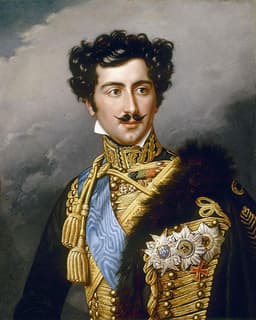
Oscar I
Emperor · Modern
49.7Total
Basic Information
Born
1566
1799
Died
1625
1859
Era
Modern
Modern
Nationality
Scotland
Sweden
Occupation
Emperor
Emperor
Civilization
Western
Western
Score Comparison
Military (10%)
20.0
21.2
Political (20%)
60.0
72.0
Influence (20%)
58.3
51.8
Legacy (20%)
54.0
40.0
Leadership (15%)
72.0
72.0
Strategy (15%)
54.6
30.3
TOTAL
55.3
49.7
James VI and I — Complete Timeline
1567 AD
Coronation as King of ScotsPolitical Action◆ Major
James VI was crowned King of Scots at Stirling Castle at 13 months old, following the abdication of his mother Mary Queen of Scots. The coronation was overseen by regents, and Scotland was governed by a series of regents during his minority.
CoronationRegencyMinority
Impact: national
1599 AD
Basilikon DoronCultural
James VI wrote Basilikon Doron, a treatise on the theory of monarchy and the duties of a king. The work was intended as a guide for his son Henry and outlined James's belief in the divine right of kings, influencing his later rule in England.
WritingPolitical TheoryDivine Right
Impact: national
1603 AD
Union of the CrownsPolitical Action
James VI succeeded Elizabeth I as King of England and Ireland, becoming James I of England. The Union of the Crowns united the kingdoms of Scotland and England under a single monarch, though they remained separate states with their own parliaments.
UnionSuccessionMonarchy
Impact: globalconstructive
1605 AD
Gunpowder PlotPolitical Action◆ Major
James VI and I was the target of the Gunpowder Plot, a Catholic conspiracy to blow up the House of Lords during the State Opening of Parliament. The plot was foiled, and its leader Guy Fawkes was executed, leading to stricter anti-Catholic laws.
PlotAssassination AttemptAnti-Catholic
Impact: nationaldestructive
1609 AD
Plantation of UlsterPolitical Action◆ Major
James VI and I oversaw the Plantation of Ulster, a colonization scheme that settled Protestant Scots and English in northern Ireland. The plantation dispossessed native Irish Catholics and created a lasting Protestant majority in Ulster, contributing to future conflicts.
ColonizationUlsterProtestant
Impact: regionaldestructive
1611 AD
Authorized King James Version of the BibleCultural◆ Major
James VI and I authorized a new translation of the Bible into English, which became known as the King James Version. The translation was completed by 47 scholars and became the standard English Bible for centuries, influencing English literature and religion.
BibleTranslationReligion
Impact: globalconstructive
Oscar I — Complete Timeline
1840 AD
Liberal reforms of the penal codeReform◆ Major
Oscar I oversaw a major reform of the Swedish penal code, abolishing the death penalty for most crimes and reducing the use of corporal punishment. This was part of a broader liberalization of Swedish law, influenced by Enlightenment principles and aimed at modernizing the justice system.
SwedenLawReformPenal Code
Impact: nationalprogressive
Introduction of freedom of the pressReform◆ Major
Oscar I introduced a new press law that significantly expanded freedom of the press in Sweden. This allowed for greater public debate and criticism of the government, marking a shift towards a more open and liberal society, though it was still subject to some restrictions.
SwedenPress FreedomLiberalismReform
Impact: nationalprogressive
1854 AD
First Swedish railway concessionOther◆ Major
Oscar I granted the first concession for the construction of a railway in Sweden, connecting Stockholm to Gothenburg. This initiated the development of Sweden's railway network, which was crucial for economic integration and industrial growth in the following decades.
SwedenRailwayInfrastructureIndustrialization
Impact: nationalconstructive
1858 AD
Repeal of the Conventicle ActReform◆ Major
Oscar I repealed the Conventicle Act, which had prohibited religious gatherings outside the state church. This allowed for greater religious freedom and the establishment of free churches, a significant step towards religious toleration in Sweden.
SwedenReligionFreedomReform
Impact: nationalprogressive
Expert Analysis
Origins
James VI and I was born on June 19, 1566, at Edinburgh Castle, the only son of Mary, Queen of Scots, and Henry Stuart, Lord Darnley. His father was murdered when James was eight months old, and his mother was forced to abdicate when he was just 13 months old. James was crowned King of Scots at Stirling Castle on July 29, 1567. He was educated by tutors such as George Buchanan, who instilled in him a strong humanist and Protestant upbringing. James grew up in a turbulent Scotland, with regents and nobles vying for control.
Oscar I was born on July 4, 1799, in Paris, the son of Charles XIV John (Jean-Baptiste Bernadotte), the Crown Prince of Sweden, and Désirée Clary. Oscar was raised in Sweden and educated at Uppsala University. He was exposed to liberal ideas from his French mother and his tutor, the poet and historian Erik Gustaf Geijer. Unlike James, Oscar grew up in a relatively stable environment, but he was influenced by the Napoleonic Wars and the subsequent Congress of Vienna.
Rise to Power
James VI became King of Scots as an infant, but effective power rested with regents until he assumed personal rule in 1583 at age 17. He gradually consolidated control over the Scottish nobility and church. His major turning point came in 1603 when he succeeded Elizabeth I as King of England, uniting the crowns of Scotland and England in the Union of the Crowns. This was a bloodless succession, but James had to navigate English politics and religious tensions.
Oscar I became Crown Prince at birth and was groomed for kingship. He served as regent during his father's absences and became king upon Charles XIV John's death on March 8, 1844. Oscar's rise to power was smooth, but he faced a parliament with growing liberal demands. He used his position to introduce reforms, balancing conservative and liberal factions.
Leadership & Governance
James VI and I was a strong advocate for the divine right of kings, arguing that monarchs were accountable only to God. He wrote treatises on kingship, such as "Basilikon Doron." His governance style was autocratic but pragmatic. He sought to unify his kingdoms, but his attempts to impose religious conformity in England (e.g., the Hampton Court Conference) and his handling of the Gunpowder Plot showed his belief in strong central authority. His political score is 60.0, reflecting his ability to maintain power but also his conflicts with Parliament.
Oscar I was a liberal reformer who believed in constitutional monarchy. He worked with the Riksdag to pass reforms. His leadership score is 72.0, matching James's. He abolished the death penalty for most crimes, introduced freedom of the press, and repealed the Conventicle Act, allowing religious freedom. He also initiated the first Swedish railway, modernizing infrastructure. His approach was more collaborative than James's, but his reforms were sometimes blocked by conservatives.
Triumph & Tragedy
James VI and I's greatest success was the Union of the Crowns, which created a unified British monarchy and laid the groundwork for the later political union. He also authorized the King James Version of the Bible, a monumental literary and religious work. However, his reign saw the Plantation of Ulster, which sowed long-term conflict in Ireland. He also faced the Gunpowder Plot, a failed attempt on his life that increased anti-Catholic sentiment. His military score is 20.0, reflecting his lack of interest in war.
Oscar I's triumphs include liberal reforms that modernized Sweden. He scored 72.0 in leadership and 72.0 in political. His penal code reform was progressive for its time. He also strengthened Sweden's neutrality. However, his reign was marked by economic stagnation and a failed attempt to introduce a more democratic constitution. His legacy score is 40.0, as his reforms were later overshadowed by more radical changes under his son.
Character & Destiny
James was intellectual and scholarly but also stubborn and prone to favoritism. His belief in divine right led to conflicts with Parliament, setting the stage for the English Civil War. He was cautious in foreign policy, avoiding major wars. His character shaped his fate: his insistence on royal prerogative weakened the monarchy in the long run.
Oscar was pragmatic and open to new ideas, but he lacked the forcefulness to push through more radical reforms. He was a diplomat and a patron of the arts. His moderate approach allowed for gradual change but prevented him from being a transformative figure.
Legacy
James VI and I's legacy is mixed. The Union of the Crowns endured, and the King James Version remains influential. However, his reign exacerbated religious tensions and parliamentary conflicts. His total score is 55.3, ranking him as a moderately successful monarch.
Oscar I's legacy is limited. He is remembered as a reformer, but his changes were incremental. His total score is 49.7, lower than James's. He is not as well-known internationally.
Conclusion
James VI and I had a greater impact on history than Oscar I. His union of Scotland and England shaped the future of the British Isles, and his Bible translation influenced English literature. Oscar I's reforms were important for Sweden but did not change the course of world history. With a score gap of 5.6 points, James's influence and legacy surpass Oscar's, despite his lower military score. James's actions had lasting consequences, while Oscar's were largely domestic and soon superseded.
Rankings
🥇
James VI and ILeader
Mil: 20.0Pol: 60.0Inf: 58.3
55.3
🥈
Oscar I
Mil: 21.2Pol: 72.0Inf: 51.8
49.7
+5.6 behind
How This Comparison Works
Algorithm
Each figure is scored on 6 dimensions (0—100 scale) based on structured historical data: Military (10%), Political (20%), Influence (20%), Legacy (20%), Leadership (15%), Strategy (15%). The weighted total produces the final ranking.
Data Sources
Scores are computed from structured sub-indicators in the database. Scale factors adjust for era (Ancient ×0.85, Modern ×1.0) and civilization size (Eastern ×1.05, Other ×0.80) to account for differences in population and military scale.
Maximum 3 Figures
Comparisons are limited to 2—3 figures to ensure readability and statistical meaningfulness.
Error Margins
±5 points per dimension — Sub-scores are derived from historical records with inherent uncertainty. Two figures within 5 points on a dimension should be considered roughly equivalent in that area.
Total Score Accuracy
±3 points overall — The weighted combination of 6 dimensions produces a total score with approximately ±3 points of uncertainty. Differences of less than 3 points are not statistically significant— the figures are effectively tied.
Known Limitations
- Historical records are incomplete and uneven across civilizations
- Figures from oral-tradition societies may be underrepresented
- Occupation labels can misclassify multi-role figures
- Scores measure capability and impact, not moral character
- Quantitative scoring is a comparison tool, not absolute truth
Capability Radar
Military (10%) — Battles & Warfare
Battles
5
10
Win Rate
5
10
Expansion
5
10
Political (20%) — Governance & Reform
Reform
60
70
Diplomacy
65
60
Economy
55
60
Influence (20%) — Cultural & Global Reach
Cultural
55
30
Global
55
20
Legacy (20%) — Historical Impact
Historical
60
30
Longevity
55
20
Leadership (15%) — Power & Stability
Tenure
70
60
Stability
50
65
Strategy (15%) — Tactics & Innovation
Strategy
5
10
Tactics
5
10
Reform
10
20
Similar Comparisons
Comments & Discussion
No comments yet. Be the first to share your thoughts!