Loading...
Javier Perez de Cuellar vs Thabo Mbeki
Thabo Mbeki leads by 2.9 pts · 2 figures compared
…
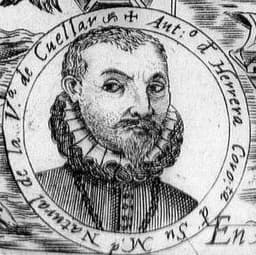
Javier Perez de Cuellar
Politician · Modern
54.0Total
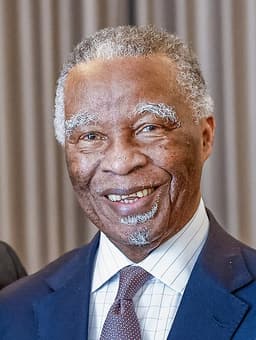
Thabo Mbeki
Politician · Modern
56.9Total
Basic Information
Born
1920
1942
Died
—
—
Era
Modern
Modern
Nationality
Peru
South Africa
Occupation
Politician
Politician
Civilization
Western
Other
Score Comparison
Military (10%)
48.5
40.8
Political (20%)
45.0
65.0
Influence (20%)
59.0
56.7
Legacy (20%)
49.2
56.0
Leadership (15%)
72.0
72.0
Strategy (15%)
45.5
40.5
TOTAL
54.0
56.9
Javier Perez de Cuellar — Complete Timeline
1982 AD
Elected UN Secretary-GeneralPolitical Action◆ Major
Perez de Cuellar was elected as the fifth Secretary-General of the United Nations, succeeding Kurt Waldheim. He served two terms from 1982 to 1991, becoming the first Latin American to hold the office.
UNDiplomacyInternational Relations
Impact: globalconstructive
1988 AD
Negotiated ceasefire in Iran-Iraq WarPolitical Action◆ Major
Perez de Cuellar mediated the ceasefire that ended the Iran-Iraq War. His diplomatic efforts led to UN Security Council Resolution 598, which both sides accepted, halting eight years of conflict.
PeacekeepingIran-Iraq WarDiplomacy
Impact: globalconstructive
1990 AD
Oversaw UN involvement in El Salvador peace processPolitical Action◆ Major
Perez de Cuellar initiated UN-mediated negotiations to end the Salvadoran Civil War. His efforts led to the Chapultepec Peace Accords in 1992, ending a 12-year conflict that killed over 75,000 people.
PeacekeepingEl SalvadorCivil War
Impact: regionalconstructive
Failed to prevent Gulf WarPolitical Action◆ Major
Perez de Cuellar attempted to negotiate Iraq's withdrawal from Kuwait after the invasion in August 1990. His diplomatic efforts failed, leading to the Gulf War in January 1991 under UN authorization.
Gulf WarDiplomacyIraq
Impact: globaltragic
Thabo Mbeki — Complete Timeline
1999 AD
Election as PresidentPolitical Action
Thabo Mbeki was elected President of South Africa in the country's second fully democratic elections, succeeding Nelson Mandela. He represented the ANC and promised to continue Mandela's legacy of reconciliation while focusing on economic growth and transformation.
PresidencyANCSuccession
Impact: nationalprogressive
Launch of the African RenaissanceCultural◆ Major
Mbeki championed the concept of an 'African Renaissance', promoting economic integration, democracy, and conflict resolution across the continent. This led to the establishment of the New Partnership for Africa's Development (NEPAD) and the African Peer Review Mechanism.
African RenaissanceNEPADPan-Africanism
Impact: regionalprogressive
2000 AD
HIV/AIDS DenialismPolitical Action◆ Major
Mbeki questioned the link between HIV and AIDS, and his government delayed the rollout of antiretroviral drugs. This policy, influenced by dissident scientists, led to hundreds of thousands of preventable deaths and drew widespread international condemnation.
HIV/AIDSDenialismPublic Health Crisis
Impact: nationaltragic
Zimbabwe InterventionPolitical Action◆ Major
Mbeki pursued a policy of 'quiet diplomacy' towards Robert Mugabe's Zimbabwe, refusing to condemn human rights abuses and land seizures. This approach was criticized as ineffective and complicit, failing to prevent Zimbabwe's economic collapse and political crisis.
ZimbabweQuiet DiplomacyMugabe
Impact: regional
2008 AD
Recall from PresidencyPolitical Action◆ Major
Mbeki was recalled by the ANC's National Executive Committee, effectively forcing his resignation as President. This followed a power struggle with Jacob Zuma, who had defeated Mbeki for the ANC presidency in 2007. Mbeki's departure marked a shift in ANC leadership.
RecallANC Power StruggleZuma
Impact: national
Expert Analysis
Origins
Javier Perez de Cuellar was born on January 19, 1920, in Lima, Peru, into a middle-class family of Spanish descent. He studied law at the Pontifical Catholic University of Peru and later joined Peru's foreign service in 1944. His early career included postings in Paris, London, and Brazil. Thabo Mbeki was born on June 18, 1942, in Idutywa, South Africa, into a politically active family; his father, Govan Mbeki, was a prominent anti-apartheid activist. Mbeki went into exile in 1962, studying economics at the University of Sussex and later at the Lenin Institute in Moscow. Both men were shaped by their formative experiences: Perez de Cuellar by the diplomacy of the mid-20th century, and Mbeki by the struggle against apartheid.
Rise to Power
Perez de Cuellar rose through the Peruvian diplomatic ranks, serving as ambassador to Switzerland, the Soviet Union, and Poland. In 1981, he was elected UN Secretary-General, succeeding Kurt Waldheim. His ascent was aided by his reputation as a skilled mediator. Thabo Mbeki rose within the African National Congress (ANC) in exile, becoming political secretary to Oliver Tambo and later ANC director of information. He played a key role in negotiations to end apartheid, and after the 1994 elections, he became Deputy President under Nelson Mandela. Mbeki was elected President in 1999, succeeding Mandela.
Leadership & Governance
Perez de Cuellar's leadership at the UN was characterized by quiet, behind-the-scenes diplomacy. He prioritized conflict resolution and consensus-building, as seen in his mediation of the Iran-Iraq War ceasefire (UN Security Council Resolution 598, 1987). He also initiated UN involvement in the El Salvador peace process, leading to the Chapultepec Accords (1992). However, he was criticized for failing to prevent the Gulf War (1990-1991) after Iraq's invasion of Kuwait. Mbeki's governance style was more ideological, emphasizing an 'African Renaissance' and economic growth. His government pursued cautious economic policies but faced criticism for his HIV/AIDS denialism, which delayed antiretroviral drug rollout and contributed to an estimated 330,000 deaths. Mbeki also employed 'quiet diplomacy' toward Zimbabwe's Robert Mugabe, avoiding condemnation of human rights abuses.
Triumph & Tragedy
Perez de Cuellar's greatest triumph was the Iran-Iraq War ceasefire, a rare UN success in the 1980s. He also oversaw the transition to peace in El Salvador. His greatest failure was the inability to prevent the Gulf War; his diplomatic efforts to secure Iraqi withdrawal failed, leading to a US-led coalition invasion. Mbeki's triumphs include overseeing South Africa's transition from Mandela's presidency, maintaining economic stability, and championing the African Renaissance. His tragedies are dominated by his HIV/AIDS denialism, which severely damaged public health, and his failure to address Zimbabwe's crisis, which harmed his legacy. He was recalled by the ANC in 2008, effectively ending his presidency.
Character & Destiny
Perez de Cuellar was a reserved, meticulous diplomat, often described as patient and persistent. His character suited the UN's consensus-driven environment, but his cautious approach sometimes led to inaction in crises like the Gulf War. Mbeki was intellectually confident and ideological, but his stubbornness on HIV/AIDS and Zimbabwe alienated allies. Historical assessments note that Mbeki's belief in dissident HIV science reflected a broader distrust of Western institutions. Perez de Cuellar scored 45.0 in political and 72.0 in leadership; Mbeki scored 65.0 in political and 72.0 in leadership. Their leadership scores are identical, but their political scores reflect Mbeki's more active domestic role.
Legacy
Perez de Cuellar's legacy is tied to UN peacekeeping and diplomacy. He helped restore credibility to the UN after the Cold War stalemate. His efforts in Iran-Iraq and El Salvador set precedents for UN mediation. However, his tenure is overshadowed by the Gulf War failure. Mbeki's legacy is mixed: he advanced African economic integration and democratic norms through the African Union's NEPAD, but his HIV/AIDS denialism and Zimbabwe policy tarnish his record. His total score is 56.9 compared to Perez de Cuellar's 54.0, reflecting slightly greater overall impact. However, his influence is more controversial.
Conclusion
Thabo Mbeki had a greater impact on global affairs, but his legacy is deeply flawed. While Perez de Cuellar's diplomatic achievements were significant within the UN framework, Mbeki's role as a post-apartheid leader and his influence on African policy had broader reach. However, Mbeki's HIV/AIDS denialism and quiet diplomacy in Zimbabwe undermine his positive contributions. Perez de Cuellar, with a score of 54.0, was a competent diplomat but lacked the transformative impact of a national leader. Mbeki, scoring 56.9, changed South Africa and Africa, but his failures prevent him from being considered a great leader. Ultimately, Mbeki's higher political score (65.0 vs 45.0) and influence (56.7 vs 59.0) give him the edge, but his legacy is cautionary.
Rankings
🥇
Thabo MbekiLeader
Mil: 40.8Pol: 65.0Inf: 56.7
56.9
🥈
Javier Perez de Cuellar
Mil: 48.5Pol: 45.0Inf: 59.0
54.0
+2.9 behind
How This Comparison Works
Algorithm
Each figure is scored on 6 dimensions (0—100 scale) based on structured historical data: Military (10%), Political (20%), Influence (20%), Legacy (20%), Leadership (15%), Strategy (15%). The weighted total produces the final ranking.
Data Sources
Scores are computed from structured sub-indicators in the database. Scale factors adjust for era (Ancient ×0.85, Modern ×1.0) and civilization size (Eastern ×1.05, Other ×0.80) to account for differences in population and military scale.
Maximum 3 Figures
Comparisons are limited to 2—3 figures to ensure readability and statistical meaningfulness.
Error Margins
±5 points per dimension — Sub-scores are derived from historical records with inherent uncertainty. Two figures within 5 points on a dimension should be considered roughly equivalent in that area.
Total Score Accuracy
±3 points overall — The weighted combination of 6 dimensions produces a total score with approximately ±3 points of uncertainty. Differences of less than 3 points are not statistically significant— the figures are effectively tied.
Known Limitations
- Historical records are incomplete and uneven across civilizations
- Figures from oral-tradition societies may be underrepresented
- Occupation labels can misclassify multi-role figures
- Scores measure capability and impact, not moral character
- Quantitative scoring is a comparison tool, not absolute truth
Capability Radar
Military (10%) — Battles & Warfare
Battles
31
23
Win Rate
33
26
Expansion
35
25
Political (20%) — Governance & Reform
Reform
55
70
Diplomacy
85
75
Economy
40
60
Influence (20%) — Cultural & Global Reach
Cultural
30
55
Global
65
60
Legacy (20%) — Historical Impact
Historical
55
60
Longevity
40
50
Leadership (15%) — Power & Stability
Tenure
60
65
Stability
65
55
Strategy (15%) — Tactics & Innovation
Strategy
40
31
Tactics
43
33
Reform
46
39
Similar Comparisons
Comments & Discussion
No comments yet. Be the first to share your thoughts!