Loading...
This comparison has not been analyzed yet.
One-time AI generation (~1 minute). Scores and timeline are already available below.
Jayachamarajendra Wadiyar vs King Heonjong of Joseon
Jayachamarajendra Wadiyar leads by 13.9 pts · 2 figures compared
…
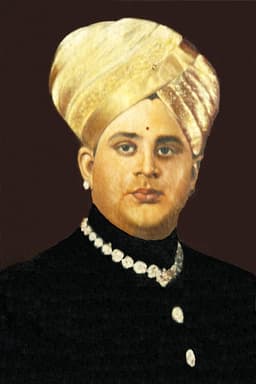
Jayachamarajendra Wadiyar
Emperor · Modern
51.1Total

King Heonjong of Joseon
Emperor · Modern
37.2Total
Basic Information
Born
1919
1827
Died
1974
1849
Era
Modern
Modern
Nationality
India
Korea
Occupation
Emperor
Emperor
Civilization
Indian
Eastern
Score Comparison
Military (10%)
51.7
17.8
Political (20%)
45.1
32.1
Influence (20%)
53.3
45.5
Legacy (20%)
40.0
33.3
Leadership (15%)
65.7
33.6
Strategy (15%)
60.0
59.0
TOTAL
51.1
37.2
Jayachamarajendra Wadiyar — Complete Timeline
1940 AD
Patronized Carnatic Music and DanceCultural◆ Major
Jayachamarajendra was a noted patron of Carnatic music and dance. He supported musicians and dancers, and himself composed several kritis (musical compositions) under the pen name 'Sri Vidya'. His patronage helped preserve and promote South Indian classical arts.
MusicPatronageCarnatic
Impact: regionalconstructive
1947 AD
Acceded to the Dominion of IndiaPolitical Action
Jayachamarajendra Wadiyar signed the Instrument of Accession, merging Mysore with the Dominion of India. This ended the princely state's sovereignty and integrated it into the Indian Union, a key step in India's unification.
Indian IndependenceAccessionPrincely State
Impact: national
1950 AD
Published Philosophical Works on Advaita VedantaCultural
Jayachamarajendra wrote several books on Advaita Vedanta philosophy, including 'The Quest for Truth' and 'The Philosophy of the Upanishads'. His works were recognized by scholars and contributed to Indian philosophical literature.
PhilosophyLiteratureAdvaita Vedanta
Impact: nationalconstructive
1956 AD
Served as Governor of Mysore StatePolitical Action
After the reorganization of states, Jayachamarajendra served as the Governor of Mysore State (later Karnataka) from 1956 to 1964. He performed ceremonial duties and represented the state at the national level.
GovernorPost-IndependenceMysore
Impact: regional
King Heonjong of Joseon — Complete Timeline
1830 AD
Reign during Factional StrifePolitical Action
Heonjong's reign was marked by ongoing factional conflicts between the Andong Kim clan and other noble families. These struggles hindered effective governance and contributed to the decline of royal authority, as the king was often a figurehead.
FactionalismPolitical InstabilityJoseon Dynasty
Impact: nationaldestructive
1849 AD
Death without HeirPolitical Action◆ Major
King Heonjong died at age 21 without a male heir, ending the direct male line of King Yeongjo. His death triggered a succession crisis, leading to the selection of a distant relative, Prince Gangneung (later King Cheoljong), as the new king.
Succession CrisisRoyal DeathJoseon Dynasty
Impact: nationaltragic
This comparison has not been analyzed yet.
One-time AI generation (~1 minute). Scores and timeline are already available below.
Rankings
🥇
Jayachamarajendra WadiyarLeader
Mil: 51.7Pol: 45.1Inf: 53.3
51.1
🥈
King Heonjong of Joseon
Mil: 17.8Pol: 32.1Inf: 45.5
37.2
+13.9 behind
How This Comparison Works
Algorithm
Each figure is scored on 6 dimensions (0—100 scale) based on structured historical data: Military (10%), Political (20%), Influence (20%), Legacy (20%), Leadership (15%), Strategy (15%). The weighted total produces the final ranking.
Data Sources
Scores are computed from structured sub-indicators in the database. Scale factors adjust for era (Ancient ×0.85, Modern ×1.0) and civilization size (Eastern ×1.05, Other ×0.80) to account for differences in population and military scale.
Maximum 3 Figures
Comparisons are limited to 2—3 figures to ensure readability and statistical meaningfulness.
Error Margins
±5 points per dimension — Sub-scores are derived from historical records with inherent uncertainty. Two figures within 5 points on a dimension should be considered roughly equivalent in that area.
Total Score Accuracy
±3 points overall — The weighted combination of 6 dimensions produces a total score with approximately ±3 points of uncertainty. Differences of less than 3 points are not statistically significant— the figures are effectively tied.
Known Limitations
- Historical records are incomplete and uneven across civilizations
- Figures from oral-tradition societies may be underrepresented
- Occupation labels can misclassify multi-role figures
- Scores measure capability and impact, not moral character
- Quantitative scoring is a comparison tool, not absolute truth
Capability Radar
Military (10%) — Battles & Warfare
Battles
28
38
Win Rate
30
43
Expansion
35
46
Political (20%) — Governance & Reform
Reform
35
5
Diplomacy
30
5
Economy
30
5
Influence (20%) — Cultural & Global Reach
Cultural
45
5
Global
15
5
Legacy (20%) — Historical Impact
Historical
30
5
Longevity
20
5
Leadership (15%) — Power & Stability
Tenure
40
5
Stability
25
5
Strategy (15%) — Tactics & Innovation
Strategy
36
49
Tactics
41
51
Reform
45
56
Similar Comparisons
Comments & Discussion
No comments yet. Be the first to share your thoughts!