Loading...
Jayaji Rao Scindia vs Louis XV
Louis XV leads by 3.9 pts · 2 figures compared
…

Jayaji Rao Scindia
Emperor · Modern
44.3Total
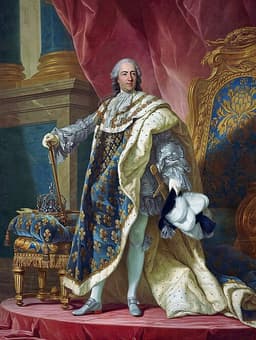
Louis XV
Emperor · Modern
48.2Total
Basic Information
Born
1834
1710
Died
1886
1774
Era
Modern
Modern
Nationality
India
France
Occupation
Emperor
Emperor
Civilization
Indian
Western
Score Comparison
Military (10%)
25.9
55.0
Political (20%)
39.4
39.4
Influence (20%)
50.2
54.9
Legacy (20%)
40.0
42.5
Leadership (15%)
64.0
53.2
Strategy (15%)
36.8
45.0
TOTAL
44.3
48.2
Jayaji Rao Scindia — Complete Timeline
1857 AD
Loyalty to British during the Indian Rebellion of 1857War◆ Major
Jayaji Rao Scindia remained loyal to the British East India Company during the Indian Rebellion of 1857. He provided military support and refused to join the rebel forces, which helped the British maintain control over central India.
Indian RebellionBritish LoyaltyGwalior
Impact: regional
1860 AD
Expansion of Gwalior StateWar◆ Major
Jayaji Rao Scindia expanded the Gwalior state through military campaigns and diplomatic negotiations. He annexed several smaller princely states and territories, increasing the size and influence of Gwalior under British suzerainty.
Territorial ExpansionGwaliorScindia
Impact: regional
1874 AD
Construction of Jai Vilas PalaceCultural◆ Major
Jayaji Rao Scindia commissioned the construction of the Jai Vilas Palace in Gwalior, a grand European-style palace. The palace featured opulent interiors, including a massive crystal chandelier and a silver train that served as a dinner service.
ArchitecturePalaceGwalior
Impact: regionalconstructive
Louis XV — Complete Timeline
1740 AD
War of the Austrian SuccessionWar◆ Major
Louis XV involved France in the War of the Austrian Succession, supporting Prussia against Austria. French forces achieved victories at Fontenoy (1745) but failed to secure lasting gains. The war drained French finances and ended with the inconclusive Treaty of Aix-la-Chapelle.
WarEuropean ConflictDynastic Struggle
Impact: global
1748 AD
Treaty of Aix-la-Chapelle (1748)Political Action◆ Major
Louis XV signed the Treaty of Aix-la-Chapelle, ending the War of the Austrian Succession. France gained little from the war despite military successes, returning conquered territories including the Austrian Netherlands. The treaty was seen as a diplomatic failure and contributed to the decline of royal prestige.
TreatyWar of the Austrian SuccessionDiplomacy
Impact: global
1756 AD
Seven Years' War (French and Indian War)War
Louis XV led France into the Seven Years' War against Great Britain and Prussia. The war resulted in France losing most of its North American colonies (New France) and its influence in India. The Treaty of Paris (1763) confirmed these losses, severely weakening French colonial power.
Colonial WarLoss of TerritorySeven Years' War
Impact: globaldestructive
1771 AD
Suppression of the ParlementsPolitical Action◆ Major
Louis XV, advised by Chancellor Maupeou, abolished the Parlements (high courts) that had opposed royal tax reforms. This authoritarian move centralized power but alienated the nobility and legal classes, creating long-term opposition to the monarchy.
Judicial ReformAbsolutismParlements
Impact: nationaldestructive
Expert Analysis
Origins
Jayaji Rao Scindia (born 1835) was the Maharaja of Gwalior, a princely state in central India. He succeeded his father at age 8 and was raised under British regency, receiving a Western education. His early life was shaped by the need to maintain his throne through alliance with the British East India Company.
Louis XV (born 1710) was the great-grandson of Louis XIV, inheriting the French throne at age 5. His regency was marked by the decline of royal authority and the rise of the aristocracy. He was educated by tutors and became known for his indecisiveness and reliance on favorites.
Rise to Power
Jayaji Rao Scindia ascended as a minor under British supervision. His major turning point came in 1857 when the Indian Rebellion broke out. While many Indian rulers joined the revolt, Scindia remained loyal to the British, providing troops and refusing to join the rebels. This cemented his position as a favored prince under British paramountcy.
Louis XV's rise was automatic through heredity. He came of age in 1723 and initially was popular, known as "the Well-Beloved." However, his reliance on mistresses like Madame de Pompadour and his inability to enforce reforms gradually eroded his popularity.
Leadership & Governance
Jayaji Rao Scindia's leadership was defined by cooperation with the British. He modernized his state's administration, built roads and railways, and commissioned the Jai Vilas Palace (1860s), a symbol of his wealth and European tastes. His governance was autocratic but stable, with a military score of 25.9 reflecting his limited independent action.
Louis XV's governance was marked by centralization and resistance. He attempted to reform the tax system and suppress the Parlements (high courts) in 1771, but faced opposition from nobles. His strategy score of 45.0 and leadership score of 53.2 indicate a ruler who failed to assert control. The Seven Years' War (1756-1763) cost France its North American colonies, scoring him 55.0 in military.
Triumph & Tragedy
Jayaji Rao Scindia's greatest success was his survival and expansion of Gwalior state. He annexed smaller states and increased his territory, with an influence score of 50.2. His tragedy was his subservience to the British; he never achieved true sovereignty, and his legacy is tied to colonial rule.
Louis XV's triumphs include the early victories in the War of the Austrian Succession (Battle of Fontenoy, 1745) and the acquisition of Lorraine. His tragedies include the loss of New France, the Diamond Necklace Affair (1785) that damaged the monarchy's reputation, and his failure to address fiscal problems, leading to the conditions for the French Revolution. His total score of 48.2 reflects a reign of missed potential.
Character & Destiny
Jayaji Rao Scindia was pragmatic and cautious, prioritizing stability over independence. His loyalty to the British ensured his dynasty's survival but limited his historical stature. His leadership score of 64.0 suggests effective management within constraints.
Louis XV was intelligent but lazy, more interested in hunting and mistresses than governance. His character led to a decline in royal prestige. His political score of 39.4 matches Scindia's, but his inability to lead France through crises sealed his fate as a weak king.
Legacy
Jayaji Rao Scindia is remembered as a loyal British ally and a modernizer of Gwalior. His palace remains a tourist attraction, but his legacy is overshadowed by the larger independence movement. His influence score of 50.2 reflects his regional impact.
Louis XV's legacy is negative: he is often blamed for the monarchy's decline. The loss of colonies and fiscal mismanagement set the stage for the Revolution. Yet, his patronage of arts (e.g., Rococo style) and the expansion of France's borders in Europe are noted. His legacy score of 42.5 is slightly above Scindia's 40.0.
Conclusion
Louis XV had a greater impact on world history due to France's global role and the consequences of his failures. His reign set the stage for the French Revolution, which reshaped Europe. Jayaji Rao Scindia, while successful regionally, operated within the British imperial system. Louis XV's total score (48.2) edges Scindia's (44.3), but the gap is small. However, in terms of historical significance, Louis XV's reign had far-reaching effects, making him the more influential figure.
Rankings
🥇
Louis XVLeader
Mil: 55.0Pol: 39.4Inf: 54.9
48.2
🥈
Jayaji Rao Scindia
Mil: 25.9Pol: 39.4Inf: 50.2
44.3
+3.9 behind
How This Comparison Works
Algorithm
Each figure is scored on 6 dimensions (0—100 scale) based on structured historical data: Military (10%), Political (20%), Influence (20%), Legacy (20%), Leadership (15%), Strategy (15%). The weighted total produces the final ranking.
Data Sources
Scores are computed from structured sub-indicators in the database. Scale factors adjust for era (Ancient ×0.85, Modern ×1.0) and civilization size (Eastern ×1.05, Other ×0.80) to account for differences in population and military scale.
Maximum 3 Figures
Comparisons are limited to 2—3 figures to ensure readability and statistical meaningfulness.
Error Margins
±5 points per dimension — Sub-scores are derived from historical records with inherent uncertainty. Two figures within 5 points on a dimension should be considered roughly equivalent in that area.
Total Score Accuracy
±3 points overall — The weighted combination of 6 dimensions produces a total score with approximately ±3 points of uncertainty. Differences of less than 3 points are not statistically significant— the figures are effectively tied.
Known Limitations
- Historical records are incomplete and uneven across civilizations
- Figures from oral-tradition societies may be underrepresented
- Occupation labels can misclassify multi-role figures
- Scores measure capability and impact, not moral character
- Quantitative scoring is a comparison tool, not absolute truth
Capability Radar
Military (10%) — Battles & Warfare
Battles
15
45
Win Rate
20
40
Expansion
5
20
Political (20%) — Governance & Reform
Reform
20
20
Diplomacy
30
30
Economy
25
25
Influence (20%) — Cultural & Global Reach
Cultural
20
40
Global
10
30
Legacy (20%) — Historical Impact
Historical
25
35
Longevity
15
30
Leadership (15%) — Power & Stability
Tenure
40
80
Stability
35
20
Strategy (15%) — Tactics & Innovation
Strategy
15
30
Tactics
20
35
Reform
10
25
Similar Comparisons
Comments & Discussion
No comments yet. Be the first to share your thoughts!