Loading...
Jean-Jacques Rousseau vs Karl Marx
Karl Marx leads by 7.4 pts · 2 figures compared
…
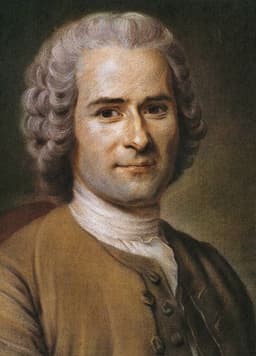
Jean-Jacques Rousseau
Philosopher · Modern
43.5Total

Karl Marx
Philosopher · Modern
50.9Total
Basic Information
Born
1712
1818
Died
1778
1883
Era
Modern
Modern
Nationality
France
Germany
Occupation
Philosopher
Philosopher
Civilization
Western
Western
Score Comparison
Military (10%)
9.1
8.9
Political (20%)
33.8
32.2
Influence (20%)
65.0
75.0
Legacy (20%)
40.0
70.0
Leadership (15%)
45.4
30.0
Strategy (15%)
44.4
44.4
TOTAL
43.5
50.9
Jean-Jacques Rousseau — Complete Timeline
1755 AD
Publication of Discourse on the Origin and Basis of Inequality Among MenCultural◆ Major
Rousseau argued that human inequality originated with the establishment of private property and civil society, corrupting natural human goodness. This work challenged Enlightenment optimism about progress and laid the groundwork for Romanticism and critiques of modern civilization.
InequalityPhilosophyRomanticism
Impact: globalconstructive
1762 AD
Publication of The Social ContractCultural
Rousseau published his political treatise arguing that legitimate political authority rests on a social contract formed by the general will of the people. The work's ideas of popular sovereignty and direct democracy influenced the French Revolution and modern democratic theory.
Political PhilosophySocial ContractGeneral Will
Impact: globalconstructive
Publication of Émile, or On EducationCultural◆ Major
Rousseau published a treatise on education advocating for natural development and learning through experience rather than rote instruction. The book was condemned by the Paris Parliament and the Catholic Church for its religious views, and Rousseau fled France to avoid arrest.
EducationPhilosophyCensorship
Impact: globalconstructive
1766 AD
Exile in EnglandPolitical Action
After the condemnation of
ExileEnglandParanoia
Impact: nationaltragic
Karl Marx — Complete Timeline
1848 AD
Publication of The Communist ManifestoCultural
Marx and Engels published the Manifesto of the Communist Party, calling for the overthrow of bourgeois society and the establishment of a classless society. The pamphlet's closing line 'Workers of the world, unite!' became a rallying cry for socialist and communist movements worldwide.
CommunismSocialismRevolution
Impact: globalconstructive
1849 AD
Exile in LondonPolitical Action◆ Major
After the failure of the 1848 revolutions, Marx was expelled from Prussia and France and settled in London. He lived in poverty while researching at the British Museum, writing Das Kapital, and organizing the International Workingmen's Association (First International).
ExileLondonFirst International
Impact: global
1864 AD
Founding of the International Workingmen's AssociationPolitical Action◆ Major
Marx helped found the International Workingmen's Association (First International) in London, uniting socialist, communist, and anarchist groups from across Europe. He wrote its inaugural address and served on its General Council, shaping its political direction until its dissolution in 1876.
InternationalLabor MovementSocialism
Impact: globalconstructive
1867 AD
Publication of Das Kapital, Volume ICultural◆ Major
Marx published the first volume of his magnum opus, Das Kapital, a critical analysis of political economy. He developed the labor theory of value, the concept of surplus value, and the theory of capitalist crisis. The work became the foundational text of Marxist economics.
EconomicsCapitalismMarxism
Impact: globalconstructive
Expert Analysis
Origins
Jean-Jacques Rousseau (1712–1778) was born in Geneva, Switzerland, to a watchmaker father and a mother who died shortly after his birth. He received little formal education, apprenticed as an engraver, and left Geneva at 16. His early life was marked by wandering, self-education, and exposure to Enlightenment ideas. Karl Marx (1818–1883) was born in Trier, Prussia, to a middle-class Jewish family that converted to Lutheranism. He studied law and philosophy at the universities of Bonn and Berlin, where he was influenced by Hegelian dialectics. Marx earned a doctorate but faced career obstacles due to his radical views.
Rise to Power
Rousseau rose to prominence in the 1750s after winning an essay contest with his *Discourse on the Arts and Sciences* (1750), which argued that civilization corrupted natural virtue. His *Discourse on Inequality* (1755) and *The Social Contract* (1762) established him as a major political philosopher, though his ideas were controversial and led to exile. Marx gained recognition through his work as a journalist for the *Rheinische Zeitung* (1842–43) and later through his collaboration with Friedrich Engels. The publication of *The Communist Manifesto* (1848) and his exile to London after the failed revolutions of 1848 solidified his role as a leading revolutionary theorist. He founded the International Workingmen's Association (First International) in 1864, uniting socialist groups across Europe.
Leadership & Governance
Rousseau never held political office; his influence was through ideas. He advocated for direct democracy where the general will (the collective interest) guides the state. In *The Social Contract*, he argued for a sovereign that cannot be represented, favoring small city-states. Marx also held no formal leadership role but was a key organizer in the First International. He advocated for the dictatorship of the proletariat as a transitional stage to communism, with centralized planning and abolition of private property. While Rousseau stressed popular sovereignty and civic virtue, Marx emphasized class struggle and material conditions. Rousseau scored 45.4 in Leadership and 44.4 in Strategy, while Marx scored 30.0 and 44.4 respectively.
Triumph & Tragedy
Rousseau's greatest triumph was influencing the French Revolution; his ideas of popular sovereignty and equality are embedded in modern democratic thought. However, his personal life was tragic: he suffered from paranoia, his books were banned, and he died in obscurity. Marx's triumph was providing the theoretical foundation for communist revolutions, notably in Russia and China. His tragedy: the gap between his predictions and reality—capitalism persisted, and communist regimes often became authoritarian. Marx scored 70.0 in Legacy and 75.0 in Influence, while Rousseau scored 40.0 and 65.0 respectively.
Character & Destiny
Rousseau was sensitive, paranoid, and prone to conflict; his distrust of society shaped his philosophy of natural goodness corrupted by civilization. Marx was combative, intellectual, and dogmatic; his belief in scientific socialism drove his life's work. Both were exiles: Rousseau fled to England after his works were condemned; Marx spent decades in London poverty. Their characters—Rousseau's romantic idealism and Marx's revolutionary determinism—led to different fates: Rousseau's ideas inspired liberal democracy; Marx's inspired communist revolutions.
Legacy
Rousseau's legacy is profound in political philosophy, education (through *Émile*), and romanticism. His concept of the general will influenced the French Revolution and later thinkers like Kant and Hegel. Marx's legacy includes the labor theory of value, historical materialism, and the basis for communist movements that governed over a third of the world's population in the 20th century. Today, Marx's critique of capitalism remains influential, while Rousseau's ideas on democracy and education continue to shape discourse.
Conclusion
While Rousseau's total score of 43.5 is lower than Marx's 50.9, both had immense impact. However, Marx achieved greater tangible influence: his ideas directly inspired revolutions and regimes that reshaped global politics. Rousseau's influence, while foundational to modern democracy, was more diffuse and indirect. Therefore, Marx had greater historical impact. The score gap of 7.4 points reflects this: Marx scored higher in Influence (75.0 vs 65.0) and Legacy (70.0 vs 40.0), compensating for lower Leadership (30.0 vs 45.4).
Rankings
🥇
Karl MarxLeader
Mil: 8.9Pol: 32.2Inf: 75.0
50.9
🥈
Jean-Jacques Rousseau
Mil: 9.1Pol: 33.8Inf: 65.0
43.5
+7.4 behind
How This Comparison Works
Algorithm
Each figure is scored on 6 dimensions (0—100 scale) based on structured historical data: Military (10%), Political (20%), Influence (20%), Legacy (20%), Leadership (15%), Strategy (15%). The weighted total produces the final ranking.
Data Sources
Scores are computed from structured sub-indicators in the database. Scale factors adjust for era (Ancient ×0.85, Modern ×1.0) and civilization size (Eastern ×1.05, Other ×0.80) to account for differences in population and military scale.
Maximum 3 Figures
Comparisons are limited to 2—3 figures to ensure readability and statistical meaningfulness.
Error Margins
±5 points per dimension — Sub-scores are derived from historical records with inherent uncertainty. Two figures within 5 points on a dimension should be considered roughly equivalent in that area.
Total Score Accuracy
±3 points overall — The weighted combination of 6 dimensions produces a total score with approximately ±3 points of uncertainty. Differences of less than 3 points are not statistically significant— the figures are effectively tied.
Known Limitations
- Historical records are incomplete and uneven across civilizations
- Figures from oral-tradition societies may be underrepresented
- Occupation labels can misclassify multi-role figures
- Scores measure capability and impact, not moral character
- Quantitative scoring is a comparison tool, not absolute truth
Capability Radar
Military (10%) — Battles & Warfare
Battles
18
15
Win Rate
21
17
Expansion
19
22
Political (20%) — Governance & Reform
Reform
60
85
Diplomacy
64
10
Economy
67
90
Influence (20%) — Cultural & Global Reach
Cultural
85
85
Global
75
85
Legacy (20%) — Historical Impact
Historical
80
90
Longevity
85
90
Leadership (15%) — Power & Stability
Tenure
53
0
Stability
69
0
Strategy (15%) — Tactics & Innovation
Strategy
24
26
Tactics
25
26
Reform
32
29
Similar Comparisons
Comments & Discussion
No comments yet. Be the first to share your thoughts!