Loading...
This comparison has not been analyzed yet.
One-time AI generation (~1 minute). Scores and timeline are already available below.
Jeongjong of Goryeo vs Richard III of England
Richard III of England leads by 10.1 pts · 2 figures compared
…
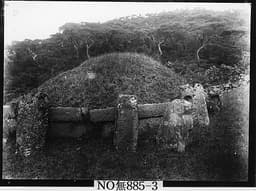
Jeongjong of Goryeo
Emperor · Medieval
38.1Total
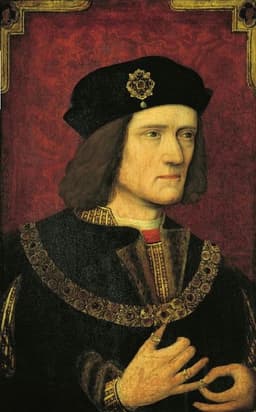
Richard III of England
Emperor · Medieval
48.2Total
Basic Information
Born
923
1452
Died
949
1485
Era
Medieval
Medieval
Nationality
Korea
England
Occupation
Emperor
Emperor
Civilization
Eastern
Western
Score Comparison
Military (10%)
21.2
40.0
Political (20%)
26.4
36.5
Influence (20%)
48.6
57.2
Legacy (20%)
40.0
54.0
Leadership (15%)
41.5
38.1
Strategy (15%)
36.8
52.5
TOTAL
38.1
48.2
Jeongjong of Goryeo — Complete Timeline
946 AD
Relocation of Capital to GaegyeongPolitical Action◆ Major
King Jeongjong moved the Goryeo capital back to Gaegyeong (modern Kaesong) from Cheorwon. This decision restored the original capital established by King Taejo, reinforcing the political and administrative center of the early Goryeo dynasty.
Capital RelocationGoryeo
Impact: nationalconstructive
Richard III of England — Complete Timeline
1471 AD
Battle of TewkesburyWar◆ Major
Richard, then Duke of Gloucester, commanded the vanguard of Edward IV's army at Tewkesbury, defeating the Lancastrian forces. This victory led to the death of Edward of Westminster, Henry VI's son, and the end of the Lancastrian line.
Wars of the RosesBattleVictory
Impact: national
1483 AD
Buckingham's RebellionWar◆ Major
Henry Stafford, Duke of Buckingham, led a rebellion against Richard III, aiming to place Henry Tudor on the throne. The rebellion failed, and Buckingham was executed, but it demonstrated significant opposition to Richard's rule.
RebellionOppositionTudor
Impact: nationaldestructive
Accession as Richard IIIPolitical Action
Richard III was crowned king of England after Parliament declared Edward V illegitimate. His accession followed the imprisonment of the Princes in the Tower and was controversial, leading to accusations of usurpation and murder.
CoronationUsurpationYorkist
Impact: national
1485 AD
Battle of Bosworth FieldWar
Richard III was killed in battle against Henry Tudor's forces at Bosworth Field. His death ended the Plantagenet dynasty and the Wars of the Roses, allowing Henry Tudor to become King Henry VII.
BattleDeathEnd of Dynasty
Impact: nationaltragic
This comparison has not been analyzed yet.
One-time AI generation (~1 minute). Scores and timeline are already available below.
Rankings
🥇
Richard III of EnglandLeader
Mil: 40.0Pol: 36.5Inf: 57.2
48.2
🥈
Jeongjong of Goryeo
Mil: 21.2Pol: 26.4Inf: 48.6
38.1
+10.1 behind
How This Comparison Works
Algorithm
Each figure is scored on 6 dimensions (0—100 scale) based on structured historical data: Military (10%), Political (20%), Influence (20%), Legacy (20%), Leadership (15%), Strategy (15%). The weighted total produces the final ranking.
Data Sources
Scores are computed from structured sub-indicators in the database. Scale factors adjust for era (Ancient ×0.85, Modern ×1.0) and civilization size (Eastern ×1.05, Other ×0.80) to account for differences in population and military scale.
Maximum 3 Figures
Comparisons are limited to 2—3 figures to ensure readability and statistical meaningfulness.
Error Margins
±5 points per dimension — Sub-scores are derived from historical records with inherent uncertainty. Two figures within 5 points on a dimension should be considered roughly equivalent in that area.
Total Score Accuracy
±3 points overall — The weighted combination of 6 dimensions produces a total score with approximately ±3 points of uncertainty. Differences of less than 3 points are not statistically significant— the figures are effectively tied.
Known Limitations
- Historical records are incomplete and uneven across civilizations
- Figures from oral-tradition societies may be underrepresented
- Occupation labels can misclassify multi-role figures
- Scores measure capability and impact, not moral character
- Quantitative scoring is a comparison tool, not absolute truth
Capability Radar
Military (10%) — Battles & Warfare
Battles
10
55
Win Rate
10
50
Expansion
10
30
Political (20%) — Governance & Reform
Reform
20
35
Diplomacy
20
30
Economy
20
30
Influence (20%) — Cultural & Global Reach
Cultural
20
45
Global
10
40
Legacy (20%) — Historical Impact
Historical
20
60
Longevity
20
55
Leadership (15%) — Power & Stability
Tenure
30
25
Stability
20
20
Strategy (15%) — Tactics & Innovation
Strategy
10
55
Tactics
10
60
Reform
10
40
Similar Comparisons
Comments & Discussion
No comments yet. Be the first to share your thoughts!