Loading...
Richard III of England vs Toghrul Beg
Toghrul Beg leads by 23.2 pts · 2 figures compared
…
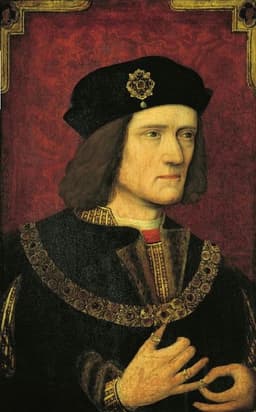
Richard III of England
Emperor · Medieval
48.2Total
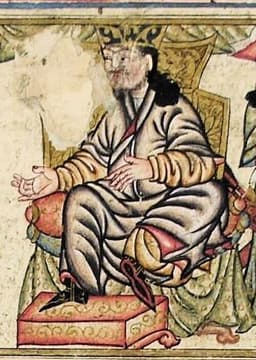
Toghrul Beg
Emperor · Medieval
71.4Total
Basic Information
Born
1452
990
Died
1485
1063
Era
Medieval
Medieval
Nationality
England
Seljuk Empire
Occupation
Emperor
Emperor
Civilization
Western
Middle Eastern
Score Comparison
Military (10%)
40.0
78.5
Political (20%)
36.5
70.0
Influence (20%)
57.2
65.0
Legacy (20%)
54.0
72.0
Leadership (15%)
38.1
79.8
Strategy (15%)
52.5
68.0
TOTAL
48.2
71.4
Richard III of England — Complete Timeline
1471 AD
Battle of TewkesburyWar◆ Major
Richard, then Duke of Gloucester, commanded the vanguard of Edward IV's army at Tewkesbury, defeating the Lancastrian forces. This victory led to the death of Edward of Westminster, Henry VI's son, and the end of the Lancastrian line.
Wars of the RosesBattleVictory
Impact: national
1483 AD
Buckingham's RebellionWar◆ Major
Henry Stafford, Duke of Buckingham, led a rebellion against Richard III, aiming to place Henry Tudor on the throne. The rebellion failed, and Buckingham was executed, but it demonstrated significant opposition to Richard's rule.
RebellionOppositionTudor
Impact: nationaldestructive
Accession as Richard IIIPolitical Action
Richard III was crowned king of England after Parliament declared Edward V illegitimate. His accession followed the imprisonment of the Princes in the Tower and was controversial, leading to accusations of usurpation and murder.
CoronationUsurpationYorkist
Impact: national
1485 AD
Battle of Bosworth FieldWar
Richard III was killed in battle against Henry Tudor's forces at Bosworth Field. His death ended the Plantagenet dynasty and the Wars of the Roses, allowing Henry Tudor to become King Henry VII.
BattleDeathEnd of Dynasty
Impact: nationaltragic
Toghrul Beg — Complete Timeline
1040 AD
Battle of DandanaqanWar
Toghrul Beg led the Seljuk Turks to victory over the Ghaznavid Empire at Dandanaqan in Khorasan. This defeat forced the Ghaznavids to retreat eastward, granting the Seljuks control of Khorasan and establishing their power base in Persia.
Seljuk ExpansionGhaznavid DefeatKhorasan
Impact: regional
1054 AD
Campaign against the Byzantine EmpireWar◆ Major
Toghrul Beg launched a major raid into Byzantine Anatolia, reaching as far as the city of Manzikert. Although he did not capture the city, the campaign demonstrated Seljuk military strength and foreshadowed future conflicts that would lead to the Battle of Manzikert in 1071.
Byzantine-Seljuk WarsAnatoliaManzikert
Impact: regional
1055 AD
Conquest of BaghdadWar
Toghrul Beg entered Baghdad at the invitation of the Abbasid Caliph al-Qa'im, who sought protection from the Buyid dynasty. Toghrul deposed the Buyid ruler, married the caliph's daughter, and was granted the title 'Sultan', becoming the de facto ruler of the Islamic world.
BaghdadAbbasid CaliphateSultanate
Impact: global
1058 AD
Suppression of the Rebellion of Ibrahim InalWar◆ Major
Toghrul's half-brother Ibrahim Inal rebelled against his authority, allying with the Fatimid Caliphate. Toghrul defeated and executed Ibrahim Inal, consolidating his power and eliminating a major internal threat to Seljuk unity.
Civil WarInternal ConflictIbrahim Inal
Impact: nationaldestructive
Expert Analysis
Origins
Richard III of England was born in 1452 at Fotheringhay Castle, the eleventh child of Richard, Duke of York, and Cecily Neville. As a member of the House of York, he grew up amid the Wars of the Roses, a series of civil wars between the Yorkist and Lancastrian factions. His father was killed in 1460, and Richard was briefly imprisoned by the Lancastrians before his elder brother Edward IV seized the throne. Richard received a knightly education and was appointed to various military commands in his teens.
Toghrul Beg was born around 990 in the steppes of Central Asia, a member of the Oghuz Turkic Qiniq tribe. His grandfather, Seljuk, had converted to Islam and established a military following. Toghrul and his brother Chaghri Beg inherited leadership of the Seljuk clan around 1020. They initially served under the Kara-Khanids and then the Ghaznavids, but sought independence. Toghrul's early life was shaped by nomadic warfare and the ambition to carve out a realm for his people.
Rise to Power
Richard III's rise was tied to his brother Edward IV's victories. He proved his military capability at the Battle of Tewkesbury in 1471, where he commanded the vanguard that crushed the Lancastrian army. This victory led to the deaths of key Lancastrian leaders, including Prince Edward of Westminster. Richard was rewarded with vast estates and the governorship of the North, where he built a power base. After Edward IV's sudden death in 1483, Richard was named Lord Protector for the young Edward V. However, he quickly moved to seize the throne, arguing that Edward V was illegitimate due to a pre-contract of marriage. Parliament ratified his claim, and he was crowned on July 6, 1483.
Toghrul Beg rose by uniting the Oghuz Turks and challenging the Ghaznavid Empire. In 1038, he and Chaghri entered Nishapur, but were forced out by Ghaznavid forces. The decisive turning point came at the Battle of Dandanaqan in 1040, where Toghrul's Seljuk army defeated the larger Ghaznavid force under Sultan Mas'ud I. This victory opened Khorasan to Seljuk control. Toghrul then expanded westward, taking Rayy, Hamadan, and Isfahan. By 1055, at the invitation of the Abbasid Caliph al-Qa'im, he entered Baghdad, deposed the Buyid ruler, and was granted the title of Sultan, becoming the secular ruler of the Islamic world.
Leadership & Governance
Richard III's leadership was autocratic and focused on securing his fragile throne. He attempted to build support through patronage, granting titles and lands to northern allies. His governance included legal reforms, such as establishing the Court of Requests to hear commoners' petitions, and promoting trade. However, his reign was marked by suspicion and rebellion. The disappearance of his nephews, the Princes in the Tower, eroded his legitimacy. His military score of 40.0 and political score of 36.5 reflect his inability to consolidate power.
Toghrul Beg's leadership combined military prowess with diplomatic acumen. He ruled through a decentralized system, delegating authority to family members like his brother Chaghri. He adopted the Persian bureaucratic model, employing viziers to administer conquered territories. Toghrul's political score of 70.0 reflects his success in gaining caliphal recognition and integrating diverse peoples. He maintained the Abbasid caliph as a figurehead, which legitimized his rule. His military score of 78.5 stems from his strategic victories and expansion.
Triumph & Tragedy
Richard III's greatest triumph was his victory at Tewkesbury, which cemented Yorkist rule. His accession, though controversial, was a masterstroke of political maneuvering. However, his greatest failure was the loss at Bosworth Field in 1485, where he was killed. His reign lasted only two years, and his legacy was tarnished by the Princes' disappearance. He scored 54.0 in legacy, largely due to posthumous vilification by Tudor historians.
Toghrul Beg's triumphs include the Battle of Dandanaqan and the conquest of Baghdad, which established the Seljuk Empire as the dominant power in the Middle East. He suppressed rebellions, including that of his half-brother Ibrahim Inal in 1059, executing him to consolidate power. His tragedy lies in his failure to secure a lasting dynasty; his son was passed over, and the empire later fragmented. He scored 72.0 in legacy, reflecting his foundational role.
Character & Destiny
Richard III was ambitious and ruthless, but also capable of loyalty to his brother Edward. His decision to take the throne and the fate of the princes made him a controversial figure. His character, as portrayed by Shakespeare, may be exaggerated, but his actions suggest a pragmatic leader who overreached. His leadership score of 38.1 indicates limited ability to inspire lasting loyalty.
Toghrul Beg was a skilled military commander and diplomat, patient and calculating. He respected the caliphate and sought legitimacy through Islamic institutions. His strategic score of 68.0 reflects his ability to plan campaigns and alliances. However, his reliance on family ties led to internal strife. His leadership score of 79.8 shows his effectiveness in building an empire.
Legacy
Richard III's legacy is dominated by his reputation as a usurper and murderer, though modern historians reassess his reign. He was the last English king to die in battle and the last of the Plantagenet dynasty. His death ushered in the Tudor period. His influence score of 57.2 is moderate, as his impact on English history is largely negative or symbolic.
Toghrul Beg's legacy is profound: he founded the Great Seljuk Empire, which controlled much of the Middle East for over a century. He restored Sunni orthodoxy and revived the Abbasid caliphate's authority. His campaigns opened Anatolia to Turkic settlement, setting the stage for later events like the Battle of Manzikert. His influence score of 65.0 and legacy score of 72.0 reflect his enduring impact.
Conclusion
Toghrul Beg had a greater impact than Richard III. His total score of 71.4 dwarfs Richard's 48.2. Toghrul founded an empire that reshaped the Islamic world, while Richard's brief reign ended in defeat and dynasty collapse. Toghrul's military, political, and leadership scores are all significantly higher. Even in influence and legacy, Toghrul's achievements in building a lasting state outweigh Richard's controversial rule. The Seljuk Empire's influence on the Crusades, Turkish history, and Islamic civilization far exceeds the mark of a short-lived English king. Thus, Toghrul Beg stands as the more consequential figure.
Rankings
🥇
Toghrul BegLeader
Mil: 78.5Pol: 70.0Inf: 65.0
71.4
🥈
Richard III of England
Mil: 40.0Pol: 36.5Inf: 57.2
48.2
+23.2 behind
How This Comparison Works
Algorithm
Each figure is scored on 6 dimensions (0—100 scale) based on structured historical data: Military (10%), Political (20%), Influence (20%), Legacy (20%), Leadership (15%), Strategy (15%). The weighted total produces the final ranking.
Data Sources
Scores are computed from structured sub-indicators in the database. Scale factors adjust for era (Ancient ×0.85, Modern ×1.0) and civilization size (Eastern ×1.05, Other ×0.80) to account for differences in population and military scale.
Maximum 3 Figures
Comparisons are limited to 2—3 figures to ensure readability and statistical meaningfulness.
Error Margins
±5 points per dimension — Sub-scores are derived from historical records with inherent uncertainty. Two figures within 5 points on a dimension should be considered roughly equivalent in that area.
Total Score Accuracy
±3 points overall — The weighted combination of 6 dimensions produces a total score with approximately ±3 points of uncertainty. Differences of less than 3 points are not statistically significant— the figures are effectively tied.
Known Limitations
- Historical records are incomplete and uneven across civilizations
- Figures from oral-tradition societies may be underrepresented
- Occupation labels can misclassify multi-role figures
- Scores measure capability and impact, not moral character
- Quantitative scoring is a comparison tool, not absolute truth
Capability Radar
Military (10%) — Battles & Warfare
Battles
55
85
Win Rate
50
90
Expansion
30
90
Political (20%) — Governance & Reform
Reform
35
75
Diplomacy
30
85
Economy
30
70
Influence (20%) — Cultural & Global Reach
Cultural
45
65
Global
40
75
Legacy (20%) — Historical Impact
Historical
60
80
Longevity
55
70
Leadership (15%) — Power & Stability
Tenure
25
80
Stability
20
70
Strategy (15%) — Tactics & Innovation
Strategy
55
85
Tactics
60
80
Reform
40
75
Similar Comparisons
Comments & Discussion
No comments yet. Be the first to share your thoughts!