Loading...
This comparison has not been analyzed yet.
One-time AI generation (~1 minute). Scores and timeline are already available below.
Jeremy Corbyn vs Walter Sisulu
Walter Sisulu leads by 8.0 pts · 2 figures compared
…

Jeremy Corbyn
Politician · Modern
47.4Total
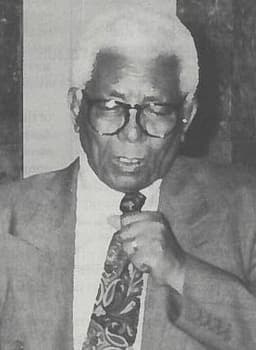
Walter Sisulu
Politician · Modern
55.4Total
Basic Information
Born
1949
1912
Died
—
2003
Era
Modern
Modern
Nationality
United Kingdom
South Africa
Occupation
Politician
Politician
Civilization
Western
Other
Score Comparison
Military (10%)
49.6
50.0
Political (20%)
40.8
53.8
Influence (20%)
55.7
58.3
Legacy (20%)
41.7
52.0
Leadership (15%)
51.9
72.0
Strategy (15%)
41.5
39.9
TOTAL
47.4
55.4
Jeremy Corbyn — Complete Timeline
2015 AD
Elected Leader of the Labour PartyPolitical Action◆ Major
Jeremy Corbyn was elected Labour leader on a left-wing platform, winning 59.5% of the vote. His leadership was seen as a shift away from New Labour, advocating for nationalization, anti-austerity, and nuclear disarmament.
Labour PartyLeadershipLeft-wing
Impact: nationalconstructive
2017 AD
Led Labour into the 2017 general electionPolitical Action◆ Major
Corbyn led Labour to a surprise result in the 2017 general election, gaining 30 seats and denying Theresa May a majority. Labour won 40% of the vote, its highest share since 2001, and forced a hung parliament.
ElectionLabour PartyHung Parliament
Impact: nationalconstructive
2019 AD
Led Labour into the 2019 general electionPolitical Action◆ Major
Corbyn led Labour to a landslide defeat in the 2019 general election, winning only 202 seats. The party lost many traditional Labour seats in the 'Red Wall' to the Conservatives. Corbyn resigned as leader following the defeat.
ElectionDefeatLabour Party
Impact: nationaltragic
2020 AD
Suspended from Labour PartyPolitical Action◆ Major
Corbyn was suspended from the Labour Party by Keir Starmer after his response to the Equality and Human Rights Commission report on antisemitism. He claimed the scale of antisemitism had been overstated, leading to his suspension.
Labour PartyAntisemitismSuspension
Impact: nationaldestructive
Walter Sisulu — Complete Timeline
1940 AD
Joined ANC Youth LeaguePolitical Action◆ Major
Sisulu joined the ANC Youth League, becoming a key organizer alongside Nelson Mandela and Oliver Tambo. He helped transform the ANC into a mass movement against apartheid.
ANC Youth LeagueAnti-ApartheidOrganizing
Impact: nationalconstructive
1964 AD
Rivonia Trial ConvictionPolitical Action◆ Major
Sisulu was convicted in the Rivonia Trial for sabotage and conspiracy to overthrow the apartheid state. He was sentenced to life imprisonment and sent to Robben Island, where he became a mentor to younger prisoners.
Rivonia TrialImprisonmentAnti-Apartheid
Impact: nationaltragic
1989 AD
Released from PrisonPolitical Action◆ Major
Sisulu was released from prison after 25 years, following a campaign by the international community. His release signaled the beginning of the end of apartheid and he resumed his role as a senior ANC leader.
ReleaseTransitionANC
Impact: nationalconstructive
1991 AD
Elected ANC Deputy PresidentPolitical Action◆ Major
Sisulu was elected Deputy President of the ANC at the party's national conference. He played a key role in the negotiations for a democratic South Africa and served as a mentor to younger leaders.
ANCLeadershipTransition
Impact: nationalconstructive
This comparison has not been analyzed yet.
One-time AI generation (~1 minute). Scores and timeline are already available below.
Rankings
🥇
Walter SisuluLeader
Mil: 50.0Pol: 53.8Inf: 58.3
55.4
🥈
Jeremy Corbyn
Mil: 49.6Pol: 40.8Inf: 55.7
47.4
+8.0 behind
How This Comparison Works
Algorithm
Each figure is scored on 6 dimensions (0—100 scale) based on structured historical data: Military (10%), Political (20%), Influence (20%), Legacy (20%), Leadership (15%), Strategy (15%). The weighted total produces the final ranking.
Data Sources
Scores are computed from structured sub-indicators in the database. Scale factors adjust for era (Ancient ×0.85, Modern ×1.0) and civilization size (Eastern ×1.05, Other ×0.80) to account for differences in population and military scale.
Maximum 3 Figures
Comparisons are limited to 2—3 figures to ensure readability and statistical meaningfulness.
Error Margins
±5 points per dimension — Sub-scores are derived from historical records with inherent uncertainty. Two figures within 5 points on a dimension should be considered roughly equivalent in that area.
Total Score Accuracy
±3 points overall — The weighted combination of 6 dimensions produces a total score with approximately ±3 points of uncertainty. Differences of less than 3 points are not statistically significant— the figures are effectively tied.
Known Limitations
- Historical records are incomplete and uneven across civilizations
- Figures from oral-tradition societies may be underrepresented
- Occupation labels can misclassify multi-role figures
- Scores measure capability and impact, not moral character
- Quantitative scoring is a comparison tool, not absolute truth
Capability Radar
Military (10%) — Battles & Warfare
Battles
31
22
Win Rate
30
26
Expansion
35
30
Political (20%) — Governance & Reform
Reform
40
75
Diplomacy
35
70
Economy
20
30
Influence (20%) — Cultural & Global Reach
Cultural
40
60
Global
35
60
Legacy (20%) — Historical Impact
Historical
30
70
Longevity
20
65
Leadership (15%) — Power & Stability
Tenure
30
60
Stability
15
65
Strategy (15%) — Tactics & Innovation
Strategy
41
32
Tactics
38
35
Reform
41
37
Similar Comparisons
Comments & Discussion
No comments yet. Be the first to share your thoughts!