Loading...
Palmiro Togliatti vs Walter Sisulu
Palmiro Togliatti leads by 7.2 pts · 2 figures compared
…
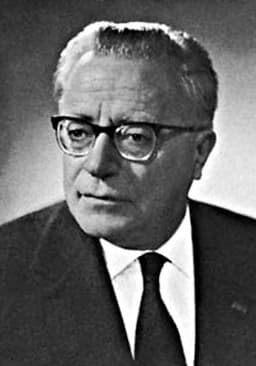
Palmiro Togliatti
Politician · Modern
62.6Total
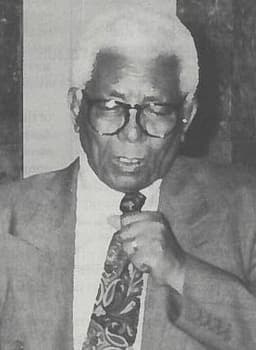
Walter Sisulu
Politician · Modern
55.4Total
Basic Information
Born
1893
1912
Died
1964
2003
Era
Modern
Modern
Nationality
Italy
South Africa
Occupation
Politician
Politician
Civilization
Western
Other
Score Comparison
Military (10%)
50.0
50.0
Political (20%)
70.0
53.8
Influence (20%)
72.0
58.3
Legacy (20%)
52.0
52.0
Leadership (15%)
78.0
72.0
Strategy (15%)
43.5
39.9
TOTAL
62.6
55.4
Palmiro Togliatti — Complete Timeline
1921 AD
Founding of the Italian Communist PartyPolitical Action◆ Major
Togliatti was a founding member of the Italian Communist Party (PCI) at its congress in Livorno. The party split from the Socialist Party over adherence to the Comintern. Togliatti became a central leader, guiding the party through the Fascist period and exile.
CommunismPartyComintern
Impact: nationalconstructive
1944 AD
Salerno TurnPolitical Action◆ Major
Togliatti, returning from exile in the Soviet Union, announced the 'Salerno Turn'
CommunismCoalitionWorld War II
Impact: nationalconstructive
1948 AD
Assassination Attempt on TogliattiPolitical Action◆ Major
Togliatti was shot and seriously wounded by a right-wing student outside the Italian Parliament. The attack triggered a general strike and widespread protests, but the PCI leadership called for calm to avoid civil war. Togliatti survived and returned to lead the party.
Assassination AttemptCold WarStrike
Impact: nationaltragic
1956 AD
Togliatti's Doctrine of PolycentrismPolitical Action◆ Major
After Khrushchev's secret speech denouncing Stalin, Togliatti developed the theory of 'polycentrism' in the communist movement. He argued for national paths to socialism independent of Moscow. This doctrine influenced the Eurocommunist movement and distanced the PCI from Soviet control.
CommunismEurocommunismSoviet Union
Impact: globalconstructive
Walter Sisulu — Complete Timeline
1940 AD
Joined ANC Youth LeaguePolitical Action◆ Major
Sisulu joined the ANC Youth League, becoming a key organizer alongside Nelson Mandela and Oliver Tambo. He helped transform the ANC into a mass movement against apartheid.
ANC Youth LeagueAnti-ApartheidOrganizing
Impact: nationalconstructive
1964 AD
Rivonia Trial ConvictionPolitical Action◆ Major
Sisulu was convicted in the Rivonia Trial for sabotage and conspiracy to overthrow the apartheid state. He was sentenced to life imprisonment and sent to Robben Island, where he became a mentor to younger prisoners.
Rivonia TrialImprisonmentAnti-Apartheid
Impact: nationaltragic
1989 AD
Released from PrisonPolitical Action◆ Major
Sisulu was released from prison after 25 years, following a campaign by the international community. His release signaled the beginning of the end of apartheid and he resumed his role as a senior ANC leader.
ReleaseTransitionANC
Impact: nationalconstructive
1991 AD
Elected ANC Deputy PresidentPolitical Action◆ Major
Sisulu was elected Deputy President of the ANC at the party's national conference. He played a key role in the negotiations for a democratic South Africa and served as a mentor to younger leaders.
ANCLeadershipTransition
Impact: nationalconstructive
Expert Analysis
Origins
Palmiro Togliatti was born in Genoa, Italy, in 1893 into a middle-class family. He studied law at the University of Turin, where he became involved in socialist circles. In 1921, he co-founded the Italian Communist Party (PCI) after a split from the Socialist Party. Togliatti's early political development was shaped by the rise of fascism under Mussolini, forcing him into exile in the Soviet Union from 1926 to 1944.
Walter Sisulu was born in 1912 in Ngcobo, South Africa, into a poor Xhosa family. He had limited formal education, leaving school at 15 to work menial jobs. Sisulu moved to Johannesburg, where he became involved in labor activism and joined the African National Congress (ANC) in 1940. His early experiences with racial discrimination and poverty drove his commitment to the anti-apartheid struggle.
Rise to Power
Togliatti rose to prominence within the international communist movement. He served as a Comintern official in Moscow and was instrumental in organizing the PCI's underground network in Italy. His major turning point came in 1944 with the Salerno Turn, where he abandoned revolutionary rhetoric to support a coalition government with moderate parties. This pragmatic move secured the PCI's legal status and made Togliatti a key figure in postwar Italian politics.
Sisulu's rise began as a key organizer in the ANC Youth League, which he helped found in 1944 alongside Nelson Mandela and Oliver Tambo. He pushed the ANC toward more militant tactics, leading the Defiance Campaign in 1952. By 1956, he was a central figure in the Congress Alliance, culminating in his arrest and the Treason Trial (1956-1961). His strategic acumen landed him a leadership role in Umkhonto we Sizwe, the ANC's armed wing, before his capture in 1963.
Leadership & Governance
Togliatti's leadership style was characterized by ideological flexibility and organizational discipline. He pursued a strategy of "polycentrism," advocating for national paths to communism independent of Moscow, after Khrushchev's denunciation of Stalin in 1956. This allowed the PCI to become the largest communist party in the West, with 34% of the vote in 1976. However, his willingness to compromise with Christian Democrats and capitalists drew criticism from hardline communists.
Sisulu's leadership emphasized collective decision-making and grassroots mobilization. As a mentor to Mandela, he focused on building a unified opposition. During his 25-year imprisonment on Robben Island, he continued to organize political education among inmates. His governance style was consultative, prioritizing consensus over individual authority. This approach was crucial in maintaining ANC cohesion during the long struggle.
Triumph & Tragedy
Togliatti's greatest success was building the PCI into a durable political force, achieving significant influence without revolution. He also survived the Stalinist purges by carefully navigating Soviet politics. However, his failure to fundamentally transform Italian society—the PCI never entered government—marked a strategic limitation. The 1948 assassination attempt by a right-wing student highlighted the polarized environment.
Sisulu's triumph was his role in the Rivonia Trial, where he refused to betray the anti-apartheid cause, inspiring global solidarity. His release in 1989 and subsequent election as ANC Deputy President in 1991 paved the way for negotiations ending apartheid. Yet, his long imprisonment meant he missed key developments in the 1970s-80s, and his health deteriorated. The tragedy of his life was the 25 years lost to incarceration.
Character & Destiny
Togliatti was pragmatic and secretive, often described as a "bureaucratic revolutionary." His willingness to compromise alienated radicals but ensured the PCI's survival. Historian Eric Hobsbawm noted that Togliatti's "flexibility was both his strength and his weakness." His destiny was tied to the contradictions of Eurocommunism—seeking revolution within democratic frameworks.
Sisulu was humble but resolute. His calm demeanor and strategic patience earned him respect across factions. Mandela called him "the greatest friend I have ever had." His destiny was shaped by imprisonment, which turned him into a symbol of endurance. Unlike Togliatti, Sisulu saw his struggle succeed with the fall of apartheid in 1994.
Legacy
Togliatti's legacy is mixed: he helped sustain communism in Italy, but his polycentrism failed to prevent the PCI's decline after his death. The party dissolved in 1991, though his ideas influenced later left-wing movements. His scores reflect this: Political 70.0, Influence 72.0, Legacy 52.0.
Sisulu's legacy is more direct: he is remembered as a founding father of democratic South Africa. The Walter Sisulu University and numerous streets bear his name. His leadership style influenced the ANC's non-racial ethos. His scores: Political 53.8, Influence 58.3, Legacy 52.0.
Conclusion
While Togliatti scored higher overall (62.6 vs. 55.4), Sisulu's impact on a concrete historical outcome—the end of apartheid—is more tangible. Togliatti's political maneuvering kept communism alive in Italy, but it never achieved power. Sisulu's sacrifices directly contributed to a democratic transition affecting 40 million people. Therefore, Walter Sisulu had greater impact: his leadership changed a nation, while Togliatti's primarily sustained a party.
Rankings
🥇
Palmiro TogliattiLeader
Mil: 50.0Pol: 70.0Inf: 72.0
62.6
🥈
Walter Sisulu
Mil: 50.0Pol: 53.8Inf: 58.3
55.4
+7.2 behind
How This Comparison Works
Algorithm
Each figure is scored on 6 dimensions (0—100 scale) based on structured historical data: Military (10%), Political (20%), Influence (20%), Legacy (20%), Leadership (15%), Strategy (15%). The weighted total produces the final ranking.
Data Sources
Scores are computed from structured sub-indicators in the database. Scale factors adjust for era (Ancient ×0.85, Modern ×1.0) and civilization size (Eastern ×1.05, Other ×0.80) to account for differences in population and military scale.
Maximum 3 Figures
Comparisons are limited to 2—3 figures to ensure readability and statistical meaningfulness.
Error Margins
±5 points per dimension — Sub-scores are derived from historical records with inherent uncertainty. Two figures within 5 points on a dimension should be considered roughly equivalent in that area.
Total Score Accuracy
±3 points overall — The weighted combination of 6 dimensions produces a total score with approximately ±3 points of uncertainty. Differences of less than 3 points are not statistically significant— the figures are effectively tied.
Known Limitations
- Historical records are incomplete and uneven across civilizations
- Figures from oral-tradition societies may be underrepresented
- Occupation labels can misclassify multi-role figures
- Scores measure capability and impact, not moral character
- Quantitative scoring is a comparison tool, not absolute truth
Capability Radar
Military (10%) — Battles & Warfare
Battles
26
22
Win Rate
29
26
Expansion
36
30
Political (20%) — Governance & Reform
Reform
75
75
Diplomacy
80
70
Economy
60
30
Influence (20%) — Cultural & Global Reach
Cultural
65
60
Global
60
60
Legacy (20%) — Historical Impact
Historical
70
70
Longevity
65
65
Leadership (15%) — Power & Stability
Tenure
85
60
Stability
55
65
Strategy (15%) — Tactics & Innovation
Strategy
38
32
Tactics
42
35
Reform
45
37
Similar Comparisons
Comments & Discussion
No comments yet. Be the first to share your thoughts!