Loading...
Francisco Largo Caballero vs Walter Sisulu
Walter Sisulu leads by 2.9 pts · 2 figures compared
…
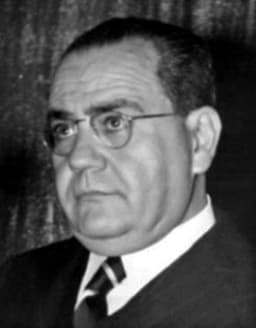
Francisco Largo Caballero
Politician · Modern
52.5Total
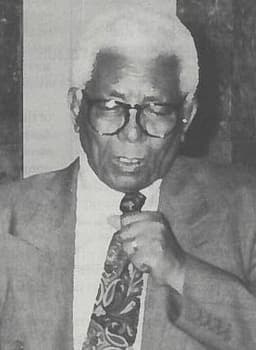
Walter Sisulu
Politician · Modern
55.4Total
Basic Information
Born
1869
1912
Died
1946
2003
Era
Modern
Modern
Nationality
Spain
South Africa
Occupation
Politician
Politician
Civilization
Western
Other
Score Comparison
Military (10%)
39.9
50.0
Political (20%)
54.7
53.8
Influence (20%)
54.9
58.3
Legacy (20%)
45.0
52.0
Leadership (15%)
65.7
72.0
Strategy (15%)
54.3
39.9
TOTAL
52.5
55.4
Francisco Largo Caballero — Complete Timeline
1936 AD
Organized the Defense of MadridWar◆ Major
As prime minister, Largo Caballero directed the organization of the defense of Madrid against the Nationalist assault in November 1936. He mobilized militias and the International Brigades, leading to the successful resistance that prevented the city's fall.
Defense of MadridCivil WarMilitary Strategy
Impact: nationalconstructive
Became Prime Minister of the RepublicPolitical Action◆ Major
Largo Caballero was appointed prime minister of the Second Spanish Republic on September 4, 1936, during the Spanish Civil War. He formed a government that included socialists, communists, and republicans, and oversaw the defense of Madrid against Nationalist forces.
Prime MinisterCivil WarRepublican Government
Impact: national
1937 AD
Resigned as Prime MinisterPolitical Action◆ Major
Largo Caballero resigned as prime minister on May 17, 1937, following the May Days in Barcelona, where internal conflicts between anarchists and communists erupted. His resignation marked the end of his leadership and the rise of Juan Negrin's more communist-aligned government.
ResignationInternal ConflictCivil War
Impact: nationaltragic
1942 AD
Exiled and Imprisoned by the NazisPolitical Action◆ Major
After the Republican defeat, Largo Caballero went into exile in France. He was arrested by the Gestapo in 1942 and deported to the Sachsenhausen concentration camp. He survived the war but was released in 1945, having suffered severe hardship.
ExileConcentration CampWorld War II
Impact: nationaltragic
Walter Sisulu — Complete Timeline
1940 AD
Joined ANC Youth LeaguePolitical Action◆ Major
Sisulu joined the ANC Youth League, becoming a key organizer alongside Nelson Mandela and Oliver Tambo. He helped transform the ANC into a mass movement against apartheid.
ANC Youth LeagueAnti-ApartheidOrganizing
Impact: nationalconstructive
1964 AD
Rivonia Trial ConvictionPolitical Action◆ Major
Sisulu was convicted in the Rivonia Trial for sabotage and conspiracy to overthrow the apartheid state. He was sentenced to life imprisonment and sent to Robben Island, where he became a mentor to younger prisoners.
Rivonia TrialImprisonmentAnti-Apartheid
Impact: nationaltragic
1989 AD
Released from PrisonPolitical Action◆ Major
Sisulu was released from prison after 25 years, following a campaign by the international community. His release signaled the beginning of the end of apartheid and he resumed his role as a senior ANC leader.
ReleaseTransitionANC
Impact: nationalconstructive
1991 AD
Elected ANC Deputy PresidentPolitical Action◆ Major
Sisulu was elected Deputy President of the ANC at the party's national conference. He played a key role in the negotiations for a democratic South Africa and served as a mentor to younger leaders.
ANCLeadershipTransition
Impact: nationalconstructive
Expert Analysis
Origins
Francisco Largo Caballero was born on October 15, 1869, in Madrid, Spain, into a working-class family. He left school at age seven to work as a plasterer, becoming involved in trade unionism and joining the Spanish Socialist Workers' Party (PSOE) in 1894. His early activism in the construction sector shaped his lifelong commitment to socialism. Walter Sisulu was born on May 18, 1912, in Ngcobo, South Africa, into a poor Xhosa family. He received limited formal education but moved to Johannesburg as a teenager, where he worked in a bakery and became involved in labor activism. He joined the African National Congress (ANC) in 1940, influenced by the growing anti-colonial movement.
Rise to Power
Largo Caballero rose through the ranks of the socialist movement, becoming a prominent trade union leader. He served as Minister of Labour in the 1931-1933 republican government, implementing progressive labor laws. Following the 1936 election victory of the Popular Front, he became Prime Minister on September 4, 1936, amid the outbreak of the Spanish Civil War. He aimed to unify leftist factions against the Nationalist forces led by Franco. Sisulu's rise began when he joined the ANC Youth League in 1944, co-founding it with Nelson Mandela and Oliver Tambo. He became the league's secretary and later the ANC's Secretary-General in 1949, helping to transform the organization into a mass movement through the Programme of Action. He was instrumental in organizing the Defiance Campaign in 1952 and the Congress of the People in 1955.
Leadership & Governance
As Prime Minister, Largo Caballero headed a coalition government of republicans, socialists, communists, and anarchists. He prioritized the defense of Madrid, mobilizing militias and creating the People's Army. However, his leadership was marked by internal divisions; he struggled to maintain control over anarchist and communist factions, leading to the May Days of 1937 in Barcelona. His governance score of 65.7 reflects his efforts but also his inability to prevent infighting. Sisulu, as ANC Secretary-General and later Deputy President, was a strategic organizer rather than a public figure. He focused on building the ANC's underground structures and fostering unity among diverse anti-apartheid groups. His leadership score of 72.0 indicates higher effectiveness in coalition-building, as he maintained close ties with Mandela, Tambo, and other leaders, ensuring the movement's coherence during decades of repression.
Triumph & Tragedy
Largo Caballero's greatest triumph was organizing the defense of Madrid in November 1936, which repelled the Nationalist assault and boosted Republican morale. However, his tragedy was the internal collapse of the Republican side; his resignation in May 1937 after the May Days weakened the government, contributing to the eventual defeat in 1939. He spent his final years in exile, arrested by the Nazis in 1942 and imprisoned in Sachsenhausen, dying in 1946. Sisulu's triumph was his role in the Rivonia Trial in 1963-1964, where he, Mandela, and others used the trial to expose apartheid's injustices. He was sentenced to life imprisonment but remained a symbol of resistance. After 25 years, he was released in 1989, and in 1991 he was elected ANC Deputy President, helping negotiate the end of apartheid. His tragedy was the loss of personal freedom and the pain of seeing many comrades killed, but he lived to see the democratic transition in 1994.
Character & Destiny
Largo Caballero was known as the "Spanish Lenin" for his revolutionary rhetoric and uncompromising stance. His character was stubborn and ideological, which helped him mobilize workers but hindered cooperation with other leftist factions. His destiny was shaped by the chaotic environment of the Civil War; his military score of 39.9 reflects his lack of military expertise, and his political score of 54.7 shows his limitations in navigating complex alliances. Sisulu was humble, patient, and strategic, often working behind the scenes. His leadership score of 72.0 and influence of 58.3 indicate his ability to build consensus and mentor younger leaders like Mandela. His destiny was to be a key architect of the anti-apartheid struggle, enduring imprisonment but ultimately seeing victory. His strategy score of 39.9 is lower, but his organizational skills compensated.
Legacy
Largo Caballero is remembered as a symbol of socialist resistance in Spain, but his legacy is mixed due to the Republican defeat. He is honored by the PSOE but his internal conflicts are criticized. His influence on Spanish socialism is moderate, scoring 54.9 in influence and 45.0 in legacy. Sisulu's legacy is profound: he is considered a founding father of democratic South Africa. His role in the ANC and the Rivonia Trial is central to the anti-apartheid narrative. His influence score of 58.3 and legacy of 52.0 reflect his lasting impact, though he is less famous than Mandela. The ANC's success in 1994 is a direct result of his organizational work.
Conclusion
Walter Sisulu had a greater overall impact than Francisco Largo Caballero. Sisulu's leadership score of 72.0 and influence of 58.3, combined with a total score of 55.4, edge out Caballero's 52.5. While Caballero faced a more immediate military crisis, his inability to maintain unity contributed to his side's defeat. Sisulu's strategic patience and coalition-building helped achieve a peaceful transition in South Africa. The 2.9-point gap reflects Sisulu's more enduring legacy as a key architect of one of the 20th century's most significant liberation movements.
Rankings
🥇
Walter SisuluLeader
Mil: 50.0Pol: 53.8Inf: 58.3
55.4
🥈
Francisco Largo Caballero
Mil: 39.9Pol: 54.7Inf: 54.9
52.5
+2.9 behind
How This Comparison Works
Algorithm
Each figure is scored on 6 dimensions (0—100 scale) based on structured historical data: Military (10%), Political (20%), Influence (20%), Legacy (20%), Leadership (15%), Strategy (15%). The weighted total produces the final ranking.
Data Sources
Scores are computed from structured sub-indicators in the database. Scale factors adjust for era (Ancient ×0.85, Modern ×1.0) and civilization size (Eastern ×1.05, Other ×0.80) to account for differences in population and military scale.
Maximum 3 Figures
Comparisons are limited to 2—3 figures to ensure readability and statistical meaningfulness.
Error Margins
±5 points per dimension — Sub-scores are derived from historical records with inherent uncertainty. Two figures within 5 points on a dimension should be considered roughly equivalent in that area.
Total Score Accuracy
±3 points overall — The weighted combination of 6 dimensions produces a total score with approximately ±3 points of uncertainty. Differences of less than 3 points are not statistically significant— the figures are effectively tied.
Known Limitations
- Historical records are incomplete and uneven across civilizations
- Figures from oral-tradition societies may be underrepresented
- Occupation labels can misclassify multi-role figures
- Scores measure capability and impact, not moral character
- Quantitative scoring is a comparison tool, not absolute truth
Capability Radar
Military (10%) — Battles & Warfare
Battles
5
22
Win Rate
5
26
Expansion
5
30
Political (20%) — Governance & Reform
Reform
60
75
Diplomacy
30
70
Economy
20
30
Influence (20%) — Cultural & Global Reach
Cultural
30
60
Global
30
60
Legacy (20%) — Historical Impact
Historical
40
70
Longevity
20
65
Leadership (15%) — Power & Stability
Tenure
55
60
Stability
10
65
Strategy (15%) — Tactics & Innovation
Strategy
10
32
Tactics
5
35
Reform
15
37
Similar Comparisons
Comments & Discussion
No comments yet. Be the first to share your thoughts!