Loading...
This comparison has not been analyzed yet.
One-time AI generation (~1 minute). Scores and timeline are already available below.
Jimmy Carter vs Parkash Singh Badal
Parkash Singh Badal leads by 0.9 pts · 2 figures compared
…
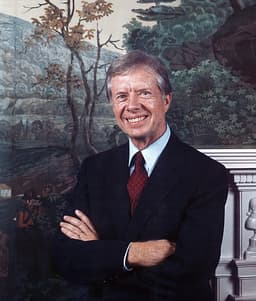
Jimmy Carter
Politician · Modern
59.1Total
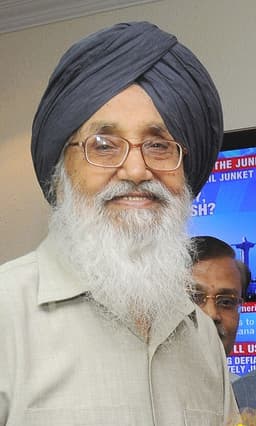
Parkash Singh Badal
Politician · Modern
60.0Total
Basic Information
Born
1924
1927
Died
—
—
Era
Modern
Modern
Nationality
United States
India
Occupation
Politician
Politician
Civilization
Western
Indian
Score Comparison
Military (10%)
10.0
53.8
Political (20%)
60.0
68.0
Influence (20%)
82.0
56.4
Legacy (20%)
58.0
49.2
Leadership (15%)
68.0
79.8
Strategy (15%)
38.6
60.0
TOTAL
59.1
60.0
Jimmy Carter — Complete Timeline
1976 AD
Elected PresidentPolitical Action
Carter defeated incumbent Gerald Ford in the 1976 presidential election. He campaigned as a Washington outsider and promised honesty and human rights in foreign policy.
PresidencyElection
Impact: national
1978 AD
Brokered the Camp David AccordsPolitical Action
Carter mediated negotiations between Egyptian President Anwar Sadat and Israeli Prime Minister Menachem Begin at Camp David. The accords led to the Egypt-Israel Peace Treaty in 1979, a landmark in Middle East diplomacy.
Middle East PeaceDiplomacy
Impact: globalconstructive
1979 AD
Iran Hostage CrisisPolitical Action◆ Major
Iranian militants seized the US Embassy in Tehran, taking 52 American hostages. Carter's administration attempted a rescue mission that failed, and the crisis dominated his final year in office.
IranHostage Crisis
Impact: globaldestructive
1980 AD
Lost 1980 Presidential ElectionPolitical Action◆ Major
Carter lost the 1980 election to Ronald Reagan in a landslide. The defeat was attributed to economic stagflation, the Iran hostage crisis, and a perception of weak leadership.
ElectionDefeat
Impact: nationaldestructive
2002 AD
Awarded Nobel Peace PrizeCultural◆ Major
Carter was awarded the Nobel Peace Prize for his decades of work in conflict resolution, human rights, and democracy promotion through the Carter Center. The prize recognized his post-presidential efforts.
Nobel PrizeHuman Rights
Impact: globalconstructive
Parkash Singh Badal — Complete Timeline
1970 AD
First term as Chief Minister of PunjabPolitical Action◆ Major
Parkash Singh Badal became Chief Minister of Punjab for the first time at age 43, leading a coalition government. His tenure was short-lived but marked the beginning of his long political career. He focused on agricultural development and Sikh interests.
Chief MinisterPunjabAkali Dal
Impact: regionalconstructive
1973 AD
Signed Punjab Accord (1973) as part of Anandpur Sahib ResolutionPolitical Action◆ Major
Badal was a key figure in the Anandpur Sahib Resolution, which demanded greater autonomy for Punjab and Sikh rights. The resolution became a central document in Sikh politics. It was later cited by militants but Badal distanced himself from extremism.
Anandpur SahibPunjabAutonomy
Impact: regional
1995 AD
Became President of Shiromani Akali Dal (SAD)Political Action◆ Major
Parkash Singh Badal became the president of the Shiromani Akali Dal, the main Sikh political party in Punjab. He led the party through the turbulent post-militancy period. His leadership focused on Sikh identity and regional autonomy.
Party LeadershipPunjabAkali Dal
Impact: regionalconstructive
1997 AD
Led Punjab during post-militancy reconstruction (1997-2002)Political Action◆ Major
Badal became Chief Minister in 1997 after the end of Sikh militancy. His government focused on rebuilding Punjab's economy and infrastructure. He implemented free power to farmers and other populist measures, but also faced criticism for fiscal mismanagement.
ReconstructionPunjabAkali Dal
Impact: regionalconstructive
2012 AD
Fifth term as Chief Minister (2012-2017)Political Action◆ Major
Badal won his fifth term as Chief Minister in 2012, leading the SAD-BJP alliance to victory. At 84, he was one of India's oldest chief ministers. His final term was marred by the 2015 drug scandal and farm distress, leading to defeat in 2017.
Chief MinisterPunjabFifth Term
Impact: regional
This comparison has not been analyzed yet.
One-time AI generation (~1 minute). Scores and timeline are already available below.
Rankings
🥇
Parkash Singh BadalLeader
Mil: 53.8Pol: 68.0Inf: 56.4
60.0
🥈
Jimmy Carter
Mil: 10.0Pol: 60.0Inf: 82.0
59.1
+0.9 behind
How This Comparison Works
Algorithm
Each figure is scored on 6 dimensions (0—100 scale) based on structured historical data: Military (10%), Political (20%), Influence (20%), Legacy (20%), Leadership (15%), Strategy (15%). The weighted total produces the final ranking.
Data Sources
Scores are computed from structured sub-indicators in the database. Scale factors adjust for era (Ancient ×0.85, Modern ×1.0) and civilization size (Eastern ×1.05, Other ×0.80) to account for differences in population and military scale.
Maximum 3 Figures
Comparisons are limited to 2—3 figures to ensure readability and statistical meaningfulness.
Error Margins
±5 points per dimension — Sub-scores are derived from historical records with inherent uncertainty. Two figures within 5 points on a dimension should be considered roughly equivalent in that area.
Total Score Accuracy
±3 points overall — The weighted combination of 6 dimensions produces a total score with approximately ±3 points of uncertainty. Differences of less than 3 points are not statistically significant— the figures are effectively tied.
Known Limitations
- Historical records are incomplete and uneven across civilizations
- Figures from oral-tradition societies may be underrepresented
- Occupation labels can misclassify multi-role figures
- Scores measure capability and impact, not moral character
- Quantitative scoring is a comparison tool, not absolute truth
Capability Radar
Military (10%) — Battles & Warfare
Battles
0
44
Win Rate
0
44
Expansion
0
48
Political (20%) — Governance & Reform
Reform
55
55
Diplomacy
85
60
Economy
40
50
Influence (20%) — Cultural & Global Reach
Cultural
50
40
Global
60
30
Legacy (20%) — Historical Impact
Historical
65
45
Longevity
50
50
Leadership (15%) — Power & Stability
Tenure
60
75
Stability
45
55
Strategy (15%) — Tactics & Innovation
Strategy
0
52
Tactics
0
58
Reform
5
61
Similar Comparisons
Comments & Discussion
No comments yet. Be the first to share your thoughts!