Loading...
Jinheung of Silla vs Murong Chui
Jinheung of Silla leads by 1.5 pts · 2 figures compared
…

Jinheung of Silla
Emperor · Ancient
59.7Total
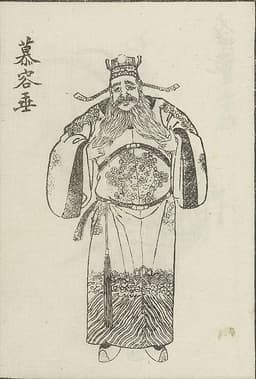
Murong Chui
Emperor · Ancient
58.2Total
Basic Information
Born
-526
326
Died
—
396
Era
Ancient
Ancient
Nationality
Korea
China
Occupation
Emperor
Emperor
Civilization
Eastern
Eastern
Score Comparison
Military (10%)
67.5
65.0
Political (20%)
68.0
45.0
Influence (20%)
55.7
58.0
Legacy (20%)
50.0
50.0
Leadership (15%)
72.0
72.0
Strategy (15%)
55.0
72.0
TOTAL
59.7
58.2
Jinheung of Silla — Complete Timeline
540 AD
Formalization of the Hwarang systemReform
King Jinheung institutionalized the Hwarang, an elite youth corps that combined military training with cultural and spiritual education. The Hwarang became a key instrument for Silla's military expansion and political unification, producing many of the kingdom's greatest generals and statesmen.
MilitaryHwarangSilla
Impact: regionalconstructive
550 AD
Establishment of the Silla-China alliancePolitical Action
Jinheung established formal diplomatic and military ties with the Northern Qi dynasty of China. This alliance provided Silla with Chinese military support and cultural influence, strengthening its position against Baekje and Goguryeo in the struggle for Korean unification.
DiplomacyAllianceSilla
Impact: regionalconstructive
553 AD
Conquest of the Han River basinWar◆ Major
Jinheung led Silla forces to capture the strategic Han River basin from Baekje. This victory gave Silla direct access to the Yellow Sea and trade routes with China, providing economic resources and diplomatic advantages that were crucial for later unification.
Territorial ExpansionBaekjeSilla
Impact: regionaldestructive
Construction of Hwangnyongsa TempleCultural◆ Major
Jinheung initiated the construction of Hwangnyongsa Temple in Gyeongju, one of the largest Buddhist temples in East Asia. The temple symbolized Silla's devotion to Buddhism and its royal patronage, becoming a major religious and cultural center for the kingdom.
TempleBuddhismSilla
Impact: nationalconstructive
562 AD
Destruction of DaegayaWar◆ Major
Jinheung's forces conquered the Gaya confederacy state of Daegaya, absorbing its territory into Silla. This eliminated a rival power in the southern Korean Peninsula and further consolidated Silla's dominance, paving the way for the eventual unification of the Three Kingdoms.
ConquestGayaSilla
Impact: regionaldestructive
Murong Chui — Complete Timeline
384 AD
Founded the Later Yan dynastyPolitical Action◆ Major
Murong Chui declared himself Prince of Yan, founding the Later Yan dynasty after breaking away from the Former Qin. He established his capital at Zhongshan (modern Dingzhou, Hebei) and began consolidating power in northern China.
Dynasty FoundingXianbeiNorthern China
Impact: regionalconstructive
395 AD
Battle of Canhe SlopeWar◆ Major
Murong Chui led a campaign against the Northern Wei dynasty. His forces were defeated at Canhe Slope by the Wei army under Tuoba Gui, a major setback that weakened Later Yan and led to its decline.
BattleDefeatNorthern Wei
Impact: regionaldestructive
396 AD
Death from illnessOther◆ Major
Murong Chui died of illness while on campaign against Northern Wei. His death left the Later Yan dynasty in a weakened state, and it soon collapsed under pressure from the Northern Wei.
DeathDynastic Decline
Impact: regionaltragic
Expert Analysis
Origins
King Jinheung of Silla was born in 526 CE into the royal Kim clan, the 24th monarch of the Silla kingdom. He ascended the throne at age 14 in 540 CE, with his aunt, Queen Jiso, serving as regent until he came of age. His early education emphasized Confucian classics and Buddhism, shaping his later policies. In contrast, Murong Chui was born in 326 CE into the Xianbei Murong clan of the Former Yan dynasty. His father was Murong Huang, a prince, and his uncle Murong Jun was emperor. Murong Chui grew up in a military environment, participating in campaigns from his youth. He was known for his bravery and tactical acumen, but his clan's internal rivalries often placed him in precarious positions.
Rise to Power
Jinheung's rise was steady and state-driven. After his regency ended, he focused on expanding Silla's territory. In 551 CE, he allied with Baekje to attack Goguryeo, but later turned on Baekje to seize the Han River basin (553 CE). This victory gave Silla direct access to the Yellow Sea and trade routes with China. His formalization of the Hwarang system around 540 CE created a loyal elite corps that combined military training with Buddhist and Confucian ethics, fostering unity. Murong Chui's rise was more turbulent. He served under Former Yan, but after its fall to Former Qin in 370 CE, he was forced to serve the Qin emperor Fu Jian. Murong Chui bided his time, and after Fu Jian's disastrous defeat at the Battle of Fei River in 383 CE, he rebelled, declaring himself Prince of Yan in 384 CE, founding the Later Yan dynasty. His military reputation attracted many followers, but his rule was contested by other Xianbei clans.
Leadership & Governance
Jinheung governed as a centralizing monarch. He promoted Buddhism as a state religion, commissioning the construction of Hwangnyongsa Temple (begun 553 CE), a nine-story pagoda that symbolized Silla's divine protection. He also established the Hwarang as a formal institution, which not only trained warriors but also cultivated a code of honor and loyalty that became central to Silla's identity. His alliance with Northern Qi (565 CE) secured Chinese military support and legitimized his rule. Murong Chui was primarily a military leader, not an administrator. His governance focused on consolidating power through campaigns. He moved his capital to Zhongshan (modern Dingzhou) and tried to stabilize his dynasty, but he lacked long-term political strategy. His leadership scored 72.0, equal to Jinheung, but his political score of 45.0 reflects his inability to build lasting institutions.
Triumph & Tragedy
Jinheung's greatest triumph was the conquest of the Han River basin and the destruction of Daegaya (562 CE), which eliminated a rival confederacy and doubled Silla's territory. His construction of Hwangnyongsa Temple remains a cultural landmark. However, his later years saw a decline in Silla's expansion as Goguryeo and Baekje regrouped. His reliance on the Hwarang created an elite that later caused internal strife. Murong Chui's triumph was founding Later Yan and defeating rival warlords like Dingling and Western Yan. His military strategy scored 72.0, reflecting his cunning. His tragedy was the defeat at Canhe Slope (395 CE) against the rising Northern Wei, which shattered his army. He died of illness in 396 CE while retreating, his dynasty collapsing within a decade. His failure to secure succession and his overconfidence in battle led to his downfall.
Character & Destiny
Jinheung was patient and visionary, using religion and culture to unify his kingdom. He took calculated risks, like the alliance with Baekje before betraying them. His character shaped a stable expansion, but his long reign (540-576 CE) ended with Silla as a major power. Murong Chui was impulsive and proud, often relying on personal bravery. He was a brilliant tactician but poor strategist, unable to see the long-term threat of Northern Wei. His decision to pursue the Wei army against advice led to Canhe Slope. Historical assessments note his military genius but political naivety. In terms of scores, Jinheung's political 68.0 versus Murong Chui's 45.0 highlights the difference in statecraft.
Legacy
Jinheung's legacy is profound in Korean history. The Hwarang system influenced later military and social structures, and the Silla unification of Korea in the 7th century built on his foundations. Hwangnyongsa Temple remained a symbol of Silla's golden age. Murong Chui's legacy is more mixed. He is remembered as a Xianbei hero who briefly revived Yan, but his dynasty was ephemeral. His military campaigns, however, influenced later northern Chinese warfare. In terms of scores, Jinheung's influence 55.7 versus Murong Chui's 58.0 shows comparable impact, but legacy scores are both 50.0, reflecting their limited long-term global influence.
Conclusion
Jinheung of Silla had a greater overall impact than Murong Chui. While Murong Chui was a superior tactician (strategy 72.0 vs 55.0), Jinheung's political and institutional achievements created a lasting state. His total score of 59.7 edges Murong Chui's 58.2, but more importantly, his Hwarang system and territorial gains laid the groundwork for Silla's unification of Korea. Murong Chui's Later Yan vanished within a generation, whereas Silla endured for centuries. Jinheung's patient state-building proved more consequential than Murong Chui's brilliant but fleeting military campaigns.
Rankings
🥇
Jinheung of SillaLeader
Mil: 67.5Pol: 68.0Inf: 55.7
59.7
🥈
Murong Chui
Mil: 65.0Pol: 45.0Inf: 58.0
58.2
+1.5 behind
How This Comparison Works
Algorithm
Each figure is scored on 6 dimensions (0—100 scale) based on structured historical data: Military (10%), Political (20%), Influence (20%), Legacy (20%), Leadership (15%), Strategy (15%). The weighted total produces the final ranking.
Data Sources
Scores are computed from structured sub-indicators in the database. Scale factors adjust for era (Ancient ×0.85, Modern ×1.0) and civilization size (Eastern ×1.05, Other ×0.80) to account for differences in population and military scale.
Maximum 3 Figures
Comparisons are limited to 2—3 figures to ensure readability and statistical meaningfulness.
Error Margins
±5 points per dimension — Sub-scores are derived from historical records with inherent uncertainty. Two figures within 5 points on a dimension should be considered roughly equivalent in that area.
Total Score Accuracy
±3 points overall — The weighted combination of 6 dimensions produces a total score with approximately ±3 points of uncertainty. Differences of less than 3 points are not statistically significant— the figures are effectively tied.
Known Limitations
- Historical records are incomplete and uneven across civilizations
- Figures from oral-tradition societies may be underrepresented
- Occupation labels can misclassify multi-role figures
- Scores measure capability and impact, not moral character
- Quantitative scoring is a comparison tool, not absolute truth
Capability Radar
Military (10%) — Battles & Warfare
Battles
55
85
Win Rate
60
90
Expansion
65
85
Political (20%) — Governance & Reform
Reform
60
65
Diplomacy
55
70
Economy
50
60
Influence (20%) — Cultural & Global Reach
Cultural
65
50
Global
30
40
Legacy (20%) — Historical Impact
Historical
60
65
Longevity
55
45
Leadership (15%) — Power & Stability
Tenure
70
75
Stability
60
55
Strategy (15%) — Tactics & Innovation
Strategy
65
88
Tactics
50
92
Reform
70
70
Similar Comparisons
Comments & Discussion
No comments yet. Be the first to share your thoughts!