Loading...
Murong Chui vs Qin Shi Huang
Qin Shi Huang leads by 27.0 pts · 2 figures compared
…
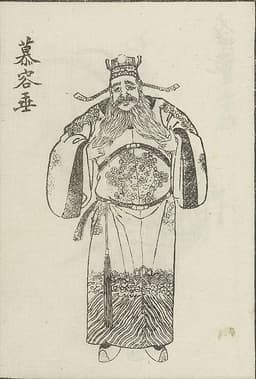
Murong Chui
Emperor · Ancient
58.2Total
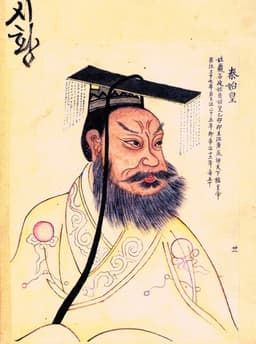
Qin Shi Huang
Emperor · Ancient
85.2Total
Basic Information
Born
326
-259
Died
396
-210
Era
Ancient
Ancient
Nationality
China
China
Occupation
Emperor
Emperor
Civilization
Eastern
Eastern
Score Comparison
Military (10%)
65.0
80.0
Political (20%)
45.0
90.0
Influence (20%)
58.0
85.0
Legacy (20%)
50.0
90.0
Leadership (15%)
72.0
78.0
Strategy (15%)
72.0
82.0
TOTAL
58.2
85.2
Murong Chui — Complete Timeline
384 AD
Founded the Later Yan dynastyPolitical Action◆ Major
Murong Chui declared himself Prince of Yan, founding the Later Yan dynasty after breaking away from the Former Qin. He established his capital at Zhongshan (modern Dingzhou, Hebei) and began consolidating power in northern China.
Dynasty FoundingXianbeiNorthern China
Impact: regionalconstructive
395 AD
Battle of Canhe SlopeWar◆ Major
Murong Chui led a campaign against the Northern Wei dynasty. His forces were defeated at Canhe Slope by the Wei army under Tuoba Gui, a major setback that weakened Later Yan and led to its decline.
BattleDefeatNorthern Wei
Impact: regionaldestructive
396 AD
Death from illnessOther◆ Major
Murong Chui died of illness while on campaign against Northern Wei. His death left the Later Yan dynasty in a weakened state, and it soon collapsed under pressure from the Northern Wei.
DeathDynastic Decline
Impact: regionaltragic
Qin Shi Huang — Complete Timeline
246 BC
Construction of the Mausoleum and Terracotta ArmyOther◆ Major
Qin Shi Huang commissioned a vast mausoleum complex near Xi'an, guarded by thousands of life-sized terracotta soldiers, horses, and chariots. The project employed hundreds of thousands of workers and reflected his obsession with immortality and imperial power.
Impact: global
230 BC
Conquest of the Six Warring StatesWar
From 230 to 221 BCE, Ying Zheng led the Qin state in a series of campaigns that conquered the Han, Zhao, Wei, Chu, Yan, and Qi states. This unified China under a single ruler for the first time, ending the Warring States period.
Impact: global
221 BC
Standardization of Writing, Currency, and MeasurementsReform◆ Major
Qin Shi Huang ordered the standardization of Chinese script, currency, and weights and measures across the unified empire. This facilitated administration, trade, and cultural integration, laying a foundation for future dynasties.
Impact: globalconstructive
Proclamation of the Qin DynastyPolitical Action
After conquering the last independent state, Ying Zheng declared himself Shi Huangdi (First Emperor), founding the Qin Dynasty. He adopted a new title to signify his supreme authority and initiated centralized imperial rule.
Impact: global
214 BC
Initiation of the Great Wall ConstructionOther◆ Major
Qin Shi Huang ordered the connection and extension of existing northern fortifications to create a unified defensive wall against nomadic Xiongnu raids. This project involved massive conscripted labor and became the precursor to the later Great Wall.
Impact: regional
213 BC
Burning of Books and Burying of ScholarsPolitical Action◆ Major
On the advice of Li Si, Qin Shi Huang ordered the burning of historical records and philosophical texts not aligned with Legalist doctrine. He also had 460 Confucian scholars buried alive to suppress dissent and consolidate ideological control.
Impact: nationaldestructive
Expert Analysis
murong-chui-vs-qin-shi-huang
# The First Emperor and the Last Great General: Qin Shi Huang and Murong Chui
On a winter morning in 221 BC, Ying Zheng stood before the walls of the last independent kingdom and declared himself *Shi Huangdi*—the First Emperor. Five centuries of war had ended. A new world had begun. More than six hundred years later, in the spring of 384 AD, a grizzled Xianbei general named Murong Chui knelt before his own banners and proclaimed himself Prince of Yan. He had spent decades fighting for others—now he would fight for himself. Both men sought to unify a fractured China. One succeeded beyond measure. The other died in defeat, his dynasty crumbling within years. What made the difference? The answer lies not in their ambitions, which were equally vast, but in the worlds they inherited and the men they became.
Origins
Qin Shi Huang was born in 259 BC, a prince of the western state of Qin, one of seven warring kingdoms locked in a brutal struggle for supremacy. His childhood was shadowed by palace intrigue: his father was a hostage in Zhao, his mother a concubine who later took lovers and plotted against him. The boy learned early that trust was a weapon turned against the unwary. The Qin state itself was a machine of war, forged by Legalist philosophy that valued order over mercy and strength over virtue. Young Ying Zheng absorbed this creed like a blade takes its edge.
Murong Chui was born in 326 AD, into a different world—the chaotic aftermath of the Han dynasty’s collapse. He was a Xianbei, a steppe nomad whose people had carved out kingdoms in northern China. His father was a tribal chieftain, his brothers generals and rulers. But the Murong clan was riven with jealousy. Chui’s elder brother, Murong Jun, feared his talent and forced him into exile. For years, Chui served the Former Qin empire, winning battle after battle for a master who never fully trusted him. Where Qin Shi Huang inherited a throne, Murong Chui had to earn his—and saw betrayal at every turn.
Rise to Power
Qin Shi Huang’s path was direct. At thirteen, he became king of Qin. For eight years, he ruled through regents, watching and learning. Then, in 238 BC, he crushed a rebellion by his mother’s lover, seized absolute power, and began the conquest that would define his life. From 230 to 221 BC, his armies swept through the six rival states like a flood. Each campaign was a masterpiece of coordination: spies, siege engines, and sheer relentless pressure. By 221 BC, all of China lay at his feet.
Murong Chui’s rise was a long, bitter road. He was already fifty-eight years old in 384 AD when he finally broke free from the Former Qin. That empire, which had once seemed invincible, shattered after a catastrophic defeat at the Fei River. Chui saw his chance. He gathered his Xianbei followers and declared independence. But unlike Qin Shi Huang, he did not conquer a unified realm. He inherited a patchwork of warring tribes, rival generals, and hostile neighbors. His Later Yan dynasty was born not from a single decisive campaign, but from a thousand skirmishes and uneasy alliances.
Leadership & Governance
Qin Shi Huang ruled with the cold precision of a Legalist philosopher. He standardized writing, currency, and measurements across his empire—a revolution that made China one. He built roads, canals, and the first Great Wall, linking northern fortifications into a single barrier. He also burned books and buried scholars alive, crushing dissent with a brutality that horrified even his own advisors. His reign was a paradox: unification through terror, order through fear. Yet the institutions he created—centralized bureaucracy, uniform law, standardized script—would outlast his dynasty by two thousand years.
Murong Chui was a different kind of ruler. He was above all a general, a man who led from the front and shared his soldiers’ rations. His Later Yan was a military camp, not a civil administration. He rewarded loyalty with land and titles, but he never built the infrastructure or legal code that might have held his kingdom together. Where Qin Shi Huang thought in centuries, Murong Chui thought in campaigns. He was brilliant at winning battles, but he could not win the peace.
Triumph & Tragedy
Qin Shi Huang’s greatest moment was the proclamation of the Qin dynasty in 221 BC. He stood at the apex of history, the first man to call himself Emperor of China. But his triumph was shadowed by obsession. He spent his final years searching for an elixir of immortality, building a mausoleum guarded by the Terracotta Army—thousands of life-sized soldiers meant to serve him in the afterlife. He died in 210 BC, poisoned by mercury pills that were supposed to make him eternal. Within three years, his dynasty collapsed in rebellion.
Murong Chui’s tragedy came in 395 AD, at the Battle of Canhe Slope. He had spent decades building his kingdom, but his son was young and reckless. The Northern Wei, a rising steppe power, ambushed the Later Yan army and annihilated it. Chui, now sixty-nine, took the field himself, determined to avenge the defeat. But his health failed him on the march. He died in 396 AD, his dynasty already weakened, his dream of a unified Xianbei empire fading with his breath.
Character & Destiny
Qin Shi Huang was a man of iron will and bottomless suspicion. He trusted no one, not even his own sons. This paranoia drove his greatest achievements—the centralization of power, the crushing of rivals—and his greatest failures, the persecution of intellectuals and the neglect of succession. His personality was the engine of his empire and the seed of its destruction.
Murong Chui was a man of loyalty too long given, and trust too often betrayed. He had served others for decades before he dared to rule. When he finally took power, he was too old and too weary to build lasting institutions. His generosity to his followers became a weakness; his reliance on family became a trap. He was a brilliant general who could not be a great emperor, because he had spent too long being a loyal subject.
Legacy
Qin Shi Huang’s legacy is carved into China itself. The Great Wall, the standardized script, the very idea of a unified empire—all trace back to his reign. He is remembered as both tyrant and founder, a figure of awe and horror. The Terracotta Army still stands guard over his tomb, a silent monument to his ambition.
Murong Chui’s legacy is smaller, but no less poignant. He is remembered as a tragic hero of the Sixteen Kingdoms period, a general of almost unmatched skill who founded a dynasty that crumbled in a generation. His story is a cautionary tale about the limits of military genius without political vision.
Conclusion
Two men, six centuries apart, each trying to build a unified China. One succeeded because he was ruthless enough to destroy everything that stood in his way. The other failed because he was too generous to hold what he had won. Qin Shi Huang’s empire lasted only fifteen years after his death, but his idea of China endured. Murong Chui’s empire vanished within a decade. In the end, the difference was not in their ambitions, but in their understanding of what power requires. The First Emperor knew that to unify China, you must first break it. Murong Chui never learned that lesson. And so one man’s name became synonymous with empire, while the other’s became a footnote in the long, bloody story of China’s reunification.
Rankings
🥇
Qin Shi HuangLeader
Mil: 80.0Pol: 90.0Inf: 85.0
85.2
🥈
Murong Chui
Mil: 65.0Pol: 45.0Inf: 58.0
58.2
+27.0 behind
How This Comparison Works
Algorithm
Each figure is scored on 6 dimensions (0—100 scale) based on structured historical data: Military (10%), Political (20%), Influence (20%), Legacy (20%), Leadership (15%), Strategy (15%). The weighted total produces the final ranking.
Data Sources
Scores are computed from structured sub-indicators in the database. Scale factors adjust for era (Ancient ×0.85, Modern ×1.0) and civilization size (Eastern ×1.05, Other ×0.80) to account for differences in population and military scale.
Maximum 3 Figures
Comparisons are limited to 2—3 figures to ensure readability and statistical meaningfulness.
Error Margins
±5 points per dimension — Sub-scores are derived from historical records with inherent uncertainty. Two figures within 5 points on a dimension should be considered roughly equivalent in that area.
Total Score Accuracy
±3 points overall — The weighted combination of 6 dimensions produces a total score with approximately ±3 points of uncertainty. Differences of less than 3 points are not statistically significant— the figures are effectively tied.
Known Limitations
- Historical records are incomplete and uneven across civilizations
- Figures from oral-tradition societies may be underrepresented
- Occupation labels can misclassify multi-role figures
- Scores measure capability and impact, not moral character
- Quantitative scoring is a comparison tool, not absolute truth
Capability Radar
Military (10%) — Battles & Warfare
Battles
85
85
Win Rate
90
90
Expansion
85
90
Political (20%) — Governance & Reform
Reform
65
95
Diplomacy
70
75
Economy
60
90
Influence (20%) — Cultural & Global Reach
Cultural
50
95
Global
40
85
Legacy (20%) — Historical Impact
Historical
65
95
Longevity
45
95
Leadership (15%) — Power & Stability
Tenure
75
70
Stability
55
65
Strategy (15%) — Tactics & Innovation
Strategy
88
85
Tactics
92
80
Reform
70
95
Similar Comparisons
Comments & Discussion
GrimVictory6/17/2026
Qin Shi Huang won because he inherited a functioning war machine; Murong Chui built his from scratch in a fractured age. The First Emperor’s Qin already had centuries of Legalist discipline, centralized bureaucracy, and a professional army. Murong Chui had to rally Xianbei tribesmen and former rivals, fighting for a dynasty that collapsed five years after his death. It’s not about ambition—it’s about starting position. Chui was the better general, but Shi Huangdi had the better state.
铁血法家6/17/2026
说到底,秦始皇的成功不是因为他个人多牛,而是因为他背后有个秦国——一个早就靠着商鞅变法练出来的战争机器。而慕容垂呢?他起兵时北方已经烂透了,前秦崩溃后全是军阀割据,他能打下半壁江山已经是奇迹。但慕容垂最大的败笔就是没搞定接班人问题,他儿子慕容宝那叫一个废,而嬴政虽然也踩雷,至少他活着时没人敢造反。
BambooSkeptic6/17/2026
You’re conflating “unification” with “temporary conquest.” Qin Shi Huang’s empire collapsed within three years of his death, the same as Murong Chui’s Later Yan. Both failed to build lasting institutions. The difference? Qin’s consolidation was paper-thin—heavy taxation, forced labor, book burnings. Chui at least had tribal loyalty. If we’re counting years of stable rule, both dynasties basically died with their founders. So who really succeeded? Neither. History just writes louder epitaphs for
兵家鬼才6/17/2026
别总吹秦始皇统一六国多伟大,他那是吃战国红利的。慕容垂才是真正的逆风翻盘——从一个被猜忌的宗室子弟,到靠一己之力重建燕国,这难度比嬴政高几个量级。而且你要真较真,嬴政中央集权那套压得太狠,二世而亡;慕容垂虽然死后国家也崩了,但至少他活着时把后燕整得有声有色。结论:论创业,慕容垂赢;论运气,嬴政赢。