Loading...
This comparison has not been analyzed yet.
One-time AI generation (~1 minute). Scores and timeline are already available below.
Joachim Yhombi-Opango vs Pervez Musharraf
Pervez Musharraf leads by 16.0 pts · 2 figures compared
…

Joachim Yhombi-Opango
General · Modern
38.6Total
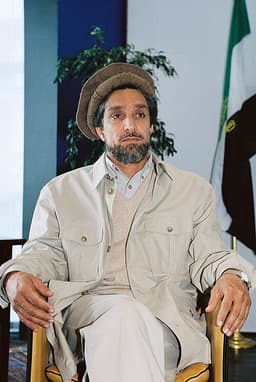
Pervez Musharraf
General · Modern
54.6Total
Basic Information
Born
1939
1943
Died
—
—
Era
Modern
Modern
Nationality
Congo-Brazzaville
Pakistan
Occupation
General
General
Civilization
Other
Indian
Score Comparison
Military (10%)
10.2
50.0
Political (20%)
35.1
68.0
Influence (20%)
48.6
52.5
Legacy (20%)
37.5
42.5
Leadership (15%)
43.8
64.0
Strategy (15%)
42.3
60.0
TOTAL
38.6
54.6
Joachim Yhombi-Opango — Complete Timeline
1977 AD
Became President of Congo-BrazzavillePolitical Action◆ Major
Yhombi-Opango succeeded Marien Ngouabi as president after Ngouabi's assassination. He led the Congolese Party of Labour and ruled until 1979.
PresidencyCongo-BrazzavilleSuccession
Impact: national
1979 AD
Ousted from PowerPolitical Action◆ Major
Yhombi-Opango was forced to resign by the Central Committee of the Congolese Party of Labour, which accused him of mismanagement and corruption. He was succeeded by Denis Sassou-Nguesso.
CoupPolitical CrisisCongo-Brazzaville
Impact: nationaldestructive
1993 AD
Returned to Politics as Prime MinisterPolitical Action
Yhombi-Opango was appointed Prime Minister by President Pascal Lissouba during the civil war. His tenure was marked by conflict and instability.
AppointmentCivil WarCongo-Brazzaville
Impact: nationaldestructive
Pervez Musharraf — Complete Timeline
1999 AD
1999 Pakistani coup d'étatPolitical Action
General Musharraf led a bloodless coup that overthrew Prime Minister Nawaz Sharif. He declared a state of emergency and assumed the title of Chief Executive, later becoming President, establishing military rule in Pakistan.
CoupMilitary ruleSharif
Impact: nationaldestructive
2001 AD
Alliance with the US War on TerrorPolitical Action◆ Major
After 9/11, Musharraf allied Pakistan with the United States in the War on Terror. He allowed US access to Pakistani airspace and bases, and launched military operations against Taliban and Al-Qaeda militants in the tribal areas.
War on TerrorUS allianceTaliban
Impact: global
2007 AD
2007 state of emergencyPolitical Action◆ Major
Musharraf declared a state of emergency, suspending the constitution and imposing media censorship. He justified it as necessary to combat terrorism, but it was widely seen as an attempt to maintain power amid rising opposition.
EmergencyAuthoritarianismMedia censorship
Impact: nationaldestructive
2008 AD
Resignation under impeachment threatPolitical Action◆ Major
Facing impeachment by the new coalition government, Musharraf resigned as President and went into self-exile. His departure ended nine years of military rule and paved the way for a return to civilian democracy in Pakistan.
ResignationExileDemocracy
Impact: national
This comparison has not been analyzed yet.
One-time AI generation (~1 minute). Scores and timeline are already available below.
Rankings
🥇
Pervez MusharrafLeader
Mil: 50.0Pol: 68.0Inf: 52.5
54.6
🥈
Joachim Yhombi-Opango
Mil: 10.2Pol: 35.1Inf: 48.6
38.6
+16.0 behind
How This Comparison Works
Algorithm
Each figure is scored on 6 dimensions (0—100 scale) based on structured historical data: Military (10%), Political (20%), Influence (20%), Legacy (20%), Leadership (15%), Strategy (15%). The weighted total produces the final ranking.
Data Sources
Scores are computed from structured sub-indicators in the database. Scale factors adjust for era (Ancient ×0.85, Modern ×1.0) and civilization size (Eastern ×1.05, Other ×0.80) to account for differences in population and military scale.
Maximum 3 Figures
Comparisons are limited to 2—3 figures to ensure readability and statistical meaningfulness.
Error Margins
±5 points per dimension — Sub-scores are derived from historical records with inherent uncertainty. Two figures within 5 points on a dimension should be considered roughly equivalent in that area.
Total Score Accuracy
±3 points overall — The weighted combination of 6 dimensions produces a total score with approximately ±3 points of uncertainty. Differences of less than 3 points are not statistically significant— the figures are effectively tied.
Known Limitations
- Historical records are incomplete and uneven across civilizations
- Figures from oral-tradition societies may be underrepresented
- Occupation labels can misclassify multi-role figures
- Scores measure capability and impact, not moral character
- Quantitative scoring is a comparison tool, not absolute truth
Capability Radar
Military (10%) — Battles & Warfare
Battles
5
15
Win Rate
5
20
Expansion
5
10
Political (20%) — Governance & Reform
Reform
20
40
Diplomacy
25
45
Economy
15
35
Influence (20%) — Cultural & Global Reach
Cultural
10
20
Global
10
25
Legacy (20%) — Historical Impact
Historical
15
30
Longevity
10
15
Leadership (15%) — Power & Stability
Tenure
30
55
Stability
10
20
Strategy (15%) — Tactics & Innovation
Strategy
5
30
Tactics
5
25
Reform
10
40
Similar Comparisons
Comments & Discussion
No comments yet. Be the first to share your thoughts!