Loading...
Joao Figueiredo vs Michiel de Ruyter
Michiel de Ruyter leads by 10.4 pts · 2 figures compared
…
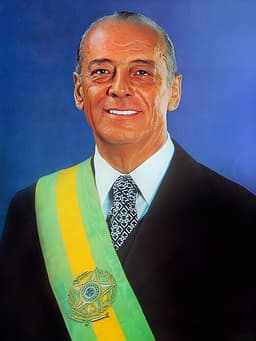
Joao Figueiredo
General · Modern
50.6Total
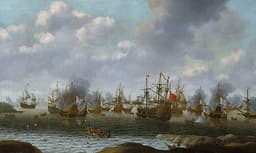
Michiel de Ruyter
General · Modern
61.0Total
Basic Information
Born
1918
1607
Died
1999
1676
Era
Modern
Modern
Nationality
Brazil
Netherlands
Occupation
General
General
Civilization
Western
Western
Score Comparison
Military (10%)
22.6
74.0
Political (20%)
68.0
45.0
Influence (20%)
51.8
40.0
Legacy (20%)
40.0
80.0
Leadership (15%)
74.0
62.0
Strategy (15%)
41.0
75.3
TOTAL
50.6
61.0
Joao Figueiredo — Complete Timeline
1979 AD
Enacted the Party Reform LawReform◆ Major
Figueiredo's government passed legislation ending the two-party system imposed by the military, allowing the formation of multiple political parties. This reform facilitated the reorganization of opposition forces and the eventual return to multi-party democracy.
Political ReformMulti-party SystemDemocratization
Impact: nationalconstructive
Assumed the Presidency of BrazilPolitical Action◆ Major
Figueiredo became the last military president of Brazil, succeeding Ernesto Geisel. His presidency marked the continuation of the political opening (abertura) process initiated by Geisel, aiming for a gradual transition to democracy.
Military DictatorshipAberturaTransition
Impact: national
Signed the Amnesty LawPolitical Action◆ Major
Figueiredo signed Law No. 6,683, granting amnesty to political exiles and those accused of political crimes during the military regime. The law also covered state agents, preventing prosecution for human rights abuses.
AmnestyHuman RightsTransition
Impact: nationalconstructive
1981 AD
Faced the 1981 Riocentro BombingOther◆ Major
A bomb exploded at a May Day concert at Riocentro, killing a military sergeant and wounding another. Evidence suggested involvement of hardline military factions opposed to abertura. The incident weakened Figueiredo's government and accelerated the democratic transition.
TerrorismMilitary HardlinersAbertura
Impact: nationaltragic
1983 AD
Launched the Economic Adjustment PlanReform◆ Major
Facing a severe debt crisis and inflation, Figueiredo's government implemented an IMF-backed austerity program, including currency devaluation and spending cuts. The plan failed to stabilize the economy, leading to recession and social unrest.
Economic CrisisIMFAusterity
Impact: nationaldestructive
1984 AD
Presided over the Diretas Já CampaignPolitical Action◆ Major
Figueiredo's government faced massive public demonstrations demanding direct presidential elections (Diretas J
Diretas JáDemocracy MovementPolitical Crisis
Impact: national
Michiel de Ruyter — Complete Timeline
1639 AD
Battle of the DownsWar
De Ruyter served as a captain in the Dutch fleet under Maarten Tromp at the Battle of the Downs, where the Dutch decisively defeated a Spanish fleet. This battle established Dutch naval dominance and marked de Ruyter's early combat experience.
Eighty Years' WarNaval BattleDutch Victory
Impact: regional
1661 AD
Expedition to the MediterraneanWar
De Ruyter led a Dutch fleet to the Mediterranean to protect Dutch merchant shipping from Barbary pirates and to assert Dutch naval presence. He negotiated treaties with Algiers and Tunis, securing safer passage for Dutch trade.
Barbary PiratesNaval DiplomacyTrade Protection
Impact: regionalconstructive
1667 AD
Raid on the MedwayWar
De Ruyter led a Dutch fleet up the River Medway, attacking the English navy at its Chatham Dockyard. The Dutch burned or captured several major English warships, including the flagship HMS Royal Charles, a humiliating defeat for England.
Second Anglo-Dutch WarNaval RaidEnglish Defeat
Impact: regional
1672 AD
Battle of SolebayWar◆ Major
De Ruyter attacked the Anglo-French fleet at Solebay, preventing a blockade of the Dutch coast. The battle was tactically indecisive but strategically important as it thwarted Allied plans to invade the Netherlands.
Third Anglo-Dutch WarNaval BattleStrategic Defense
Impact: regional
1673 AD
Battle of the TexelWar◆ Major
De Ruyter commanded the Dutch fleet to a tactical victory over a combined Anglo-French fleet at the Battle of the Texel. This victory prevented an invasion of the Netherlands and secured Dutch independence during the Franco-Dutch War.
Franco-Dutch WarNaval BattleDutch Victory
Impact: regional
1676 AD
Death at the Battle of AugustaWar◆ Major
De Ruyter was mortally wounded by a cannonball during the Battle of Augusta against a French fleet. He died several days later. His death was a major loss for the Dutch navy and he was given a state funeral with great honors.
Franco-Dutch WarNaval BattleDeath in Battle
Impact: nationaltragic
Expert Analysis
Origins
João Figueiredo was born on January 15, 1918, in Rio de Janeiro, Brazil, into a military family. His father, Euclides Figueiredo, was an army general. Figueiredo entered the military academy in 1937 and later served as a cavalry officer. He rose through the ranks, attending the Escola de Comando e Estado-Maior do Exército and the Escola Superior de Guerra. His early career was marked by staff positions and teaching, rather than combat.
Michiel de Ruyter was born on March 24, 1607, in Vlissingen, Netherlands, into a poor family. His father was a beer porter. De Ruyter went to sea at age 11 as a cabin boy, learning navigation and seamanship. He became a merchant captain by 1631, gaining experience in the Baltic and Mediterranean trades. His early naval service began in 1637 when he fought against Spain in the Eighty Years' War.
Rise to Power
Figueiredo's rise was through the military hierarchy. He served as chief of staff of the Third Army and later as head of the National Information Service (SNI) under President Ernesto Geisel. In 1978, Geisel selected Figueiredo as his successor, and he was elected president by an electoral college in 1979, taking office on March 15, 1979. His political score of 68.0 reflects his ability to navigate the transition to democracy.
De Ruyter's rise came from naval victories. He was appointed vice-admiral of the Dutch fleet in 1653 after the death of Maarten Tromp. His command of the Mediterranean squadron in 1661 and victories against the English in the Second Anglo-Dutch War (1665-1667) cemented his reputation. The Raid on the Medway in June 1667, where he destroyed much of the English fleet, made him a national hero. His military score of 74.0 and strategy score of 75.3 highlight his tactical brilliance.
Leadership & Governance
Figueiredo's leadership was defined by political liberalization. He continued the abertura (political opening) started by Geisel, signing the Amnesty Law in 1979 that allowed exiles to return and freed political prisoners. He also enacted the Party Reform Law in 1979, ending the two-party system and allowing multiple parties. However, his economic policies were less successful: facing a debt crisis and inflation, he implemented an IMF-backed austerity plan that caused recession and unemployment. His leadership score of 74.0 reflects his role in the democratic transition.
De Ruyter's leadership was operational and tactical. He commanded fleets in major battles: the Battle of Solebay (1672), where he prevented a blockade; the Battle of the Texel (1673), where he defeated an Anglo-French invasion force. His leadership style was hands-on and inspirational, often leading from the front. He emphasized discipline, training, and innovation in naval tactics. His leadership score of 62.0 is lower than Figueiredo's, but his military and strategy scores are higher.
Triumph & Tragedy
Figueiredo's greatest success was overseeing the peaceful transition to democracy, including the 1982 elections and the 1984 Diretas Já protests. However, his greatest failure was the 1981 Riocentro bombing, where a bomb intended for a concert killed a military sergeant, revealing hardline resistance to democratization. The scandal damaged the regime's credibility. His legacy score of 40.0 reflects mixed views on his presidency.
De Ruyter's greatest triumph was the Raid on the Medway, which forced England to sue for peace. His greatest tragedy was his death at the Battle of Augusta (1676), where he was mortally wounded while fighting the French. His death was a major loss for the Dutch Republic. His legacy score of 80.0 is high due to his lasting fame as a national hero.
Character & Destiny
Figueiredo was known for his gruff personality and occasional bluntness. He once said, "I am the last of the cassocks" (referring to the military regime). His character was suited to managing the transition, but he lacked the charisma to inspire. His destiny was to be the last military president, a role he accepted reluctantly.
De Ruyter was known for his modesty, piety, and tactical acumen. He was a skilled diplomat as well as admiral. His character made him a unifying figure for the Dutch Republic. His destiny was to die in battle, cementing his status as a martyr for his country.
Legacy
Figueiredo's legacy is tied to Brazil's democratization. The Amnesty Law and party reforms laid the groundwork for the 1988 Constitution. However, his economic mismanagement and the Riocentro affair tarnish his record. His total score of 50.6 reflects a mixed but significant impact.
De Ruyter's legacy is enduring. He is considered one of the greatest naval commanders in history. His tactics influenced naval warfare for centuries. The Dutch navy named ships after him, and his statue stands in Vlissingen. His total score of 61.0 is higher, reflecting his military and strategic brilliance.
Conclusion
Michiel de Ruyter had greater impact than João Figueiredo. De Ruyter's military achievements (score 74.0) and strategic innovations (75.3) shaped European history, while Figueiredo's political role (68.0) was important but limited to Brazil. De Ruyter's legacy score of 80.0 far exceeds Figueiredo's 40.0. Although Figueiredo's leadership score (74.0) is higher, de Ruyter's overall total (61.0 vs 50.6) and lasting fame make him the more significant figure.
Rankings
🥇
Michiel de RuyterLeader
Mil: 74.0Pol: 45.0Inf: 40.0
61.0
🥈
Joao Figueiredo
Mil: 22.6Pol: 68.0Inf: 51.8
50.6
+10.4 behind
How This Comparison Works
Algorithm
Each figure is scored on 6 dimensions (0—100 scale) based on structured historical data: Military (10%), Political (20%), Influence (20%), Legacy (20%), Leadership (15%), Strategy (15%). The weighted total produces the final ranking.
Data Sources
Scores are computed from structured sub-indicators in the database. Scale factors adjust for era (Ancient ×0.85, Modern ×1.0) and civilization size (Eastern ×1.05, Other ×0.80) to account for differences in population and military scale.
Maximum 3 Figures
Comparisons are limited to 2—3 figures to ensure readability and statistical meaningfulness.
Error Margins
±5 points per dimension — Sub-scores are derived from historical records with inherent uncertainty. Two figures within 5 points on a dimension should be considered roughly equivalent in that area.
Total Score Accuracy
±3 points overall — The weighted combination of 6 dimensions produces a total score with approximately ±3 points of uncertainty. Differences of less than 3 points are not statistically significant— the figures are effectively tied.
Known Limitations
- Historical records are incomplete and uneven across civilizations
- Figures from oral-tradition societies may be underrepresented
- Occupation labels can misclassify multi-role figures
- Scores measure capability and impact, not moral character
- Quantitative scoring is a comparison tool, not absolute truth
Capability Radar
Military (10%) — Battles & Warfare
Battles
10
85
Win Rate
10
90
Expansion
5
60
Political (20%) — Governance & Reform
Reform
40
40
Diplomacy
45
70
Economy
35
55
Influence (20%) — Cultural & Global Reach
Cultural
20
75
Global
20
70
Legacy (20%) — Historical Impact
Historical
25
80
Longevity
15
75
Leadership (15%) — Power & Stability
Tenure
55
50
Stability
30
60
Strategy (15%) — Tactics & Innovation
Strategy
15
88
Tactics
15
95
Reform
20
75
Similar Comparisons
Comments & Discussion
No comments yet. Be the first to share your thoughts!