Loading...
Julius Caesar vs Michiel de Ruyter
Julius Caesar leads by 21.8 pts · 2 figures compared
…

Julius Caesar
General · Ancient
82.8Total
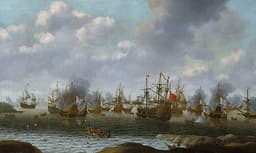
Michiel de Ruyter
General · Modern
61.0Total
Basic Information
Born
-100
1607
Died
-44
1676
Era
Ancient
Modern
Nationality
Roman Republic
Netherlands
Occupation
General
General
Civilization
Western
Western
Score Comparison
Military (10%)
88.0
74.0
Political (20%)
78.0
45.0
Influence (20%)
85.0
40.0
Legacy (20%)
82.0
80.0
Leadership (15%)
80.0
62.0
Strategy (15%)
85.0
75.3
TOTAL
82.8
61.0
Julius Caesar — Complete Timeline
58 BC
Gallic WarsWar◆ Major
Caesar, as proconsul of Gaul, launched a series of campaigns that conquered all of Gaul (modern France, Belgium, and parts of Switzerland). He fought numerous battles, including against the Helvetii, the Belgae, and the Gallic chieftain Vercingetorix. The wars brought immense wealth and a loyal army to Caesar.
Gallic WarsConquestRoman Expansion
Impact: regional
49 BC
Crossing the RubiconPolitical Action◆ Major
Caesar led Legio XIII across the Rubicon River into Italy, defying the Roman Senate's order to disband his army. This act triggered a civil war against Pompey and the Optimates, ultimately leading to Caesar's dictatorship and the end of the Roman Republic.
Roman Civil WarEnd of RepublicPower Struggle
Impact: global
48 BC
Battle of PharsalusWar◆ Major
Caesar's outnumbered army defeated the larger forces of Pompey the Great at Pharsalus in Greece. Caesar's tactical use of a reserve line to counter Pompey's cavalry charge proved decisive. Pompey fled to Egypt, where he was assassinated, leaving Caesar as the undisputed master of the Roman world.
Roman Civil WarBattleDecisive Victory
Impact: regional
44 BC
Appointment as Dictator for LifePolitical Action◆ Major
The Roman Senate appointed Caesar dictator perpetuo (dictator for life), granting him unprecedented personal power. This move concentrated military, legislative, and judicial authority in one person, effectively ending the Roman Republic's traditional system of checks and balances and alarming many senators.
DictatorshipEnd of RepublicPower Consolidation
Impact: regionaldestructive
Assassination on the Ides of MarchPolitical Action◆ Major
A group of Roman senators, led by Marcus Junius Brutus and Gaius Cassius Longinus, stabbed Caesar to death at a meeting of the Senate in the Theatre of Pompey. The assassination was intended to restore the Republic, but instead triggered another civil war that led to the rise of the Roman Empire.
AssassinationRoman PoliticsEnd of Republic
Impact: globaldestructive
Michiel de Ruyter — Complete Timeline
1639 AD
Battle of the DownsWar
De Ruyter served as a captain in the Dutch fleet under Maarten Tromp at the Battle of the Downs, where the Dutch decisively defeated a Spanish fleet. This battle established Dutch naval dominance and marked de Ruyter's early combat experience.
Eighty Years' WarNaval BattleDutch Victory
Impact: regional
1661 AD
Expedition to the MediterraneanWar
De Ruyter led a Dutch fleet to the Mediterranean to protect Dutch merchant shipping from Barbary pirates and to assert Dutch naval presence. He negotiated treaties with Algiers and Tunis, securing safer passage for Dutch trade.
Barbary PiratesNaval DiplomacyTrade Protection
Impact: regionalconstructive
1667 AD
Raid on the MedwayWar
De Ruyter led a Dutch fleet up the River Medway, attacking the English navy at its Chatham Dockyard. The Dutch burned or captured several major English warships, including the flagship HMS Royal Charles, a humiliating defeat for England.
Second Anglo-Dutch WarNaval RaidEnglish Defeat
Impact: regional
1672 AD
Battle of SolebayWar◆ Major
De Ruyter attacked the Anglo-French fleet at Solebay, preventing a blockade of the Dutch coast. The battle was tactically indecisive but strategically important as it thwarted Allied plans to invade the Netherlands.
Third Anglo-Dutch WarNaval BattleStrategic Defense
Impact: regional
1673 AD
Battle of the TexelWar◆ Major
De Ruyter commanded the Dutch fleet to a tactical victory over a combined Anglo-French fleet at the Battle of the Texel. This victory prevented an invasion of the Netherlands and secured Dutch independence during the Franco-Dutch War.
Franco-Dutch WarNaval BattleDutch Victory
Impact: regional
1676 AD
Death at the Battle of AugustaWar◆ Major
De Ruyter was mortally wounded by a cannonball during the Battle of Augusta against a French fleet. He died several days later. His death was a major loss for the Dutch navy and he was given a state funeral with great honors.
Franco-Dutch WarNaval BattleDeath in Battle
Impact: nationaltragic
Expert Analysis
Origins
Gaius Julius Caesar was born in 100 BCE into the patrician Julian family, which claimed descent from the goddess Venus. His early life was marked by political turbulence: his uncle Gaius Marius was a populist leader, while his father died when Caesar was 16. He received a traditional Roman education in rhetoric, philosophy, and military tactics. His marriage to Cornelia, daughter of Marius's ally Cinna, tied him to the popular faction. Caesar fled Rome during Sulla's proscriptions and served in Asia Minor, where he won the civic crown for saving a citizen's life.
Michiel de Ruyter was born in 1607 in Vlissingen, a port city in the Dutch Republic. His father was a beer porter who died when Michiel was young. De Ruyter went to sea at age 11 as a ship's boy, learning navigation and seamanship through experience. He rose through the ranks of the Dutch merchant marine, commanding his first ship at 24. Unlike Caesar, De Ruyter had no formal education in classics or politics; his expertise was entirely practical, honed in the rough-and-tumble world of 17th-century maritime commerce and naval warfare.
Rise to Power
Caesar's political ascent began with his election as quaestor in 69 BCE, followed by aedile in 65 BCE, and pontifex maximus in 63 BCE. He formed the First Triumvirate with Pompey and Crassus in 60 BCE, securing the consulship for 59 BCE. As proconsul of Gaul from 58 BCE, he launched the Gallic Wars, conquering modern France and Belgium in a series of brilliant campaigns. His victories at Alesia (52 BCE) and against the Helvetii and Germans made him immensely popular with his legions and the Roman populace. The Senate's attempt to recall him led to his crossing of the Rubicon in 49 BCE, triggering a civil war. He defeated Pompey at Pharsalus (48 BCE) and later secured control over the Roman world.
De Ruyter's rise was slower but steady. He served as a captain in the Dutch navy during the First Anglo-Dutch War (1652-1654), distinguishing himself at the Battle of the Downs (1639) under Maarten Tromp. After Tromp's death in 1653, De Ruyter became vice-admiral. His strategic acumen was recognized during the Second Anglo-Dutch War (1665-1667). His most famous achievement was the Raid on the Medway (1667), where he led a Dutch fleet up the River Medway, burning or capturing English ships at Chatham Dockyard. This humiliating defeat forced England to negotiate a favorable peace for the Dutch. De Ruyter was appointed commander-in-chief of the Dutch fleet in 1672, facing the combined Anglo-French forces.
Leadership & Governance
Caesar's leadership combined military genius with political ambition. He centralized authority, reformed the calendar (Julian calendar), granted citizenship to provincials, and initiated public works. His governance was autocratic but effective, reducing corruption and stabilizing the provinces. Militarily, he was known for speed, surprise, and tactical innovation—such as using a reserve line at Pharsalus to counter Pompey's cavalry. He also wrote commentaries on his campaigns, shaping his own legacy. However, his concentration of power alienated the senatorial aristocracy, leading to his assassination.
De Ruyter's leadership was more collaborative. He commanded through respect and example, often leading from the front. His tactical flexibility allowed him to adapt to changing conditions; for instance, at the Battle of Solebay (1672), he used aggressive attacks to break the Anglo-French line. He was less involved in governance, focusing on naval matters. His political influence was limited compared to Caesar's, reflected in his lower political score of 45.0 versus Caesar's 78.0. De Ruyter's strength lay in naval strategy and inspiring his crews, not in shaping state policy.
Triumph & Tragedy
Caesar's greatest triumph was the conquest of Gaul, which added vast territories to Rome and provided wealth and troops for his rise. His victory at Pharsalus solidified his control over Rome. However, his greatest failure was his inability to secure a stable succession. His assassination on the Ides of March (44 BCE) plunged Rome into another civil war. His rule as dictator for life concentrated too much power in one individual, leading to his downfall.
De Ruyter's triumph was the Raid on the Medway, a strategic masterpiece that crippled English naval power and forced peace. His victory at the Battle of the Texel (1673) prevented an invasion of the Dutch Republic. His tragedy was his death at the Battle of Augusta (1676), where a cannonball mortally wounded him. He died without seeing the end of the war. Despite his successes, the Dutch Republic eventually declined as a major power.
Character & Destiny
Caesar was ambitious, decisive, and ruthless. He gambled on the Rubicon crossing, knowing it meant war. His clemency toward former enemies was calculated to win support, but he underestimated the hatred he engendered. His character—charismatic, intelligent, and driven—shaped his destiny: he rose to unparalleled power but fell to assassination. Historian Suetonius described him as "a man of great energy and ability, but with a passion for novelty and glory."
De Ruyter was modest, brave, and loyal. He was known as "Bestevaer" (Grandfather) by his sailors for his paternal care. He avoided political intrigue and focused on his duty. His character—steadfast and unpretentious—earned him respect but limited his political influence. His destiny was to become a national hero, but his death in battle sealed his legend. Historians note his tactical genius but also his reluctance to engage in risky ventures.
Legacy
Caesar's legacy is immense. His military tactics are still studied; his name became synonymous with imperial rule (Kaiser, Tsar). The Julian calendar was used for centuries. His centralization of power set a precedent for Roman emperors. His writings, especially the Commentaries, are classics of Latin literature. In terms of scores, Caesar's overall is 82.8, with military 88.0, political 78.0, influence 85.0, and legacy 82.0.
De Ruyter's legacy is strong in naval history. He is celebrated as the greatest Dutch admiral. The Raid on the Medway is a textbook example of amphibious warfare. His tactics influenced later naval strategists. However, his impact on global history is narrower than Caesar's. His overall score is 61.0, with military 74.0, political 45.0, influence 40.0, and legacy 80.0.
Conclusion
Julius Caesar had a greater impact on world history than Michiel de Ruyter. Caesar's military score of 88.0 exceeds De Ruyter's 74.0, and his political score of 78.0 dwarfs De Ruyter's 45.0. Caesar's actions transformed the Roman Republic into an empire, shaping Western civilization for centuries. De Ruyter's achievements, while impressive, were confined to naval warfare and the defense of the Dutch Republic. Caesar's legacy in governance, military strategy, and culture is far-reaching. De Ruyter was a master of his domain, but Caesar changed the course of history.
Rankings
🥇
Julius CaesarLeader
Mil: 88.0Pol: 78.0Inf: 85.0
82.8
🥈
Michiel de Ruyter
Mil: 74.0Pol: 45.0Inf: 40.0
61.0
+21.8 behind
How This Comparison Works
Algorithm
Each figure is scored on 6 dimensions (0—100 scale) based on structured historical data: Military (10%), Political (20%), Influence (20%), Legacy (20%), Leadership (15%), Strategy (15%). The weighted total produces the final ranking.
Data Sources
Scores are computed from structured sub-indicators in the database. Scale factors adjust for era (Ancient ×0.85, Modern ×1.0) and civilization size (Eastern ×1.05, Other ×0.80) to account for differences in population and military scale.
Maximum 3 Figures
Comparisons are limited to 2—3 figures to ensure readability and statistical meaningfulness.
Error Margins
±5 points per dimension — Sub-scores are derived from historical records with inherent uncertainty. Two figures within 5 points on a dimension should be considered roughly equivalent in that area.
Total Score Accuracy
±3 points overall — The weighted combination of 6 dimensions produces a total score with approximately ±3 points of uncertainty. Differences of less than 3 points are not statistically significant— the figures are effectively tied.
Known Limitations
- Historical records are incomplete and uneven across civilizations
- Figures from oral-tradition societies may be underrepresented
- Occupation labels can misclassify multi-role figures
- Scores measure capability and impact, not moral character
- Quantitative scoring is a comparison tool, not absolute truth
Capability Radar
Military (10%) — Battles & Warfare
Battles
95
85
Win Rate
92
90
Expansion
97
60
Political (20%) — Governance & Reform
Reform
90
40
Diplomacy
85
70
Economy
82
55
Influence (20%) — Cultural & Global Reach
Cultural
88
75
Global
94
70
Legacy (20%) — Historical Impact
Historical
95
80
Longevity
96
75
Leadership (15%) — Power & Stability
Tenure
75
50
Stability
60
60
Strategy (15%) — Tactics & Innovation
Strategy
94
88
Tactics
96
95
Reform
88
75
Similar Comparisons
Comments & Discussion
No comments yet. Be the first to share your thoughts!