Loading...
Joe Clark vs Y. S. Rajasekhara Reddy
Y. S. Rajasekhara Reddy leads by 16.9 pts · 2 figures compared
…
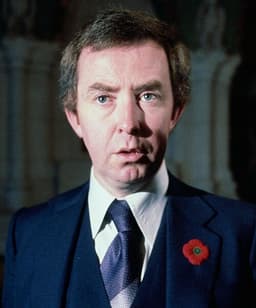
Joe Clark
Politician · Modern
41.5Total

Y. S. Rajasekhara Reddy
Politician · Modern
58.4Total
Basic Information
Born
1939
1949
Died
—
—
Era
Modern
Modern
Nationality
Canada
India
Occupation
Politician
Politician
Civilization
Western
Indian
Score Comparison
Military (10%)
10.2
52.9
Political (20%)
37.9
72.0
Influence (20%)
48.6
56.4
Legacy (20%)
38.3
45.8
Leadership (15%)
58.8
72.0
Strategy (15%)
42.2
60.0
TOTAL
41.5
58.4
Joe Clark — Complete Timeline
1979 AD
Became Prime Minister of CanadaPolitical Action◆ Major
Clark became the 16th Prime Minister of Canada, leading a Progressive Conservative minority government. At age 39, he was the youngest person to hold the office.
Government FormationYouthConservatism
Impact: national
Defeated on budget and lost governmentPolitical Action◆ Major
Clark's minority government was defeated on a motion of non-confidence over his budget, which proposed an 18-cent-per-gallon tax on gasoline. The defeat triggered an election that returned Pierre Trudeau's Liberals to power.
BudgetNon-ConfidenceElection
Impact: national
1984 AD
Returned as Minister of Foreign AffairsPolitical Action
Clark returned to cabinet as Secretary of State for External Affairs under Prime Minister Brian Mulroney. He served in this role until 1991, focusing on foreign policy and international relations.
CabinetForeign AffairsMulroney
Impact: national
Y. S. Rajasekhara Reddy — Complete Timeline
2004 AD
Became Chief Minister of Andhra PradeshPolitical Action◆ Major
YSR led the Indian National Congress to a landslide victory in the 2004 Andhra Pradesh assembly elections, defeating incumbent N. Chandrababu Naidu. He became Chief Minister, promising welfare and rural development.
ElectionCongressAndhra Pradesh
Impact: regionalconstructive
2006 AD
Implemented the 'Indiramma' Housing SchemeReform◆ Major
YSR launched the Indiramma housing scheme, aiming to provide free houses to all landless poor families in Andhra Pradesh. The program constructed millions of homes, but faced allegations of corruption and incomplete projects.
HousingWelfareAndhra Pradesh
Impact: regionalconstructive
2007 AD
Launched the 'Rajiv Arogyasri' Health Insurance SchemeReform◆ Major
YSR introduced the Rajiv Arogyasri health insurance scheme, providing free tertiary healthcare to Below Poverty Line families. The program covered critical illnesses and surgeries, becoming a model for other states.
HealthcareWelfareAndhra Pradesh
Impact: regionalconstructive
2009 AD
Died in a Helicopter CrashOther◆ Major
YSR died when his helicopter crashed in the Nallamala forest in Andhra Pradesh. The crash killed all nine on board, including YSR and his aides. His death triggered massive public mourning and political upheaval.
DeathHelicopter CrashAndhra Pradesh
Impact: nationaltragic
Expert Analysis
Origins
Joe Clark was born on June 5, 1939, in High River, Alberta, Canada. His father was a newspaper editor and his mother a teacher. He studied political science at the University of Alberta and later earned a law degree but never practiced. He worked as a journalist and political organizer before entering politics. His early involvement in the Progressive Conservative Party shaped his pragmatic conservatism.
Yeduguri Sandinti Rajasekhara Reddy, known as YSR, was born on July 8, 1949, in Pulivendula, Andhra Pradesh, India. His father was a farmer and politician. He earned a medical degree from Guntur Medical College and practiced as a doctor. His political career began in the Indian National Congress, inspired by his father's legacy. His rural roots deeply influenced his policy focus.
Rise to Power
Clark entered the House of Commons in 1972 and quickly rose through the ranks. He became leader of the Progressive Conservative Party in 1976, defeating more experienced candidates. In the 1979 federal election, he led his party to a minority government, winning 136 seats. He became Prime Minister on June 4, 1979, at age 39, the youngest in Canadian history.
YSR emerged as a prominent Congress leader in Andhra Pradesh. He was elected to the state assembly in 1978 and held various ministerial positions. In 2004, he led the Congress to a landslide victory, defeating incumbent Chandrababu Naidu. He became Chief Minister on May 14, 2004, and was re-elected in 2009 with an increased majority.
Leadership & Governance
Clark's leadership style was collegial but indecisive. His minority government faced immediate challenges. He proposed a budget with an 18-cent-per-gallon gasoline tax to reduce the deficit. The budget was defeated in a non-confidence motion on December 13, 1979, by a vote of 139-133. Clark's government fell after only 9 months, the shortest tenure of any Canadian prime minister.
YSR governed with a populist, pro-poor agenda. He launched transformative welfare schemes: the Rajiv Arogyasri health insurance scheme (2007), providing free tertiary healthcare to Below Poverty Line families; the Indiramma housing scheme (2005), building millions of houses for the landless; and the fee reimbursement scheme for students. His governance was marked by accessibility—he held open meetings and toured villages. His political score of 72.0 reflects his electoral success, but his military score of 52.9 is irrelevant to his governance.
Triumph & Tragedy
Clark's greatest triumph was becoming Prime Minister at a young age and later serving as a respected Foreign Minister under Brian Mulroney (1984-1991), where he focused on apartheid in South Africa and the Gulf War. His greatest failure was his brief, ineffective premiership—his government's defeat on the budget highlighted his lack of legislative control. He scored 58.8 in leadership, but his total score of 41.5 reflects his limited impact.
YSR's triumphs include transforming Andhra Pradesh's rural infrastructure and healthcare. The Arogyasri scheme covered over 1,000 medical procedures and benefited millions. His housing scheme constructed over 2 million houses. However, his tenure also saw rising debt and allegations of corruption. His greatest tragedy was his death in a helicopter crash on September 2, 2009, in the Nallamala forest, killing all nine on board. His sudden death created a political vacuum and a sympathy wave that benefited his son, Jagan Mohan Reddy. YSR scored 72.0 in leadership and 72.0 in political skill, far above Clark's 37.9.
Character & Destiny
Clark was described as cautious, intellectual, and principled but lacked the charisma and ruthlessness needed for sustained power. His destiny was to be a footnote—a prime minister whose legacy is brevity. He later served with distinction in foreign affairs, but his premiership is remembered as a failed experiment.
YSR was charismatic, decisive, and deeply connected to rural voters. He cultivated a persona of a 'common man's leader,' often eating with villagers and sleeping in their homes. His destiny was cut short by a tragic accident, but his death cemented his status as a martyr. His son inherited his political base, creating a new dynasty.
Legacy
Clark's legacy is mixed. He demonstrated that youth could reach the highest office, but his failure to govern effectively reinforced the need for strong minority management. He is remembered more for his later diplomatic work than his premiership. His score of 38.3 in legacy reflects this.
YSR's legacy is profound in Andhra Pradesh. The Arogyasri scheme became a model for national health insurance (Ayushman Bharat). The housing scheme transformed rural housing. His populist policies created a lasting political brand—'YSR' remains a powerful electoral force. His son formed the YSR Congress Party, which has governed the state. YSR's legacy score of 45.8 is higher than Clark's, but his impact was regional, not national or global.
Conclusion
While Clark achieved the rare feat of becoming Canada's youngest PM, his tenure was too brief and ineffective to leave a significant mark. His total score of 41.5 underscores his limited impact. In contrast, YSR scored 58.4 overall, with higher leadership (72.0) and political (72.0) scores reflecting his transformative governance and enduring political influence. YSR's welfare schemes changed millions of lives and created a political dynasty. Therefore, Y. S. Rajasekhara Reddy had greater impact as a leader, despite his regional scope, because his policies directly improved healthcare and housing for the poor, and his political legacy continues to shape Andhra Pradesh.
Rankings
🥇
Y. S. Rajasekhara ReddyLeader
Mil: 52.9Pol: 72.0Inf: 56.4
58.4
🥈
Joe Clark
Mil: 10.2Pol: 37.9Inf: 48.6
41.5
+16.9 behind
How This Comparison Works
Algorithm
Each figure is scored on 6 dimensions (0—100 scale) based on structured historical data: Military (10%), Political (20%), Influence (20%), Legacy (20%), Leadership (15%), Strategy (15%). The weighted total produces the final ranking.
Data Sources
Scores are computed from structured sub-indicators in the database. Scale factors adjust for era (Ancient ×0.85, Modern ×1.0) and civilization size (Eastern ×1.05, Other ×0.80) to account for differences in population and military scale.
Maximum 3 Figures
Comparisons are limited to 2—3 figures to ensure readability and statistical meaningfulness.
Error Margins
±5 points per dimension — Sub-scores are derived from historical records with inherent uncertainty. Two figures within 5 points on a dimension should be considered roughly equivalent in that area.
Total Score Accuracy
±3 points overall — The weighted combination of 6 dimensions produces a total score with approximately ±3 points of uncertainty. Differences of less than 3 points are not statistically significant— the figures are effectively tied.
Known Limitations
- Historical records are incomplete and uneven across civilizations
- Figures from oral-tradition societies may be underrepresented
- Occupation labels can misclassify multi-role figures
- Scores measure capability and impact, not moral character
- Quantitative scoring is a comparison tool, not absolute truth
Capability Radar
Military (10%) — Battles & Warfare
Battles
22
42
Win Rate
25
44
Expansion
28
49
Political (20%) — Governance & Reform
Reform
25
65
Diplomacy
40
55
Economy
20
70
Influence (20%) — Cultural & Global Reach
Cultural
15
40
Global
15
30
Legacy (20%) — Historical Impact
Historical
20
45
Longevity
10
30
Leadership (15%) — Power & Stability
Tenure
30
60
Stability
25
60
Strategy (15%) — Tactics & Innovation
Strategy
32
52
Tactics
33
57
Reform
36
58
Similar Comparisons
Comments & Discussion
No comments yet. Be the first to share your thoughts!