Loading...
Joe Clark vs Timothy Harris
Timothy Harris leads by 9.0 pts · 2 figures compared
…
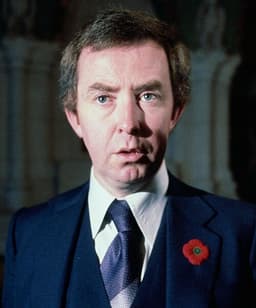
Joe Clark
Politician · Modern
41.5Total
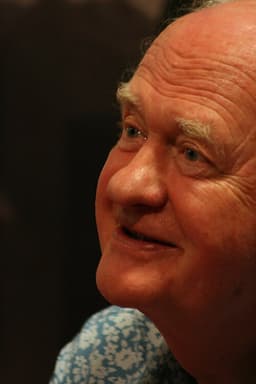
Timothy Harris
Politician · Modern
50.5Total
Basic Information
Born
1939
1964
Died
—
—
Era
Modern
Modern
Nationality
Canada
Saint Kitts and Nevis
Occupation
Politician
Politician
Civilization
Western
Other
Score Comparison
Military (10%)
10.2
33.6
Political (20%)
37.9
68.0
Influence (20%)
48.6
50.2
Legacy (20%)
38.3
40.8
Leadership (15%)
58.8
68.0
Strategy (15%)
42.2
39.9
TOTAL
41.5
50.5
Joe Clark — Complete Timeline
1979 AD
Became Prime Minister of CanadaPolitical Action◆ Major
Clark became the 16th Prime Minister of Canada, leading a Progressive Conservative minority government. At age 39, he was the youngest person to hold the office.
Government FormationYouthConservatism
Impact: national
Defeated on budget and lost governmentPolitical Action◆ Major
Clark's minority government was defeated on a motion of non-confidence over his budget, which proposed an 18-cent-per-gallon tax on gasoline. The defeat triggered an election that returned Pierre Trudeau's Liberals to power.
BudgetNon-ConfidenceElection
Impact: national
1984 AD
Returned as Minister of Foreign AffairsPolitical Action
Clark returned to cabinet as Secretary of State for External Affairs under Prime Minister Brian Mulroney. He served in this role until 1991, focusing on foreign policy and international relations.
CabinetForeign AffairsMulroney
Impact: national
Timothy Harris — Complete Timeline
2013 AD
Formed Team Unity CoalitionPolitical Action◆ Major
Harris helped form the Team Unity coalition, uniting the People's Labour Party, the Concerned Citizens' Movement, and the People's Action Movement. This alliance aimed to defeat the incumbent Labour Party.
CoalitionSaint KittsPolitics
Impact: nationalconstructive
2015 AD
Elected Prime Minister of Saint Kitts and NevisPolitical Action◆ Major
Timothy Harris led the Team Unity coalition to victory in the 2015 general election, becoming prime minister. The coalition ended 20 years of Denzil Douglas's rule.
ElectionSaint KittsCoalition
Impact: nationalconstructive
2016 AD
Implemented Citizenship by Investment ReformsReform◆ Major
Harris's government reformed the Citizenship by Investment Program, increasing transparency and oversight. The program became a major source of revenue for Saint Kitts and Nevis.
CBIEconomicReform
Impact: nationalconstructive
2022 AD
Lost 2022 General ElectionPolitical Action◆ Major
Harris's Team Unity coalition was defeated by the Saint Kitts and Nevis Labour Party in the 2022 general election. He stepped down as prime minister after one term.
ElectionSaint KittsDefeat
Impact: national
Expert Analysis
Origins
Joe Clark was born on June 5, 1939, in High River, Alberta, Canada. His father was a newspaper editor and his mother a homemaker. Clark studied political science at the University of Alberta and later earned a law degree from the University of British Columbia, though he never practiced law extensively. His early political involvement included work as a student activist and assistant to a Progressive Conservative MP.
Timothy Harris was born on October 8, 1964, in Tabernacle, Saint Kitts and Nevis. He grew up in a rural farming family. Harris earned a bachelor's degree in economics and history from the University of the West Indies, followed by a master's in public administration from the University of the West Indies. He worked as a teacher and later as a civil servant before entering politics.
Rise to Power
Joe Clark entered federal politics in 1972 as the MP for Rocky Mountain. He rose quickly through party ranks, becoming leader of the Progressive Conservative Party in 1976 at age 36. In the 1979 federal election, Clark led the PCs to a narrow victory, winning 136 seats against Pierre Trudeau's Liberals' 114. He became prime minister on June 4, 1979, at 39, the youngest in Canadian history.
Timothy Harris was first elected to the National Assembly of Saint Kitts and Nevis in 1993 as a member of the People's Labour Party (PLP). He served as Minister of Agriculture under Prime Minister Denzil Douglas but broke away in 2008 due to policy disagreements. In 2013, he helped form the Team Unity coalition, uniting the PLP, Concerned Citizens' Movement, and People's Action Movement. The coalition won the 2015 general election, ending 20 years of Labour Party rule. Harris became prime minister on February 18, 2015.
Leadership & Governance
Joe Clark's leadership style was cautious and consensus-oriented. He led a minority government, requiring negotiation with other parties. His most notable policy was the 18-cent-per-gallon gasoline tax in his 1979 budget, which aimed to reduce the deficit. However, the tax was unpopular and his government fell on a non-confidence vote on December 13, 1979, after only 9 months in power. Clark scored 58.8 in leadership and 42.2 in strategy, reflecting his competence but inability to navigate minority politics.
Timothy Harris governed with a focus on economic development and coalition management. He implemented major reforms to the Citizenship by Investment Program (CIP), increasing transparency and oversight. The CIP became a major revenue source for the island, funding infrastructure and social programs. Harris's government also improved relations with international partners. His leadership score of 68.0 and political score of 68.0 indicate strong coalition-building and governance skills, though his strategy score of 39.9 suggests challenges in long-term planning.
Triumph & Tragedy
Joe Clark's greatest success was becoming prime minister at a young age, demonstrating that the Progressive Conservatives could win after years of Liberal dominance. He also served effectively as Minister of Foreign Affairs under Brian Mulroney from 1984 to 1991, playing a role in apartheid-era South Africa and the Gulf War. His greatest failure was the brief, unstable minority government that fell over a budget measure. Clark's political score of 37.9 and legacy score of 38.3 reflect his limited impact as PM.
Timothy Harris's success includes ending 20 years of single-party rule and reforming the CIP, which boosted the economy. His government achieved fiscal stability and international recognition for transparency. However, his failure was losing the 2022 general election to the Labour Party, partly due to internal coalition tensions and COVID-19 economic effects. Harris's influence score of 50.2 and legacy score of 40.8 indicate moderate impact, primarily within the Caribbean.
Character & Destiny
Joe Clark was known for his integrity, intellect, and moderation. He was a pragmatist but lacked the charisma of his rival Pierre Trudeau. His cautious nature led to indecisiveness in crisis, such as the budget debacle. Historians often view him as a competent leader who was unlucky to face a strong opposition. His total score of 41.5 reflects a capable but unremarkable career.
Timothy Harris is seen as a skilled coalition builder and reformer. He demonstrated patience and strategic patience in uniting disparate parties. However, his reliance on the coalition led to internal conflicts over policy and leadership. His character as a consensus-seeker helped him win elections but also made him vulnerable to coalition fractures. His total score of 50.5 highlights his effectiveness in a small-state context.
Legacy
Joe Clark's legacy is as Canada's youngest PM and a symbol of Progressive Conservative resilience. He is remembered for his foreign policy work and as a statesman. However, his brief term left little legislative impact. Canada's political system saw no major changes due to his tenure. His legacy score of 38.3 aligns with his limited long-term influence.
Timothy Harris's legacy is tied to the Team Unity coalition and CIP reforms. He established a model for coalition governance in St Kitts and Nevis and increased the country's economic resilience. The CIP reforms set a standard for transparency in the region. His influence score of 50.2 reflects his impact on Caribbean politics, though his defeat in 2022 limits his long-term legacy.
Conclusion
Timothy Harris had a greater overall impact, scoring 50.5 versus Joe Clark's 41.5. Harris successfully formed a coalition, implemented economic reforms, and governed for two terms, while Clark's minority government lasted only 9 months. Clark's political score of 37.9 is significantly lower than Harris's 68.0, indicating Harris's superior ability to navigate political challenges. While both faced setbacks, Harris's reforms to the CIP had tangible economic benefits, whereas Clark's budget failure led to his government's collapse. Thus, Harris's influence and leadership outweigh Clark's brief tenure, making him the more impactful leader.
Rankings
🥇
Timothy HarrisLeader
Mil: 33.6Pol: 68.0Inf: 50.2
50.5
🥈
Joe Clark
Mil: 10.2Pol: 37.9Inf: 48.6
41.5
+9.0 behind
How This Comparison Works
Algorithm
Each figure is scored on 6 dimensions (0—100 scale) based on structured historical data: Military (10%), Political (20%), Influence (20%), Legacy (20%), Leadership (15%), Strategy (15%). The weighted total produces the final ranking.
Data Sources
Scores are computed from structured sub-indicators in the database. Scale factors adjust for era (Ancient ×0.85, Modern ×1.0) and civilization size (Eastern ×1.05, Other ×0.80) to account for differences in population and military scale.
Maximum 3 Figures
Comparisons are limited to 2—3 figures to ensure readability and statistical meaningfulness.
Error Margins
±5 points per dimension — Sub-scores are derived from historical records with inherent uncertainty. Two figures within 5 points on a dimension should be considered roughly equivalent in that area.
Total Score Accuracy
±3 points overall — The weighted combination of 6 dimensions produces a total score with approximately ±3 points of uncertainty. Differences of less than 3 points are not statistically significant— the figures are effectively tied.
Known Limitations
- Historical records are incomplete and uneven across civilizations
- Figures from oral-tradition societies may be underrepresented
- Occupation labels can misclassify multi-role figures
- Scores measure capability and impact, not moral character
- Quantitative scoring is a comparison tool, not absolute truth
Capability Radar
Military (10%) — Battles & Warfare
Battles
22
26
Win Rate
25
24
Expansion
28
32
Political (20%) — Governance & Reform
Reform
25
40
Diplomacy
40
50
Economy
20
45
Influence (20%) — Cultural & Global Reach
Cultural
15
20
Global
15
20
Legacy (20%) — Historical Impact
Historical
20
25
Longevity
10
20
Leadership (15%) — Power & Stability
Tenure
30
55
Stability
25
50
Strategy (15%) — Tactics & Innovation
Strategy
32
34
Tactics
33
35
Reform
36
35
Similar Comparisons
Comments & Discussion
No comments yet. Be the first to share your thoughts!