Loading...
Johan de Witt vs Luiz Inacio Lula da Silva
Luiz Inacio Lula da Silva leads by 1.0 pts · 2 figures compared
…
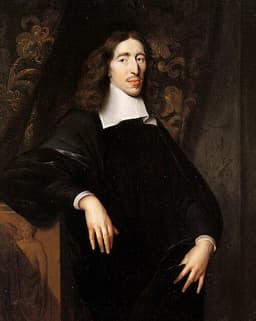
Johan de Witt
Politician · Modern
65.3Total
Luiz Inacio Lula da Silva
Politician · Modern
66.3Total
Basic Information
Born
1625
1945
Died
1672
—
Era
Modern
Modern
Nationality
Netherlands
Brazil
Occupation
Politician
Politician
Civilization
Western
Western
Score Comparison
Military (10%)
20.0
50.0
Political (20%)
90.0
78.0
Influence (20%)
82.0
82.0
Legacy (20%)
55.0
52.0
Leadership (15%)
75.0
78.0
Strategy (15%)
43.3
43.8
TOTAL
65.3
66.3
Johan de Witt — Complete Timeline
1652 AD
First Anglo-Dutch War (ended 1654)War◆ Major
De Witt oversaw the Dutch Republic's conduct in the First Anglo-Dutch War, which ended with the Treaty of Westminster. The war was a commercial conflict, and de Witt's leadership helped maintain Dutch maritime trade despite English naval superiority.
WarAnglo-Dutch WarsTrade
Impact: global
1653 AD
Appointed Grand Pensionary of HollandPolitical Action◆ Major
Johan de Witt was appointed Grand Pensionary of Holland, the most powerful political position in the Dutch Republic. He effectively led the republic during its Golden Age, focusing on naval power, trade, and republican governance, while opposing the influence of the House of Orange.
GovernmentDutch RepublicGolden Age
Impact: nationalconstructive
1667 AD
Raid on the MedwayWar◆ Major
Under de Witt's direction, the Dutch navy executed a daring raid on the English fleet at Chatham, destroying several ships and capturing the flagship Royal Charles. This humiliating defeat forced England to negotiate a favorable peace for the Dutch, ending the Second Anglo-Dutch War.
Naval RaidAnglo-Dutch WarsVictory
Impact: regionalconstructive
1672 AD
Murder of Johan de WittOther◆ Major
Johan de Witt and his brother Cornelis were lynched by an Orangist mob in The Hague. The murder occurred during the Rampjaar (Disaster Year) when the Dutch Republic faced invasions from France, England, and German states, and de Witt was blamed for the military failures.
MurderRampjaarPolitical Violence
Impact: nationaltragic
Luiz Inacio Lula da Silva — Complete Timeline
2002 AD
Elected President of BrazilPolitical Action
Luiz Inácio Lula da Silva was elected president of Brazil in 2002 as the candidate of the Workers' Party (PT). He assumed office on January 1, 2003, becoming the first left-wing president in Brazil's modern democratic history.
PresidencyElectionBrazil
Impact: nationalconstructive
2003 AD
Launched the Bolsa Família ProgramReform
Lula launched the Bolsa Fam
Social PolicyPoverty ReductionBrazil
Impact: nationalprogressive
2006 AD
Re-elected President of BrazilPolitical Action◆ Major
Lula was re-elected president in 2006, winning in the second round against Geraldo Alckmin. His second term continued social programs and economic growth, with Brazil experiencing a commodity boom.
Re-electionSocial PolicyBrazil
Impact: nationalconstructive
Oversaw the Discovery of the Pre-Salt Oil FieldsInvention◆ Major
During Lula's presidency, Petrobras discovered massive oil reserves in the pre-salt layer off the coast of Brazil in 2006. These discoveries transformed Brazil into a major oil exporter and boosted the economy.
Oil DiscoveryEnergyBrazil
Impact: globalconstructive
2018 AD
Convicted and Imprisoned in the Lava Jato ScandalPolitical Action
Lula was convicted of corruption and money laundering in 2017 and 2018 as part of the Lava Jato (Car Wash) investigation. He was imprisoned in April 2018, serving 580 days before his conviction was annulled in 2021.
CorruptionImprisonmentBrazil
Impact: nationaltragic
2022 AD
Re-elected President of Brazil for a Third TermPolitical Action
Lula was elected president for a third term in 2022, defeating incumbent Jair Bolsonaro. He assumed office on January 1, 2023, returning to power after his previous convictions were annulled.
PresidencyRe-electionBrazil
Impact: nationalconstructive
Expert Analysis
Origins
**Johan de Witt** was born in 1625 in Dordrecht, Netherlands, into a prominent regent family. His father, Jacob de Witt, was a burgomaster and member of the States of Holland. Johan studied law at the University of Leiden, graduating in 1645. His education emphasized mathematics, philosophy, and law, reflecting the Dutch Golden Age's intellectual climate. As a member of the Dutch States Party, he opposed the influence of the House of Orange.
**Luiz Inácio Lula da Silva** was born in 1945 in Garanhuns, Pernambuco, Brazil, into a poor family. His father left when Lula was young, and his mother moved the family to São Paulo. Lula had little formal education, leaving school after fourth grade to work as a shoeshiner and later a metalworker. He became involved in union activism in the 1970s, leading strikes that challenged Brazil's military dictatorship. His background as a labor leader shaped his political identity.
Rise to Power
**Johan de Witt** rose to prominence through family connections and intellectual reputation. In 1653, at age 28, he was appointed Grand Pensionary of Holland, the highest political office in the Dutch Republic. This occurred during the First Anglo-Dutch War (1652-1654), which he helped end with the Treaty of Westminster in 1654. His political skill secured his position for nearly two decades, leading the States Party against Orangist factions.
**Lula da Silva** rose through the labor movement. He co-founded the Workers' Party (PT) in 1980 and ran for president three times (1989, 1994, 1998) before winning in 2002. His victory marked a shift to the left in Brazilian politics, with his platform focusing on social justice and economic reform. He took office on January 1, 2003, with a mandate to reduce inequality.
Leadership & Governance
**Johan de Witt** governed as a republican leader, emphasizing the sovereignty of the States General over the stadtholderate. He promoted maritime commerce, overseeing the expansion of the Dutch East India Company (VOC). His leadership during the Second Anglo-Dutch War (1665-1667) included the Raid on the Medway in 1667, where the Dutch fleet destroyed English ships at Chatham. Domestically, he navigated religious tensions between Calvinists and Remonstrants, advocating for toleration. His governance score is 75.0, reflecting effective administration but vulnerability to populist backlash.
**Lula da Silva** governed as a pragmatic leftist. He launched the Bolsa Família program in 2003, which provided cash transfers to poor families conditional on school attendance and vaccinations. This program lifted over 20 million Brazilians out of poverty during his tenure. He also oversaw economic growth, with GDP averaging 4% annually from 2003-2010. His leadership score is 78.0, indicating strong executive ability but challenged by corruption scandals.
Triumph & Tragedy
**Johan de Witt's** greatest triumph was the Raid on the Medway, a strategic victory that forced England to negotiate favorable peace terms. His political system maintained the Dutch Republic's prosperity despite external threats. However, his greatest failure was the Rampjaar (Disaster Year) of 1672, when French and English forces invaded the Netherlands. De Witt was unable to mobilize effective defense, leading to his resignation and murder by an Orangist mob. His political score of 90.0 reflects his legislative skill but his military score of 20.0 highlights his weakness in war.
**Lula da Silva's** greatest triumph is Bolsa Família, which reduced extreme poverty by 50% during his presidency. His influence on global stage was high, with Brazil becoming a major commodity exporter. However, his greatest failure is the corruption scandal Lava Jato, which led to his conviction in 2017 for money laundering. He was imprisoned for 580 days before his conviction was annulled in 2021. His legacy score of 52.0 reflects lasting social programs but tainted by legal controversies.
Character & Destiny
**Johan de Witt** was a rationalist and mathematician, known for his analytical approach to politics. He wrote a treatise on annuity valuation, showing his affinity for numbers. His stubborn defense of republican principles alienated Orangist supporters, leading to his violent death. Historians assess him as a competent statesman who lacked the charisma to rally popular support. His character score of 75.0 in leadership is undermined by inflexibility.
**Lula da Silva** is a charismatic orator and union leader, with a personal story that resonates with Brazil's poor. His pragmatic turn after election (maintaining IMF agreements) disappointed some leftists but stabilized the economy. His conviction and imprisonment in 2018 were seen by supporters as political persecution. His resilience led to a political comeback, winning the presidency again in 2022. His influence score of 82.0 is high, but his strategy score of 43.8 indicates questionable decision-making in legal matters.
Legacy
**Johan de Witt's** legacy includes the consolidation of Dutch republican governance and maritime law. His writings on probability influenced later economists. However, his murder ended the States Party dominance, leading to the restoration of the stadtholderate. Today, he is remembered as a symbol of republican virtue, but his impact is limited to the Dutch Golden Age. His total score of 65.3 reflects a historically significant but regionally confined figure.
**Lula da Silva's** legacy is more global. Bolsa Família became a model for conditional cash transfers worldwide, influencing programs in Mexico, Indonesia, and the United States. His presidency reduced inequality in Brazil, with the Gini coefficient falling from 0.58 in 2003 to 0.54 in 2010. However, his corruption conviction casts a shadow. His total score of 66.3 is slightly higher than de Witt's, indicating broader contemporary relevance.
Conclusion
**Luiz Inácio Lula da Silva** had greater impact than Johan de Witt. While de Witt was a key figure in the Dutch Golden Age, his influence was largely confined to the Netherlands and the 17th century. Lula's policies, particularly Bolsa Família, have been replicated globally and have directly improved the lives of millions. His political trajectory from union leader to president to prisoner to president again is a unique narrative. Lula's total score of 66.3 edges out de Witt's 65.3, reflecting his broader and more enduring influence. Despite his flaws, Lula's impact on poverty reduction and social policy is more significant in historical terms.
Rankings
🥇
Luiz Inacio Lula da SilvaLeader
Mil: 50.0Pol: 78.0Inf: 82.0
66.3
🥈
Johan de Witt
Mil: 20.0Pol: 90.0Inf: 82.0
65.3
+1.0 behind
How This Comparison Works
Algorithm
Each figure is scored on 6 dimensions (0—100 scale) based on structured historical data: Military (10%), Political (20%), Influence (20%), Legacy (20%), Leadership (15%), Strategy (15%). The weighted total produces the final ranking.
Data Sources
Scores are computed from structured sub-indicators in the database. Scale factors adjust for era (Ancient ×0.85, Modern ×1.0) and civilization size (Eastern ×1.05, Other ×0.80) to account for differences in population and military scale.
Maximum 3 Figures
Comparisons are limited to 2—3 figures to ensure readability and statistical meaningfulness.
Error Margins
±5 points per dimension — Sub-scores are derived from historical records with inherent uncertainty. Two figures within 5 points on a dimension should be considered roughly equivalent in that area.
Total Score Accuracy
±3 points overall — The weighted combination of 6 dimensions produces a total score with approximately ±3 points of uncertainty. Differences of less than 3 points are not statistically significant— the figures are effectively tied.
Known Limitations
- Historical records are incomplete and uneven across civilizations
- Figures from oral-tradition societies may be underrepresented
- Occupation labels can misclassify multi-role figures
- Scores measure capability and impact, not moral character
- Quantitative scoring is a comparison tool, not absolute truth
Capability Radar
Military (10%) — Battles & Warfare
Battles
15
27
Win Rate
20
32
Expansion
10
34
Political (20%) — Governance & Reform
Reform
85
80
Diplomacy
90
85
Economy
95
80
Influence (20%) — Cultural & Global Reach
Cultural
60
65
Global
70
75
Legacy (20%) — Historical Impact
Historical
75
70
Longevity
65
60
Leadership (15%) — Power & Stability
Tenure
75
75
Stability
70
70
Strategy (15%) — Tactics & Innovation
Strategy
40
39
Tactics
25
41
Reform
60
46
Similar Comparisons
Comments & Discussion
No comments yet. Be the first to share your thoughts!