Loading...
Johan de Witt vs Pravedes Mateo Sagasta
Johan de Witt leads by 9.7 pts · 2 figures compared
…
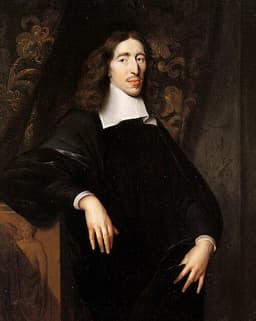
Johan de Witt
Politician · Modern
65.3Total

Pravedes Mateo Sagasta
Politician · Modern
55.6Total
Basic Information
Born
1625
1825
Died
1672
1903
Era
Modern
Modern
Nationality
Netherlands
Spain
Occupation
Politician
Politician
Civilization
Western
Western
Score Comparison
Military (10%)
20.0
50.0
Political (20%)
90.0
60.0
Influence (20%)
82.0
53.3
Legacy (20%)
55.0
48.3
Leadership (15%)
75.0
79.8
Strategy (15%)
43.3
42.1
TOTAL
65.3
55.6
Johan de Witt — Complete Timeline
1652 AD
First Anglo-Dutch War (ended 1654)War◆ Major
De Witt oversaw the Dutch Republic's conduct in the First Anglo-Dutch War, which ended with the Treaty of Westminster. The war was a commercial conflict, and de Witt's leadership helped maintain Dutch maritime trade despite English naval superiority.
WarAnglo-Dutch WarsTrade
Impact: global
1653 AD
Appointed Grand Pensionary of HollandPolitical Action◆ Major
Johan de Witt was appointed Grand Pensionary of Holland, the most powerful political position in the Dutch Republic. He effectively led the republic during its Golden Age, focusing on naval power, trade, and republican governance, while opposing the influence of the House of Orange.
GovernmentDutch RepublicGolden Age
Impact: nationalconstructive
1667 AD
Raid on the MedwayWar◆ Major
Under de Witt's direction, the Dutch navy executed a daring raid on the English fleet at Chatham, destroying several ships and capturing the flagship Royal Charles. This humiliating defeat forced England to negotiate a favorable peace for the Dutch, ending the Second Anglo-Dutch War.
Naval RaidAnglo-Dutch WarsVictory
Impact: regionalconstructive
1672 AD
Murder of Johan de WittOther◆ Major
Johan de Witt and his brother Cornelis were lynched by an Orangist mob in The Hague. The murder occurred during the Rampjaar (Disaster Year) when the Dutch Republic faced invasions from France, England, and German states, and de Witt was blamed for the military failures.
MurderRampjaarPolitical Violence
Impact: nationaltragic
Pravedes Mateo Sagasta — Complete Timeline
1885 AD
Pact of El PardoPolitical Action
Sagasta and Conservative leader C
RestorationPolitical PactTurno Pacífico
Impact: nationalconstructive
1890 AD
Law of Universal SuffrageReform◆ Major
As Prime Minister, Sagasta passed a law establishing universal male suffrage in Spain. This reform expanded the electorate from about 800,000 to over 4 million voters, though electoral manipulation continued through caciquismo.
Electoral ReformDemocracyRestoration
Impact: nationalprogressive
1898 AD
Spanish-American WarWar
Sagasta was Prime Minister when the Spanish-American War broke out after the sinking of the USS Maine. Spain lost its remaining colonies of Cuba, Puerto Rico, and the Philippines, marking the end of the Spanish Empire.
Spanish-American WarColonial LossEmpire
Impact: globaltragic
Expert Analysis
Origins
Johan de Witt was born on September 24, 1625, in Dordrecht, Netherlands, into a prominent regent family. His father, Jacob de Witt, was a burgomaster and a member of the States of Holland. Johan studied law at the University of Leiden, where he excelled in mathematics and jurisprudence. His upbringing was steeped in the republican ideals of the Dutch Golden Age, emphasizing commerce, naval power, and civic virtue.
Pravedes Mateo Sagasta was born on July 21, 1825, in Torrecilla en Cameros, Spain, into a humble family. He studied civil engineering at the University of Madrid but soon turned to politics. Sagasta joined the Progressive Party and participated in the 1854 revolution, which shaped his liberal convictions. His early career was marked by exile and opposition to conservative regimes, fostering a pragmatic approach to reform.
Rise to Power
De Witt rose to prominence through his family connections and intellectual abilities. In 1653, at age 27, he was appointed Grand Pensionary of Holland, the de facto head of the Dutch Republic. His appointment came during the First Anglo-Dutch War (1652–1654), which he helped conclude with the Treaty of Westminster in 1654. De Witt consolidated power by marginalizing the Orangist faction and strengthening the States Party, a republican oligarchy.
Sagasta's rise was more gradual. He became a leader of the Liberal Party after the 1868 Glorious Revolution, serving as Minister of the Interior in 1869. He was Prime Minister for the first time in 1871. His political ascent culminated in the Pact of El Pardo (1885) with Conservative leader Antonio Cánovas del Castillo, establishing the turno pacífico—a system of alternating power that stabilized Spain's Restoration monarchy.
Leadership & Governance
De Witt governed as a republican leader, prioritizing Dutch commercial interests and naval supremacy. He reformed the Dutch navy, reducing corruption and improving efficiency, which led to victories in the Second Anglo-Dutch War (1665–1667), including the Raid on the Medway in 1667. Domestically, he promoted religious tolerance and free trade, but his regime was oligarchic, excluding the broader population. His leadership style was technocratic, relying on data and diplomacy.
Sagasta led as a parliamentary liberal, championing progressive reforms within a monarchical framework. He passed the Law of Universal Suffrage in 1890, expanding the electorate from 800,000 to over 5 million. He also enacted press freedom, jury trials, and civil marriage. However, his turno pacífico system was undemocratic, rigging elections to ensure alternation. His governance was pragmatic, balancing reform with stability.
Triumph & Tragedy
De Witt's greatest triumph was the Raid on the Medway (1667), where the Dutch fleet destroyed English ships at Chatham, forcing a favorable peace. His political acumen scored 90.0, and his leadership scored 75.0. However, his tragedy was the Rampjaar (Disaster Year) of 1672, when France and England invaded the Republic. De Witt's failure to secure alliances and his unpopularity led to his lynching by an Orangist mob, along with his brother Cornelis. His military score of 20.0 reflects his neglect of land forces.
Sagasta's triumph was the Pact of El Pardo (1885), which ensured political stability for two decades. His leadership score of 79.8 underscores his ability to manage coalitions. He also passed universal male suffrage, a landmark reform. However, his tragedy was the Spanish-American War (1898), which occurred during his premiership. Spain lost Cuba, Puerto Rico, and the Philippines, devastating national morale. His political score of 60.0 reflects the limitations of his system.
Character & Destiny
De Witt was rational, calculating, and principled, but he lacked popular appeal. His reliance on the merchant elite alienated the masses, who favored the Orangist monarchy. His character shaped his destiny: his refusal to compromise with the Orangists led to his violent death. Historians view him as a tragic figure, a republican visionary undone by his own rigidity.
Sagasta was charismatic, pragmatic, and conciliatory. He mastered the art of political maneuvering, but his commitment to the turno pacífico made him complicit in a corrupt system. His destiny was to be a reformer within constraints, achieving incremental change but unable to prevent Spain's decline. His influence score of 53.3 reflects his limited long-term impact.
Legacy
De Witt's legacy is mixed. He is remembered as a champion of republican governance and naval strength, but his murder tarnished his reputation. His influence on Dutch politics was overshadowed by the subsequent Orange monarchy. However, his ideas of religious tolerance and commercial republicanism influenced later thinkers. His total score of 65.3 places him as a significant but flawed leader.
Sagasta's legacy is more durable in Spain. The turno pacífico provided stability, but it also entrenched oligarchy. Universal male suffrage was a milestone, though its impact was diluted by electoral fraud. Sagasta is honored as a liberal reformer, but his system collapsed in 1923. His total score of 55.6 reflects his moderate impact.
Conclusion
Johan de Witt had greater impact than Pravedes Mateo Sagasta. De Witt's political score of 90.0 versus Sagasta's 60.0 highlights his superior strategic vision and influence during the Dutch Golden Age. While Sagasta's reforms were important, they operated within a flawed system. De Witt's ideas of republican liberty and naval power shaped the Netherlands' peak, whereas Sagasta's legacy is tied to Spain's decline. The score gap of 9.7 points confirms de Witt's greater historical significance.
Rankings
🥇
Johan de WittLeader
Mil: 20.0Pol: 90.0Inf: 82.0
65.3
🥈
Pravedes Mateo Sagasta
Mil: 50.0Pol: 60.0Inf: 53.3
55.6
+9.7 behind
How This Comparison Works
Algorithm
Each figure is scored on 6 dimensions (0—100 scale) based on structured historical data: Military (10%), Political (20%), Influence (20%), Legacy (20%), Leadership (15%), Strategy (15%). The weighted total produces the final ranking.
Data Sources
Scores are computed from structured sub-indicators in the database. Scale factors adjust for era (Ancient ×0.85, Modern ×1.0) and civilization size (Eastern ×1.05, Other ×0.80) to account for differences in population and military scale.
Maximum 3 Figures
Comparisons are limited to 2—3 figures to ensure readability and statistical meaningfulness.
Error Margins
±5 points per dimension — Sub-scores are derived from historical records with inherent uncertainty. Two figures within 5 points on a dimension should be considered roughly equivalent in that area.
Total Score Accuracy
±3 points overall — The weighted combination of 6 dimensions produces a total score with approximately ±3 points of uncertainty. Differences of less than 3 points are not statistically significant— the figures are effectively tied.
Known Limitations
- Historical records are incomplete and uneven across civilizations
- Figures from oral-tradition societies may be underrepresented
- Occupation labels can misclassify multi-role figures
- Scores measure capability and impact, not moral character
- Quantitative scoring is a comparison tool, not absolute truth
Capability Radar
Military (10%) — Battles & Warfare
Battles
15
29
Win Rate
20
29
Expansion
10
36
Political (20%) — Governance & Reform
Reform
85
70
Diplomacy
90
65
Economy
95
60
Influence (20%) — Cultural & Global Reach
Cultural
60
30
Global
70
30
Legacy (20%) — Historical Impact
Historical
75
50
Longevity
65
40
Leadership (15%) — Power & Stability
Tenure
75
75
Stability
70
55
Strategy (15%) — Tactics & Innovation
Strategy
40
36
Tactics
25
43
Reform
60
42
Similar Comparisons
Comments & Discussion
No comments yet. Be the first to share your thoughts!