Loading...
Johan de Witt vs Mohamed Boudiaf
Johan de Witt leads by 23.3 pts · 2 figures compared
…

Johan de Witt
Politician · Modern
65.3Total
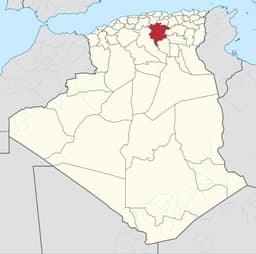
Mohamed Boudiaf
Politician · Modern
42.0Total
Basic Information
Born
1625
1919
Died
1672
1992
Era
Modern
Modern
Nationality
Netherlands
Algeria
Occupation
Politician
Politician
Civilization
Western
Middle Eastern
Score Comparison
Military (10%)
20.0
26.9
Political (20%)
90.0
37.9
Influence (20%)
82.0
52.5
Legacy (20%)
55.0
45.8
Leadership (15%)
75.0
31.2
Strategy (15%)
43.3
43.4
TOTAL
65.3
42.0
Johan de Witt — Complete Timeline
1652 AD
First Anglo-Dutch War (ended 1654)War◆ Major
De Witt oversaw the Dutch Republic's conduct in the First Anglo-Dutch War, which ended with the Treaty of Westminster. The war was a commercial conflict, and de Witt's leadership helped maintain Dutch maritime trade despite English naval superiority.
WarAnglo-Dutch WarsTrade
Impact: global
1653 AD
Appointed Grand Pensionary of HollandPolitical Action◆ Major
Johan de Witt was appointed Grand Pensionary of Holland, the most powerful political position in the Dutch Republic. He effectively led the republic during its Golden Age, focusing on naval power, trade, and republican governance, while opposing the influence of the House of Orange.
GovernmentDutch RepublicGolden Age
Impact: nationalconstructive
1667 AD
Raid on the MedwayWar◆ Major
Under de Witt's direction, the Dutch navy executed a daring raid on the English fleet at Chatham, destroying several ships and capturing the flagship Royal Charles. This humiliating defeat forced England to negotiate a favorable peace for the Dutch, ending the Second Anglo-Dutch War.
Naval RaidAnglo-Dutch WarsVictory
Impact: regionalconstructive
1672 AD
Murder of Johan de WittOther◆ Major
Johan de Witt and his brother Cornelis were lynched by an Orangist mob in The Hague. The murder occurred during the Rampjaar (Disaster Year) when the Dutch Republic faced invasions from France, England, and German states, and de Witt was blamed for the military failures.
MurderRampjaarPolitical Violence
Impact: nationaltragic
Mohamed Boudiaf — Complete Timeline
1954 AD
Co-founded the National Liberation Front (FLN)Political Action
Mohamed Boudiaf was a founding member of the National Liberation Front (FLN) in November 1954, the revolutionary organization that launched the Algerian War of Independence against French colonial rule. He helped organize the armed struggle and served as a key political leader.
Algerian WarIndependenceFLN
Impact: nationalconstructive
1956 AD
Arrested and imprisoned by French authoritiesPolitical Action◆ Major
Boudiaf was arrested by French authorities in 1956 along with other FLN leaders, including Ahmed Ben Bella. He was imprisoned in France for the duration of the war, spending nearly six years in detention until the Evian Accords in 1962.
ImprisonmentAlgerian WarFrench Colonialism
Impact: nationaltragic
1963 AD
Exiled and founded the Socialist Forces Front (FFS)Political Action◆ Major
After independence, Boudiaf opposed the authoritarian turn of the FLN under Ahmed Ben Bella. He went into exile in Morocco and founded the Socialist Forces Front (FFS) in 1963, a leftist opposition party that advocated for democratic socialism and multi-party politics.
OppositionExilePolitical Party
Impact: nationalconstructive
1992 AD
Returned from exile and became President of AlgeriaPolitical Action
Boudiaf returned from 27 years of exile in Morocco on January 16, 1992, to become President of the High State Council (HCE), Algeria's collective presidency. He was appointed after the military canceled the 1991 legislative elections to prevent an Islamist victory, tasked with restoring stability.
PresidencyAlgerian Civil WarHCE
Impact: national
Assassinated during a public speechPolitical Action
Boudiaf was assassinated on June 29, 1992, in Annaba while giving a speech at a cultural center. He was shot by a bodyguard, Lieutenant Larbi Belkheir, who was allegedly linked to Islamist extremists. His death deepened Algeria's civil war and removed a key moderate figure.
AssassinationAlgerian Civil WarPolitical Violence
Impact: nationaltragic
Expert Analysis
Origins
Johan de Witt was born on September 24, 1625, in Dordrecht, Dutch Republic, into a prominent regent family. His father, Jacob de Witt, was a burgomaster and member of the States of Holland. Johan studied law at the University of Leiden, graduating in 1645, and was deeply influenced by the rationalist philosophy of Descartes and the republican ideals of the Dutch Golden Age. His early career as a lawyer and his diplomatic missions to Sweden and Denmark honed his political skills.
Mohamed Boudiaf was born on June 23, 1919, in M'Sila, Algeria, then part of French Algeria. He came from a modest rural family. After attending primary school, he worked as a clerk and later became involved in nationalist activism. He was influenced by the anti-colonial movements and joined the Algerian People's Party (PPA) in the 1940s. His early experiences with French repression shaped his revolutionary zeal.
Rise to Power
De Witt's rise was rapid and based on merit. In 1653, at age 28, he was appointed Grand Pensionary of Holland, the de facto leader of the Dutch Republic. This was during the First Anglo-Dutch War (1652-1654). He negotiated the Treaty of Westminster (1654), which ended the war and included a secret clause (the Act of Seclusion) barring the House of Orange from the stadtholderate. This cemented his power and the dominance of the republican States Party.
Boudiaf's rise was through revolutionary struggle. In 1954, he co-founded the National Liberation Front (FLN), which launched the Algerian War of Independence. He was arrested by French authorities in 1956 and imprisoned until 1962. After independence, he opposed the authoritarian turn of Ahmed Ben Bella and went into exile in Morocco in 1963. There, he founded the Socialist Forces Front (FFS) but remained on the margins. His return to power came abruptly in 1992, when the military, facing an Islamist electoral victory, brought him back from exile to head the High State Council (HCE). He was president for only five months before his assassination.
Leadership & Governance
De Witt's leadership was characterized by a focus on commercial interests, naval power, and republican governance. He promoted the 'True Freedom' ideology, opposing the Orangist monarchical tendencies. He reformed the Dutch navy, working closely with Admiral Michiel de Ruyter, and oversaw the Raid on the Medway (1667), a daring attack on the English fleet. His governance was pragmatic and data-driven, using economic statistics to guide policy. He scored 75.0 in leadership and 90.0 in political acumen.
Boudiaf's leadership was brief and constrained. As president, he attempted to implement reforms to dismantle the FLN's corrupt one-party system and tackle the Islamist insurgency. He advocated for a new constitution and economic liberalization. However, his rule lasted only 165 days, and he faced opposition from both the military and Islamists. His leadership score of 31.2 reflects his limited opportunity to govern effectively.
Triumph & Tragedy
De Witt's greatest triumph was the Raid on the Medway, which humiliated England and forced a favorable peace. He also successfully navigated the Dutch Republic through the Second Anglo-Dutch War (1665-1667) and maintained its commercial supremacy. His tragedy was the Rampjaar (Disaster Year) of 1672, when France and England invaded the Dutch Republic. He was forced to resign, and he and his brother Cornelis were brutally lynched by an Orangist mob on August 20, 1672. This violent end overshadowed his achievements.
Boudiaf's triumph was his role in founding the FLN and his steadfast opposition to authoritarianism, which earned him the reputation of a principled martyr. His tragedy was his assassination before he could implement his vision. He was killed on June 29, 1992, during a speech, by a bodyguard with alleged ties to the military. His death plunged Algeria into a decade-long civil war.
Character & Destiny
De Witt was a rational, methodical, and principled republican. He believed in the power of law and commerce. His character made him effective in peacetime but less so in crisis, as he failed to build broad support against the Orangist faction. His fate was sealed by his inability to compromise with the monarchy and the masses' desire for a strong leader.
Boudiaf was a dedicated revolutionary, idealistic and uncompromising. His long exile made him a symbol of integrity but also disconnected from Algerian realities. His return to power was a desperate gamble by the military, and his assassination was likely orchestrated by those who feared his reforms. His character as a principled outsider made him a martyr but not an effective ruler.
Legacy
De Witt's legacy is mixed. He is remembered as a champion of republicanism and a skilled administrator, but his violent death and the subsequent rise of the Orangist stadtholders limited his long-term impact. His political system did not endure, but his ideas influenced later republican thinkers. He scores 55.0 in legacy.
Boudiaf's legacy is more symbolic. He is revered as a founding father of Algerian independence and a martyr against corruption. However, his assassination and the civil war that followed tarnish his memory. His FFS party remains a minor opposition force. He scores 45.8 in legacy.
Conclusion
Johan de Witt had a greater impact than Mohamed Boudiaf, as reflected in his total score of 65.3 versus Boudiaf's 42.0. De Witt's political and leadership scores are substantially higher (90.0 vs 37.9, and 75.0 vs 31.2). He led one of the most prosperous nations of the 17th century through wars and diplomacy, leaving a mark on Dutch governance and naval history. Boudiaf, while a crucial figure in Algeria's independence, never had the opportunity to govern effectively and his impact was cut short. De Witt's concrete achievements in statecraft and naval strategy outweigh Boudiaf's symbolic martyrdom.
Rankings
🥇
Johan de WittLeader
Mil: 20.0Pol: 90.0Inf: 82.0
65.3
🥈
Mohamed Boudiaf
Mil: 26.9Pol: 37.9Inf: 52.5
42.0
+23.3 behind
How This Comparison Works
Algorithm
Each figure is scored on 6 dimensions (0—100 scale) based on structured historical data: Military (10%), Political (20%), Influence (20%), Legacy (20%), Leadership (15%), Strategy (15%). The weighted total produces the final ranking.
Data Sources
Scores are computed from structured sub-indicators in the database. Scale factors adjust for era (Ancient ×0.85, Modern ×1.0) and civilization size (Eastern ×1.05, Other ×0.80) to account for differences in population and military scale.
Maximum 3 Figures
Comparisons are limited to 2—3 figures to ensure readability and statistical meaningfulness.
Error Margins
±5 points per dimension — Sub-scores are derived from historical records with inherent uncertainty. Two figures within 5 points on a dimension should be considered roughly equivalent in that area.
Total Score Accuracy
±3 points overall — The weighted combination of 6 dimensions produces a total score with approximately ±3 points of uncertainty. Differences of less than 3 points are not statistically significant— the figures are effectively tied.
Known Limitations
- Historical records are incomplete and uneven across civilizations
- Figures from oral-tradition societies may be underrepresented
- Occupation labels can misclassify multi-role figures
- Scores measure capability and impact, not moral character
- Quantitative scoring is a comparison tool, not absolute truth
Capability Radar
Military (10%) — Battles & Warfare
Battles
15
20
Win Rate
20
22
Expansion
10
28
Political (20%) — Governance & Reform
Reform
85
40
Diplomacy
90
35
Economy
95
10
Influence (20%) — Cultural & Global Reach
Cultural
60
30
Global
70
25
Legacy (20%) — Historical Impact
Historical
75
45
Longevity
65
30
Leadership (15%) — Power & Stability
Tenure
75
10
Stability
70
5
Strategy (15%) — Tactics & Innovation
Strategy
40
33
Tactics
25
31
Reform
60
36
Similar Comparisons
Comments & Discussion
No comments yet. Be the first to share your thoughts!