Loading...
John Balliol vs Li Cui
John Balliol leads by 5.2 pts · 2 figures compared
…

John Balliol
Emperor · Medieval
44.9Total
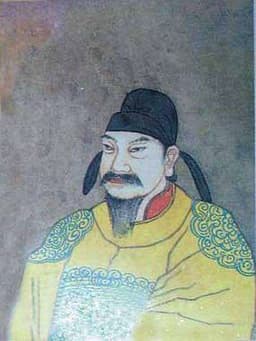
Li Cui
Emperor · Medieval
39.7Total
Basic Information
Born
1249
833
Died
1314
873
Era
Medieval
Medieval
Nationality
Scotland
China
Occupation
Emperor
Emperor
Civilization
Western
Eastern
Score Comparison
Military (10%)
55.0
21.2
Political (20%)
39.4
25.0
Influence (20%)
47.1
47.9
Legacy (20%)
35.8
38.3
Leadership (15%)
48.4
55.3
Strategy (15%)
55.0
39.6
TOTAL
44.9
39.7
John Balliol — Complete Timeline
1290 AD
Signing of the Treaty of BirghamPolitical Action
John Balliol, as a claimant, was party to the Treaty of Birgham which arranged the marriage of Margaret, Maid of Norway to Edward II. The treaty promised Scottish independence, but it was never fully implemented after Margaret's death.
TreatyMarriageIndependence
Impact: national
1292 AD
Installation as King by Edward IPolitical Action
John Balliol was selected as King of Scots by Edward I of England after the Great Cause arbitration. Edward I oversaw the selection process and Balliol swore fealty to him, effectively making Scotland a vassal state.
CoronationVassalageGreat Cause
Impact: nationaldestructive
1296 AD
Battle of DunbarWar◆ Major
John Balliol's Scottish army was decisively defeated by English forces under John de Warenne at Dunbar. The defeat led to Balliol's abdication and Edward I's conquest of Scotland, with the Stone of Destiny taken to Westminster.
BattleDefeatEnglish Conquest
Impact: nationaldestructive
Abdication and ImprisonmentPolitical Action◆ Major
John Balliol abdicated the Scottish throne after his defeat at Dunbar. He was stripped of his royal regalia and imprisoned in the Tower of London, later being exiled to France. His reign ended with Scotland under English occupation.
AbdicationImprisonmentExile
Impact: nationaltragic
Li Cui — Complete Timeline
868 AD
Suppressed the Pang Xun RebellionWar◆ Major
Li Cui (Tang Yizong) ordered the suppression of the rebellion led by Pang Xun, a mutineer from the southern frontier. The rebellion was crushed after a year of fighting, but it exposed the weakening of Tang military control and foreshadowed larger revolts.
RebellionTang DynastyMilitary Campaign
Impact: nationaldestructive
870 AD
Ignored Growing Unrest and FaminePolitical Action◆ Major
During the later years of Li Cui's reign, widespread famine and banditry erupted across the empire. He failed to implement effective relief measures or military reforms, allowing conditions to worsen that would lead to the Huang Chao Rebellion after his death.
NeglectFamineDecline
Impact: nationaldestructive
Expert Analysis
Origins
John Balliol was born around 1249 into a powerful Anglo-Norman family with claims to the Scottish throne. His father, John de Balliol, was a wealthy lord, and his mother, Dervorguilla of Galloway, was a descendant of King David I. Educated in England and France, Balliol was more of a nobleman than a warrior. In contrast, Li Cui was born in 833 as the eldest son of Emperor Tang Wuzong, but his early life was overshadowed by palace intrigues. He became emperor in 859 after his uncle Tang Xuanzong died, inheriting a vast but troubled empire. While Balliol's path was shaped by English influence, Li Cui's was shaped by the decaying Tang bureaucracy.
Rise to Power
Balliol's rise came through the Great Cause (1291-1292), a legal process to determine the Scottish succession after the death of Margaret, Maid of Norway. Edward I of England, acting as arbiter, chose Balliol over 13 claimants, including Robert Bruce. Balliol was crowned in 1292 but quickly became a puppet. His reign was defined by Edward's demands, including military service against France. Li Cui's rise was smoother: he ascended the throne in 859 after his father's death. He initially showed promise, but his reign soon devolved into neglect. His political score of 25.0 reflects his failure to manage the empire, while Balliol's 39.4 indicates slightly better maneuvering under duress.
Leadership & Governance
Balliol's leadership (score 48.4) was weak and indecisive. He attempted to assert independence by forming the Auld Alliance with France in 1295, but this provoked Edward's invasion. His military score of 55.0 is higher than Li Cui's 21.2, but his army was crushed at Dunbar in 1296. After the battle, he abdicated and was imprisoned. Li Cui's leadership (55.3) was marred by inaction. He suppressed the Pang Xun Rebellion in 868-869, but ignored the growing famine and banditry that preceded the Huang Chao Rebellion. His strategy score of 39.6 shows poor planning. Balliol's governance was constrained by English overlordship, while Li Cui's was hampered by his own negligence.
Triumph & Tragedy
Balliol's greatest triumph was briefly uniting Scottish nobles against England, but his tragedy was his utter defeat and humiliation. His abdication in 1296 left Scotland without a king for a decade. Li Cui's triumph was crushing the Pang Xun Rebellion, but his tragedy was his failure to address the root causes of unrest. By 873, when he died, the Tang dynasty was on the brink of collapse. The Huang Chao Rebellion began just a year later. Balliol's legacy score of 35.8 reflects his role as a cautionary tale, while Li Cui's 38.3 shows his reign as a missed opportunity.
Character & Destiny
Balliol was a vacillating figure, torn between loyalty to England and Scottish independence. His character led to his downfall: he was too weak to resist Edward but too proud to submit fully. Li Cui was described as pleasure-seeking and disengaged, preferring hunting and entertainment to governance. His inaction during famine cost countless lives. Both men were shaped by their circumstances, but their personal failings sealed their fates. Balliol's total score of 44.9 edges out Li Cui's 39.7, but neither was effective.
Legacy
Balliol is remembered as a puppet king, a symbol of Scottish subjugation. His reign sparked the Wars of Scottish Independence, as his abdication left a power vacuum filled by William Wallace and Robert Bruce. Li Cui is largely forgotten, his reign a prelude to the Tang collapse. His neglect accelerated the dynasty's decline. Balliol's influence score of 47.1 is slightly below Li Cui's 47.9, but his impact on Scottish history is more direct.
Conclusion
While both were ineffective rulers, John Balliol had a greater impact on history. His reign triggered the Scottish Wars of Independence, which shaped Scotland's identity. Li Cui's reign merely accelerated an inevitable decline. Balliol's total score of 44.9 versus Li Cui's 39.7 reflects his slightly higher influence, though both were failures.
Rankings
🥇
John BalliolLeader
Mil: 55.0Pol: 39.4Inf: 47.1
44.9
🥈
Li Cui
Mil: 21.2Pol: 25.0Inf: 47.9
39.7
+5.2 behind
How This Comparison Works
Algorithm
Each figure is scored on 6 dimensions (0—100 scale) based on structured historical data: Military (10%), Political (20%), Influence (20%), Legacy (20%), Leadership (15%), Strategy (15%). The weighted total produces the final ranking.
Data Sources
Scores are computed from structured sub-indicators in the database. Scale factors adjust for era (Ancient ×0.85, Modern ×1.0) and civilization size (Eastern ×1.05, Other ×0.80) to account for differences in population and military scale.
Maximum 3 Figures
Comparisons are limited to 2—3 figures to ensure readability and statistical meaningfulness.
Error Margins
±5 points per dimension — Sub-scores are derived from historical records with inherent uncertainty. Two figures within 5 points on a dimension should be considered roughly equivalent in that area.
Total Score Accuracy
±3 points overall — The weighted combination of 6 dimensions produces a total score with approximately ±3 points of uncertainty. Differences of less than 3 points are not statistically significant— the figures are effectively tied.
Known Limitations
- Historical records are incomplete and uneven across civilizations
- Figures from oral-tradition societies may be underrepresented
- Occupation labels can misclassify multi-role figures
- Scores measure capability and impact, not moral character
- Quantitative scoring is a comparison tool, not absolute truth
Capability Radar
Military (10%) — Battles & Warfare
Battles
5
15
Win Rate
0
10
Expansion
0
5
Political (20%) — Governance & Reform
Reform
0
20
Diplomacy
5
20
Economy
0
15
Influence (20%) — Cultural & Global Reach
Cultural
5
15
Global
5
10
Legacy (20%) — Historical Impact
Historical
10
20
Longevity
5
10
Leadership (15%) — Power & Stability
Tenure
10
60
Stability
0
10
Strategy (15%) — Tactics & Innovation
Strategy
0
10
Tactics
0
10
Reform
0
5
Similar Comparisons
Comments & Discussion
No comments yet. Be the first to share your thoughts!