Loading...
John F. Kennedy vs Manmohan Singh
John F. Kennedy leads by 1.5 pts · 2 figures compared
…
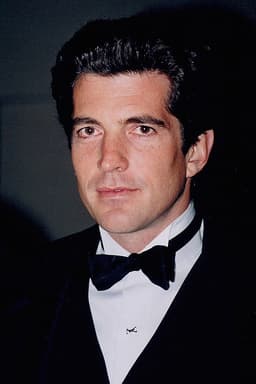
John F. Kennedy
Politician · Modern
62.7Total

Manmohan Singh
Politician · Modern
61.2Total
Basic Information
Born
1917
1932
Died
1963
—
Era
Modern
Modern
Nationality
United States
India
Occupation
Politician
Politician
Civilization
Western
Indian
Score Comparison
Military (10%)
34.9
27.4
Political (20%)
60.0
72.0
Influence (20%)
82.0
62.0
Legacy (20%)
54.0
58.0
Leadership (15%)
72.0
78.0
Strategy (15%)
54.3
60.0
TOTAL
62.7
61.2
John F. Kennedy — Complete Timeline
1961 AD
Bay of Pigs InvasionWar◆ Major
Kennedy authorized the CIA-backed invasion of Cuba by exiles at the Bay of Pigs, which failed disastrously. The event embarrassed the U.S., strengthened Castro's position, and pushed Cuba closer to the Soviet Union.
CubaCold WarFailed Invasion
Impact: globaldestructive
Establishment of the Peace CorpsPolitical Action◆ Major
Kennedy signed an executive order establishing the Peace Corps, sending American volunteers abroad to assist with development. The program promoted U.S. soft power and cultural exchange, becoming a lasting legacy of his administration.
Peace CorpsForeign AidVolunteerism
Impact: globalconstructive
1962 AD
Cuban Missile CrisisPolitical Action
Kennedy confronted the Soviet Union over the installation of nuclear missiles in Cuba. He imposed a naval blockade and negotiated a peaceful resolution, securing the removal of missiles in exchange for a pledge not to invade Cuba and removal of U.S. missiles from Turkey.
Cold WarNuclear CrisisDiplomacy
Impact: global
Moon Speech at Rice UniversityCultural◆ Major
Kennedy delivered a speech at Rice University, committing the U.S. to landing a man on the moon before the end of the decade. This galvanized the Apollo program and the Space Race against the Soviet Union.
Space RaceApollo ProgramMoon Landing
Impact: globalprogressive
1963 AD
Assassination of John F. KennedyPolitical Action
Kennedy was assassinated by Lee Harvey Oswald while riding in a motorcade in Dallas, Texas. His death shocked the world and led to the passage of the Civil Rights Act and other legislation under his successor, Lyndon B. Johnson.
AssassinationDallasConspiracy Theories
Impact: globaltragic
Manmohan Singh — Complete Timeline
2004 AD
Appointed Prime Minister of IndiaPolitical Action◆ Major
Manmohan Singh became the 13th Prime Minister of India, leading the United Progressive Alliance (UPA) coalition. He was the first Sikh to hold the office and served two full terms until 2014.
Indian PoliticsUPASikh Prime Minister
Impact: nationalconstructive
Presided Over High Economic Growth PeriodOther◆ Major
During Singh's tenure, India experienced an average GDP growth rate of over 8% per year, lifting millions out of poverty. The growth was driven by economic reforms initiated in the 1990s and global demand.
Economic GrowthDevelopmentGDP
Impact: nationalconstructive
2005 AD
Implemented National Rural Employment Guarantee Act (NREGA)Reform◆ Major
Singh's government enacted NREGA, guaranteeing 100 days of wage employment per year to rural households. The program became one of India's largest social welfare schemes, reducing rural poverty but facing implementation challenges.
Social WelfareRural EmploymentNREGA
Impact: nationalconstructive
2008 AD
Signed US-India Civil Nuclear AgreementPolitical Action
Singh's government finalized the US-India Civil Nuclear Agreement, ending India's nuclear isolation and allowing civilian nuclear trade. The deal faced political opposition but was passed after a confidence vote.
Nuclear DealUS-India RelationsEnergy Policy
Impact: globalconstructive
2010 AD
Faced 2G Spectrum Scandal AllegationsPolitical Action◆ Major
Singh's government was embroiled in the 2G spectrum allocation scandal, with allegations of underpricing leading to revenue loss. The Supreme Court later cancelled 122 licenses, and the scandal damaged the government's reputation.
Corruption2G ScandalTelecom
Impact: nationaldestructive
Expert Analysis
Origins
John F. Kennedy was born on May 29, 1917, in Brookline, Massachusetts, into a wealthy and politically ambitious family. His father, Joseph P. Kennedy Sr., was a businessman and former U.S. ambassador to the United Kingdom. Kennedy attended Harvard University, graduating in 1940, and served in the U.S. Navy during World War II, commanding a PT boat that was sunk by a Japanese destroyer. He was awarded the Navy and Marine Corps Medal for heroism.
Manmohan Singh was born on September 26, 1932, in Gah, Punjab (now in Pakistan), into a Sikh family. His father was a small-time trader. Singh studied at Panjab University and later earned a doctorate in economics from Oxford University. He also studied at Cambridge University, where he earned a first-class honours degree in Economics. He worked as an economist and held positions at the United Nations and the Reserve Bank of India.
Rise to Power
Kennedy entered politics in 1946, winning a seat in the U.S. House of Representatives. He served three terms before being elected to the Senate in 1952. In 1960, he won the Democratic presidential nomination and narrowly defeated Republican Richard Nixon in the general election, becoming the first Catholic president. His campaign emphasized youth, charisma, and a vision for a "New Frontier."
Singh rose through bureaucratic and technocratic ranks. He served as economic adviser to the Indian government and as governor of the Reserve Bank of India. In 1991, as Finance Minister under Prime Minister P.V. Narasimha Rao, he spearheaded economic reforms that liberalized India's economy. In 2004, he was unexpectedly chosen to lead the United Progressive Alliance coalition as Prime Minister, becoming the first Sikh to hold the office.
Leadership & Governance
Kennedy's leadership was marked by crisis management. During the 1962 Cuban Missile Crisis, he faced down the Soviet Union, imposing a naval blockade and negotiating a peaceful resolution. He also advanced the Space Race, famously committing to a moon landing by the end of the decade. Domestically, he advocated for civil rights, proposing the Civil Rights Act of 1964 (passed after his death). However, his governance was marred by the failed Bay of Pigs Invasion in 1961, a CIA-backed attempt to overthrow Fidel Castro that embarrassed the U.S.
Singh's leadership was technocratic and consensus-driven. As Prime Minister, he presided over an average GDP growth rate of over 8% per year, lifting millions out of poverty. His government enacted the National Rural Employment Guarantee Act (NREGA) in 2005, guaranteeing 100 days of wage employment to rural households. He also signed the U.S.-India Civil Nuclear Agreement in 2008, ending India's nuclear isolation. However, his tenure was plagued by corruption scandals, such as the 2G spectrum scandal, which led to a Supreme Court ruling that canceled licenses.
Triumph & Tragedy
Kennedy's greatest triumph was peacefully resolving the Cuban Missile Crisis, avoiding nuclear war. His tragic failure was the Bay of Pigs Invasion, which weakened U.S. credibility and strengthened Castro. His assassination in 1963 cut short his presidency, but it galvanized support for his legislative agenda, including the Civil Rights Act and the moon landing program.
Singh's triumph was overseeing India's economic transformation. His policies as Finance Minister and Prime Minister accelerated growth and integrated India into the global economy. His tragedy was the corruption scandals that tarnished his government's reputation, particularly the 2G spectrum scandal, which damaged public trust. His quiet, unassuming style was criticized as weak in handling coalition pressures.
Character & Destiny
Kennedy was charismatic, articulate, and decisive. His ability to inspire, as seen in his moon speech, contrasted with his risk-taking, as seen in the Bay of Pigs. His character shaped his destiny: his boldness led to both his greatest success (Cuban Missile Crisis) and his most significant failure (Bay of Pigs). Historians often rate him highly for crisis management, with a leadership score of 72.0.
Singh was introverted, intellectual, and principled. His integrity was respected, but his reluctance to assert authority led to coalition infighting and policy paralysis. His destiny was shaped by his role as a reformer: he succeeded in economic policy but struggled with political communication. His leadership score is 78.0, reflecting his steady hand during economic growth.
Legacy
Kennedy's legacy is defined by his rhetoric, civil rights advocacy, and space program. The Peace Corps continues to operate, and the Apollo program achieved a moon landing in 1969. His influence score of 82.0 reflects his enduring symbolic power. However, his short tenure limits his legislative legacy compared to longer-serving presidents.
Singh's legacy is the economic liberalization that transformed India. The NREGA remains a major social program, and the nuclear deal ended India's isolation. His influence score of 62.0 reflects his impact on policy rather than popular culture. His legacy is debated: praised for growth but criticized for corruption and inaction.
Conclusion
Comparing scores, Kennedy totals 62.7 against Singh's 61.2, a narrow gap. Yet impact depends on context. Kennedy's leadership during the Cuban Missile Crisis arguably prevented a nuclear war, a global impact of the highest order. Singh's economic reforms lifted millions from poverty, a profound domestic achievement. However, Kennedy's influence on global politics and his role in the Space Race gave him a broader, more lasting impact. While Singh's policy legacy is substantial, Kennedy's crisis leadership and symbolic power edge him ahead. Therefore, John F. Kennedy had a greater overall impact.
Rankings
🥇
John F. KennedyLeader
Mil: 34.9Pol: 60.0Inf: 82.0
62.7
🥈
Manmohan Singh
Mil: 27.4Pol: 72.0Inf: 62.0
61.2
+1.5 behind
How This Comparison Works
Algorithm
Each figure is scored on 6 dimensions (0—100 scale) based on structured historical data: Military (10%), Political (20%), Influence (20%), Legacy (20%), Leadership (15%), Strategy (15%). The weighted total produces the final ranking.
Data Sources
Scores are computed from structured sub-indicators in the database. Scale factors adjust for era (Ancient ×0.85, Modern ×1.0) and civilization size (Eastern ×1.05, Other ×0.80) to account for differences in population and military scale.
Maximum 3 Figures
Comparisons are limited to 2—3 figures to ensure readability and statistical meaningfulness.
Error Margins
±5 points per dimension — Sub-scores are derived from historical records with inherent uncertainty. Two figures within 5 points on a dimension should be considered roughly equivalent in that area.
Total Score Accuracy
±3 points overall — The weighted combination of 6 dimensions produces a total score with approximately ±3 points of uncertainty. Differences of less than 3 points are not statistically significant— the figures are effectively tied.
Known Limitations
- Historical records are incomplete and uneven across civilizations
- Figures from oral-tradition societies may be underrepresented
- Occupation labels can misclassify multi-role figures
- Scores measure capability and impact, not moral character
- Quantitative scoring is a comparison tool, not absolute truth
Capability Radar
Military (10%) — Battles & Warfare
Battles
10
46
Win Rate
10
49
Expansion
10
49
Political (20%) — Governance & Reform
Reform
65
85
Diplomacy
75
70
Economy
55
90
Influence (20%) — Cultural & Global Reach
Cultural
70
40
Global
70
60
Legacy (20%) — Historical Impact
Historical
65
65
Longevity
60
50
Leadership (15%) — Power & Stability
Tenure
50
75
Stability
60
65
Strategy (15%) — Tactics & Innovation
Strategy
20
50
Tactics
15
55
Reform
25
60
Similar Comparisons
Comments & Discussion
No comments yet. Be the first to share your thoughts!