Loading...
John F. Kennedy vs Wolfgang Schussel
John F. Kennedy leads by 11.7 pts · 2 figures compared
…
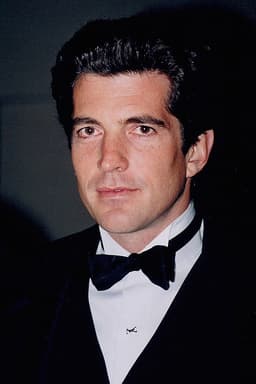
John F. Kennedy
Politician · Modern
62.7Total

Wolfgang Schussel
Politician · Modern
51.0Total
Basic Information
Born
1917
1945
Died
1963
—
Era
Modern
Modern
Nationality
United States
Austria
Occupation
Politician
Politician
Civilization
Western
Western
Score Comparison
Military (10%)
34.9
48.3
Political (20%)
60.0
68.0
Influence (20%)
82.0
53.3
Legacy (20%)
54.0
42.5
Leadership (15%)
72.0
53.2
Strategy (15%)
54.3
40.9
TOTAL
62.7
51.0
John F. Kennedy — Complete Timeline
1961 AD
Bay of Pigs InvasionWar◆ Major
Kennedy authorized the CIA-backed invasion of Cuba by exiles at the Bay of Pigs, which failed disastrously. The event embarrassed the U.S., strengthened Castro's position, and pushed Cuba closer to the Soviet Union.
CubaCold WarFailed Invasion
Impact: globaldestructive
Establishment of the Peace CorpsPolitical Action◆ Major
Kennedy signed an executive order establishing the Peace Corps, sending American volunteers abroad to assist with development. The program promoted U.S. soft power and cultural exchange, becoming a lasting legacy of his administration.
Peace CorpsForeign AidVolunteerism
Impact: globalconstructive
1962 AD
Cuban Missile CrisisPolitical Action
Kennedy confronted the Soviet Union over the installation of nuclear missiles in Cuba. He imposed a naval blockade and negotiated a peaceful resolution, securing the removal of missiles in exchange for a pledge not to invade Cuba and removal of U.S. missiles from Turkey.
Cold WarNuclear CrisisDiplomacy
Impact: global
Moon Speech at Rice UniversityCultural◆ Major
Kennedy delivered a speech at Rice University, committing the U.S. to landing a man on the moon before the end of the decade. This galvanized the Apollo program and the Space Race against the Soviet Union.
Space RaceApollo ProgramMoon Landing
Impact: globalprogressive
1963 AD
Assassination of John F. KennedyPolitical Action
Kennedy was assassinated by Lee Harvey Oswald while riding in a motorcade in Dallas, Texas. His death shocked the world and led to the passage of the Civil Rights Act and other legislation under his successor, Lyndon B. Johnson.
AssassinationDallasConspiracy Theories
Impact: globaltragic
Wolfgang Schussel — Complete Timeline
2000 AD
Appointed Chancellor of AustriaPolitical Action◆ Major
Wolfgang Sch
ChancellorshipCoalition with Far-Right
Impact: national
EU Sanctions Against AustriaPolitical Action◆ Major
Following the inclusion of the Freedom Party in government, the other 14 EU member states imposed diplomatic sanctions on Austria on February 14, 2000. The sanctions were lifted in September 2000 after a report found no threat to democracy.
EU SanctionsDiplomatic Crisis
Impact: regionaldestructive
2002 AD
2002 Austrian Legislative Election VictoryPolitical Action◆ Major
In the November 24, 2002 election, Sch
Election VictoryCoalition Government
Impact: nationalconstructive
2007 AD
Resignation as ChancellorPolitical Action◆ Major
Schüssel resigned as Chancellor on January 11, 2007, after the 2006 election resulted in a loss for his party. He was succeeded by Alfred Gusenbauer of the Social Democratic Party, ending seven years of ÖVP-led government.
ResignationEnd of Chancellorship
Impact: national
Expert Analysis
Origins
John F. Kennedy was born on May 29, 1917, in Brookline, Massachusetts, into a wealthy and politically ambitious Irish-American family. His father, Joseph P. Kennedy Sr., was a businessman and later U.S. ambassador to the UK. Kennedy attended Harvard University, graduating in 1940, and served in the U.S. Navy during World War II, commanding PT-109. His wartime heroism, despite a severe back injury, shaped his public image. Wolfgang Schüssel was born on June 7, 1945, in Vienna, Austria, into a middle-class family. He studied law at the University of Vienna, earning his doctorate in 1968. Schüssel entered politics early, joining the Austrian People's Party (ÖVP) and serving in various parliamentary roles before becoming chancellor.
Rise to Power
Kennedy's political career began in 1947 when he was elected to the U.S. House of Representatives, serving three terms. He moved to the Senate in 1953, where he gained national attention through his book "Profiles in Courage" (1957). In 1960, he won the Democratic presidential nomination and narrowly defeated Richard Nixon, becoming the first Catholic U.S. president at age 43. His election marked a generational shift. Schüssel rose through the ranks of the ÖVP, serving as Minister of Economic Affairs (1989–1995) and Vice Chancellor (1995–2000). In 2000, he became Chancellor after forming a coalition with the far-right Freedom Party of Austria (FPÖ), despite international controversy. The coalition triggered EU sanctions, but Schüssel remained in power.
Leadership & Governance
Kennedy's leadership style was charismatic and crisis-driven. He navigated the Cuban Missile Crisis in October 1962, imposing a naval blockade and negotiating with Soviet Premier Khrushchev to remove missiles from Cuba, avoiding nuclear war. He also advanced the Space Race, pledging to land a man on the moon by the end of the decade (1961 Moon Speech). Domestically, he proposed civil rights legislation but faced opposition from Southern Democrats. His administration established the Peace Corps (1961) and increased military spending. Schüssel's governance was pragmatic but controversial. He led a coalition with the FPÖ, which included Jörg Haider, a far-right figure. His economic policies focused on privatization and tax reform. He faced EU sanctions from February to September 2000, which he countered by maintaining diplomatic relations and eventually normalizing ties. Schüssel scored 68.0 in political skill, while Kennedy scored 60.0, reflecting different contexts: Schüssel managed coalition dynamics, while Kennedy faced Cold War crises.
Triumph & Tragedy
Kennedy's greatest triumph was the peaceful resolution of the Cuban Missile Crisis, where his strategic restraint (scoring 54.3 in strategy) prevented escalation. His greatest failure was the Bay of Pigs Invasion (April 1961), a botched CIA operation to overthrow Fidel Castro, which embarrassed the U.S. and strengthened Castro's position. Schüssel's triumph was leading the ÖVP to a historic 42.3% vote share in the 2002 election, securing his position. His failure was the EU sanctions and the stigma of governing with the far-right, which damaged Austria's international reputation. Schüssel's legacy score of 42.5 reflects limited lasting impact compared to Kennedy's 54.0.
Character & Destiny
Kennedy's character combined idealism and pragmatism. He was driven by a sense of destiny, famously saying, "Ask not what your country can do for you." His health issues (Addison's disease, back pain) were hidden from the public. His assassination on November 22, 1963, in Dallas, Texas, elevated him to a martyr-like status. Schüssel was a cautious, methodical politician, often described as a technocrat. His willingness to ally with the FPÖ showed a focus on power over principle. He resigned in 2007 after electoral defeat, avoiding the dramatic end that befell Kennedy.
Legacy
Kennedy's legacy is immense: the Peace Corps continues to operate, the Apollo program achieved the moon landing in 1969, and his civil rights advocacy paved the way for the 1964 Civil Rights Act. He scored 82.0 in influence, reflecting his global impact. Schüssel's legacy is more modest: he normalized coalition with the far-right in Europe, a precedent that influenced other countries. His economic reforms had domestic effects, but his international standing suffered. Kennedy's total score of 62.7 far exceeds Schüssel's 51.0, driven by higher influence and leadership.
Conclusion
John F. Kennedy had a greater impact than Wolfgang Schüssel. Kennedy's handling of the Cuban Missile Crisis prevented nuclear war, and his vision for space exploration and civil rights shaped the modern world. Schüssel's chancellorship was significant for Austria but limited in global scope. Kennedy's total score of 62.7 versus Schüssel's 51.0 underscores this disparity. While Schüssel navigated complex EU politics, Kennedy's decisions affected billions and defined an era.
Rankings
🥇
John F. KennedyLeader
Mil: 34.9Pol: 60.0Inf: 82.0
62.7
🥈
Wolfgang Schussel
Mil: 48.3Pol: 68.0Inf: 53.3
51.0
+11.7 behind
How This Comparison Works
Algorithm
Each figure is scored on 6 dimensions (0—100 scale) based on structured historical data: Military (10%), Political (20%), Influence (20%), Legacy (20%), Leadership (15%), Strategy (15%). The weighted total produces the final ranking.
Data Sources
Scores are computed from structured sub-indicators in the database. Scale factors adjust for era (Ancient ×0.85, Modern ×1.0) and civilization size (Eastern ×1.05, Other ×0.80) to account for differences in population and military scale.
Maximum 3 Figures
Comparisons are limited to 2—3 figures to ensure readability and statistical meaningfulness.
Error Margins
±5 points per dimension — Sub-scores are derived from historical records with inherent uncertainty. Two figures within 5 points on a dimension should be considered roughly equivalent in that area.
Total Score Accuracy
±3 points overall — The weighted combination of 6 dimensions produces a total score with approximately ±3 points of uncertainty. Differences of less than 3 points are not statistically significant— the figures are effectively tied.
Known Limitations
- Historical records are incomplete and uneven across civilizations
- Figures from oral-tradition societies may be underrepresented
- Occupation labels can misclassify multi-role figures
- Scores measure capability and impact, not moral character
- Quantitative scoring is a comparison tool, not absolute truth
Capability Radar
Military (10%) — Battles & Warfare
Battles
10
31
Win Rate
10
33
Expansion
10
34
Political (20%) — Governance & Reform
Reform
65
55
Diplomacy
75
50
Economy
55
55
Influence (20%) — Cultural & Global Reach
Cultural
70
30
Global
70
30
Legacy (20%) — Historical Impact
Historical
65
35
Longevity
60
20
Leadership (15%) — Power & Stability
Tenure
50
60
Stability
60
40
Strategy (15%) — Tactics & Innovation
Strategy
20
35
Tactics
15
40
Reform
25
43
Similar Comparisons
Comments & Discussion
No comments yet. Be the first to share your thoughts!