Loading...
John I of Portugal vs Julius Caesar
Julius Caesar leads by 22.5 pts · 2 figures compared
…
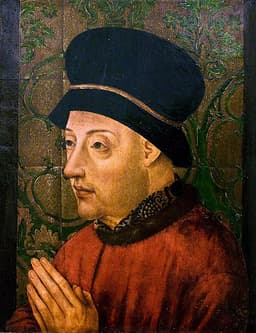
John I of Portugal
Emperor · Medieval
60.3Total

Julius Caesar
General · Ancient
82.8Total
Basic Information
Born
1357
-100
Died
1433
-44
Era
Medieval
Ancient
Nationality
Portugal
Roman Republic
Occupation
Emperor
General
Civilization
Western
Western
Score Comparison
Military (10%)
65.0
88.0
Political (20%)
55.0
78.0
Influence (20%)
56.7
85.0
Legacy (20%)
58.0
82.0
Leadership (15%)
72.0
80.0
Strategy (15%)
60.7
85.0
TOTAL
60.3
82.8
John I of Portugal — Complete Timeline
1385 AD
Battle of AljubarrotaWar
John I led Portuguese forces to a decisive victory over the Castilian army at Aljubarrota. This battle secured Portuguese independence and solidified John's claim to the throne.
BattleIndependenceCastile
Impact: regionalconstructive
Accession to the thronePolitical Action
John I became King of Portugal after the 1383-1385 Crisis, being elected by the Cortes of Coimbra. His accession ended the Burgundian dynasty and founded the House of Aviz.
SuccessionDynastyAviz
Impact: nationalconstructive
1386 AD
Treaty of WindsorPolitical Action◆ Major
John I signed the Treaty of Windsor with England, establishing a perpetual alliance between Portugal and England. This alliance, the oldest in the world, has endured to the present day.
TreatyAllianceEngland
Impact: globalconstructive
1415 AD
Conquest of CeutaWar◆ Major
John I led the conquest of Ceuta in North Africa, marking the beginning of Portuguese overseas expansion. The capture of the city opened the era of European colonialism.
ConquestColonialismNorth Africa
Impact: global
Julius Caesar — Complete Timeline
58 BC
Gallic WarsWar◆ Major
Caesar, as proconsul of Gaul, launched a series of campaigns that conquered all of Gaul (modern France, Belgium, and parts of Switzerland). He fought numerous battles, including against the Helvetii, the Belgae, and the Gallic chieftain Vercingetorix. The wars brought immense wealth and a loyal army to Caesar.
Gallic WarsConquestRoman Expansion
Impact: regional
49 BC
Crossing the RubiconPolitical Action◆ Major
Caesar led Legio XIII across the Rubicon River into Italy, defying the Roman Senate's order to disband his army. This act triggered a civil war against Pompey and the Optimates, ultimately leading to Caesar's dictatorship and the end of the Roman Republic.
Roman Civil WarEnd of RepublicPower Struggle
Impact: global
48 BC
Battle of PharsalusWar◆ Major
Caesar's outnumbered army defeated the larger forces of Pompey the Great at Pharsalus in Greece. Caesar's tactical use of a reserve line to counter Pompey's cavalry charge proved decisive. Pompey fled to Egypt, where he was assassinated, leaving Caesar as the undisputed master of the Roman world.
Roman Civil WarBattleDecisive Victory
Impact: regional
44 BC
Appointment as Dictator for LifePolitical Action◆ Major
The Roman Senate appointed Caesar dictator perpetuo (dictator for life), granting him unprecedented personal power. This move concentrated military, legislative, and judicial authority in one person, effectively ending the Roman Republic's traditional system of checks and balances and alarming many senators.
DictatorshipEnd of RepublicPower Consolidation
Impact: regionaldestructive
Assassination on the Ides of MarchPolitical Action◆ Major
A group of Roman senators, led by Marcus Junius Brutus and Gaius Cassius Longinus, stabbed Caesar to death at a meeting of the Senate in the Theatre of Pompey. The assassination was intended to restore the Republic, but instead triggered another civil war that led to the rise of the Roman Empire.
AssassinationRoman PoliticsEnd of Republic
Impact: globaldestructive
Expert Analysis
john-i-of-portugal-vs-julius-caesar
### The General and the King: Caesar's Ambition and John I's Foundation
On a spring morning in 44 BCE, the Roman Senate gathered, and the daggers of sixty conspirators cut down Gaius Julius Caesar, the most powerful man in the Mediterranean. His blood pooled at the feet of a statue of his rival, Pompey. Fourteen centuries later, in a very different corner of Europe, another leader faced a moment of equal gravity. On a dusty battlefield at Aljubarrota in 1385, King John I of Portugal stood with his outnumbered army, watching the might of Castile march toward him. One man died a tyrant’s death, leaving a legacy of civil war and empire. The other won a kingdom’s freedom, founding a dynasty that would launch the Age of Discovery. Why did their paths diverge so starkly? The answer lies not just in their eras, but in the very nature of their ambition.
### Origins
Julius Caesar was born into the patrician Julian clan in 100 BCE, a family of ancient lineage but modest political clout in a Rome dominated by military strongmen. His youth was marked by the violent rivalry between Marius and Sulla, and he learned early that survival meant navigating chaos with a mix of charm, ruthlessness, and debt. His was a world where personal glory and the Republic’s expansion were one and the same. John I, born in 1357, was the illegitimate son of King Peter I of Portugal, a “Master of Aviz” raised in a monastery. Unlike Caesar, he was not groomed for greatness but for obscurity. Portugal was a small, embattled kingdom on the edge of Europe, its independence constantly threatened by its giant neighbor, Castile. John’s era was one of dynastic crisis and feudal loyalty, not republican ambition. Caesar breathed the air of a dying republic; John, the air of a nascent nation.
### Rise to Power
Caesar’s ascent was a masterclass in political audacity. He climbed the Roman ladder—quaestor, aedile, pontifex maximus—through bribery, spectacle, and alliance with the wealthy Crassus and the popular Pompey. His conquest of Gaul (58–50 BCE) was not just a military campaign but a personal power base, creating a loyal army and a fortune in plunder. When the Senate ordered him to disband, he crossed the Rubicon River in 49 BCE, igniting a civil war. His path was one of deliberate transgression against established order.
John I’s rise was forced upon him by crisis. When King Ferdinand died in 1383, leaving only a daughter married to the King of Castile, Portugal faced absorption. The people of Lisbon rose up, and John, as the Master of Aviz, was thrust into leadership. He was not a conqueror but a defender. In April 1385, the Cortes of Coimbra elected him king, a constitutional act that legitimized his rule. His turning point came that August at Aljubarrota, where he used a defensive position, English longbowmen, and a disciplined square of infantry to shatter a larger Castilian army. Where Caesar gambled on rebellion, John gambled on resistance—and won a kingdom.
### Leadership & Governance
Caesar governed as a revolutionary reformer. As dictator, he centralized power, reformed the calendar, granted citizenship to provincials, and launched massive public works. His military genius was unparalleled—his *Commentaries* remain a textbook on speed and surprise. But his rule was personal, not institutional. He stacked the Senate with his supporters, accepted the title “dictator for life,” and flaunted royal symbols. His political wisdom was overshadowed by his contempt for the old elite. John I, by contrast, governed as a builder of institutions. He signed the Treaty of Windsor with England in 1386, a diplomatic masterstroke that created the world’s oldest alliance, securing Portugal’s independence. He sponsored the first exploratory voyages along the African coast, beginning the Age of Discovery. His reign was one of consolidation: he strengthened the crown, rewarded his supporters, and avoided the arrogance that doomed Caesar. His military score of 55.2 reflects a competent, not brilliant, commander; his political score of 66.9 shows a steady hand, not a revolutionary.
### Triumph & Tragedy
Caesar’s greatest triumph was the conquest of Gaul, adding a vast territory to the Roman world. His most devastating failure was his own assassination. He had the vision to see the Republic was broken, but he lacked the patience to build a new order. His death plunged Rome into another civil war, from which his adopted heir, Octavian, finally emerged as Augustus. John I’s greatest moment was the conquest of Ceuta in 1415, a daring amphibious assault that marked the first European colonial foothold in Africa. His tragedy was more subtle: his son, Henry the Navigator, would push exploration further, but John himself never saw the full fruits of his patronage. He died in 1433, a king who had secured his nation’s future but not its global empire.
### Character & Destiny
Caesar was driven by an insatiable *libido dominandi*—the lust for power. He was charismatic, clement to his enemies, but ultimately unable to share authority. As the historian Suetonius noted, “He often said that Sulla did not know his political ABC’s because he laid down his dictatorship.” Caesar’s personality demanded absolute control, and that demand made his death inevitable. John I, known as “John of Good Memory,” was pragmatic, pious, and patient. He was a man who understood limits. He did not seek to conquer Europe; he sought to secure Portugal. His strategy score of 56.7 suggests he was no grand strategist, but his leadership score of 79.3 reflects a king who inspired loyalty, not fear.
### Legacy
Caesar’s legacy is the Roman Empire. His name became the title “Kaiser” and “Tsar.” He transformed the ancient world, but at the cost of the Republic he claimed to serve. He is remembered as a brilliant general and a flawed politician, a man whose ambition both created and destroyed. John I’s legacy is Portugal itself. He founded the House of Aviz, which would rule for a century, and set in motion the voyages that would make Portugal a global power. He is remembered as the father of his country, a king who defended it at its darkest hour and launched it toward the unknown.
### Conclusion
Standing at the crossroads of history, Caesar and John I faced the same fundamental question: What does a leader owe to the order he inherits? Caesar answered by breaking the old world to build a new one, and he paid for it with his life. John answered by defending the old world and gradually expanding it, and he was rewarded with a dynasty. One man’s ambition tore a republic apart; the other’s prudence built a nation. In the end, the difference between the general and the king was not talent or courage, but the wisdom to know when enough is enough.
Rankings
🥇
Julius CaesarLeader
Mil: 88.0Pol: 78.0Inf: 85.0
82.8
🥈
John I of Portugal
Mil: 65.0Pol: 55.0Inf: 56.7
60.3
+22.5 behind
How This Comparison Works
Algorithm
Each figure is scored on 6 dimensions (0—100 scale) based on structured historical data: Military (10%), Political (20%), Influence (20%), Legacy (20%), Leadership (15%), Strategy (15%). The weighted total produces the final ranking.
Data Sources
Scores are computed from structured sub-indicators in the database. Scale factors adjust for era (Ancient ×0.85, Modern ×1.0) and civilization size (Eastern ×1.05, Other ×0.80) to account for differences in population and military scale.
Maximum 3 Figures
Comparisons are limited to 2—3 figures to ensure readability and statistical meaningfulness.
Error Margins
±5 points per dimension — Sub-scores are derived from historical records with inherent uncertainty. Two figures within 5 points on a dimension should be considered roughly equivalent in that area.
Total Score Accuracy
±3 points overall — The weighted combination of 6 dimensions produces a total score with approximately ±3 points of uncertainty. Differences of less than 3 points are not statistically significant— the figures are effectively tied.
Known Limitations
- Historical records are incomplete and uneven across civilizations
- Figures from oral-tradition societies may be underrepresented
- Occupation labels can misclassify multi-role figures
- Scores measure capability and impact, not moral character
- Quantitative scoring is a comparison tool, not absolute truth
Capability Radar
Military (10%) — Battles & Warfare
Battles
65
95
Win Rate
70
92
Expansion
60
97
Political (20%) — Governance & Reform
Reform
70
90
Diplomacy
75
85
Economy
70
82
Influence (20%) — Cultural & Global Reach
Cultural
60
88
Global
55
94
Legacy (20%) — Historical Impact
Historical
65
95
Longevity
60
96
Leadership (15%) — Power & Stability
Tenure
75
75
Stability
65
60
Strategy (15%) — Tactics & Innovation
Strategy
65
94
Tactics
60
96
Reform
55
88
Similar Comparisons
Comments & Discussion
Cleopatra's Shadow6/17/2026
Comparing Caesar to John I is like comparing a wildfire to a foundation stone. Caesar burned through Gaul, Britain, and Egypt, never stopping to build anything lasting except his own legend. John I didn't just win at Aljubarrota—he used that victory to forge a national identity. Caesar's ambition destroyed the Republic; John's secured Portugal's independence for two centuries. One died betrayed by his adopted son, the other founded a dynasty that shaped the world.
历史编年匠6/17/2026
拿凯撒和若昂一世比,本身就是降维打击。凯撒征服高卢杀了百万人口,罗马史书都在歌颂,但若昂在阿尔茹巴罗塔以寡敌众,用长弓和拒马击败了卡斯蒂利亚重骑兵,这才是真正改变国运的胜利。凯撒的《高卢战记》写得再漂亮,也掩盖不了他毁灭共和的事实;若昂一世只有一份阿维什敕令,却奠定了基础。
Naval Gazer6/17/2026
Let's be honest: Caesar was a tactical genius but a terrible strategist for Rome's long-term survival. John I understood something Caesar never did—that stable institutions outlast any individual. Caesar centralized power in himself, causing a century of civil war. John established the Avis dynasty, allied with England through the Treaty of Windsor (still active today!), and made Portugal a maritime power. Aljubarrota wasn't just a battle; it was a bridge to the Age of Discovery.
铁血考据党6/17/2026
其实若昂一世最被低估的是他的经济政策。他执政期间大规模重组葡萄牙币制,发行了数量稳定的金币和银币,这才让海外扩张有了资本基础。凯撒呢?他攫取高卢财富养私兵、搞民粹、败坏元老院权威,最终直接导致罗马帝国转型的血腥内耗。若昂在1383-1385年危机期间还搞了地方自治改革,比凯撒高到不知道哪里去了。
Risorgimento Rebel6/17/2026
You want a real comparison? Caesar was a populist dictator who rode military fame to personal power—sound familiar? John I was a reluctant leader who accepted the crown because Portugal needed him, not because he craved it. Caesar crossed the Rubicon and doomed the Republic; John defended the kingdom and made it sovereign. One man's ambition fractured a world; the other's duty built a nation. That's the difference between a general and a king.