Loading...
John I Tzimiskes vs Julius Caesar
Julius Caesar leads by 20.0 pts · 2 figures compared
…
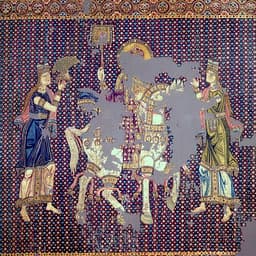
John I Tzimiskes
Emperor · Medieval
62.8Total

Julius Caesar
General · Ancient
82.8Total
Basic Information
Born
925
-100
Died
976
-44
Era
Medieval
Ancient
Nationality
Byzantine Empire
Roman Republic
Occupation
Emperor
General
Civilization
Western
Western
Score Comparison
Military (10%)
85.0
88.0
Political (20%)
72.0
78.0
Influence (20%)
60.0
85.0
Legacy (20%)
52.0
82.0
Leadership (15%)
53.2
80.0
Strategy (15%)
75.0
85.0
TOTAL
62.8
82.8
John I Tzimiskes — Complete Timeline
969 AD
Accession as Emperor (969)Political Action◆ Major
John I Tzimiskes became emperor after assassinating his uncle Nikephoros II Phokas. He was a skilled general and continued the military expansion of the Byzantine Empire.
AccessionCoup
Impact: regional
970 AD
Campaign against the Rus (970-971)War◆ Major
John I led a campaign against the Rus under Sviatoslav I, who had invaded Bulgaria. He defeated the Rus at the Battle of Dorostolon in 971, forcing Sviatoslav to withdraw. This secured Byzantine control over the Balkans.
Byzantine-Rus WarsMilitary Campaign
Impact: regionalconstructive
974 AD
Campaigns in Syria (974-975)War◆ Major
John I launched a major campaign into Syria, capturing Damascus, Beirut, and other cities. He advanced as far as Jerusalem, but did not capture it. These campaigns extended Byzantine influence in the Levant.
Byzantine-Arab WarsMilitary Campaign
Impact: regional
976 AD
Death from Poison (976)Other◆ Major
John I Tzimiskes died suddenly, possibly from poison. His death cut short his ambitious campaigns. He was succeeded by Basil II, who would later become known as the 'Bulgar-Slayer'.
DeathPoison
Impact: regionaltragic
Julius Caesar — Complete Timeline
58 BC
Gallic WarsWar◆ Major
Caesar, as proconsul of Gaul, launched a series of campaigns that conquered all of Gaul (modern France, Belgium, and parts of Switzerland). He fought numerous battles, including against the Helvetii, the Belgae, and the Gallic chieftain Vercingetorix. The wars brought immense wealth and a loyal army to Caesar.
Gallic WarsConquestRoman Expansion
Impact: regional
49 BC
Crossing the RubiconPolitical Action◆ Major
Caesar led Legio XIII across the Rubicon River into Italy, defying the Roman Senate's order to disband his army. This act triggered a civil war against Pompey and the Optimates, ultimately leading to Caesar's dictatorship and the end of the Roman Republic.
Roman Civil WarEnd of RepublicPower Struggle
Impact: global
48 BC
Battle of PharsalusWar◆ Major
Caesar's outnumbered army defeated the larger forces of Pompey the Great at Pharsalus in Greece. Caesar's tactical use of a reserve line to counter Pompey's cavalry charge proved decisive. Pompey fled to Egypt, where he was assassinated, leaving Caesar as the undisputed master of the Roman world.
Roman Civil WarBattleDecisive Victory
Impact: regional
44 BC
Appointment as Dictator for LifePolitical Action◆ Major
The Roman Senate appointed Caesar dictator perpetuo (dictator for life), granting him unprecedented personal power. This move concentrated military, legislative, and judicial authority in one person, effectively ending the Roman Republic's traditional system of checks and balances and alarming many senators.
DictatorshipEnd of RepublicPower Consolidation
Impact: regionaldestructive
Assassination on the Ides of MarchPolitical Action◆ Major
A group of Roman senators, led by Marcus Junius Brutus and Gaius Cassius Longinus, stabbed Caesar to death at a meeting of the Senate in the Theatre of Pompey. The assassination was intended to restore the Republic, but instead triggered another civil war that led to the rise of the Roman Empire.
AssassinationRoman PoliticsEnd of Republic
Impact: globaldestructive
Expert Analysis
john-i-tzimiskes-vs-julius-caesar
# The Two Caesars: Julius and John
On the Ides of March, 44 BCE, a Roman dictator lay bleeding at the foot of a statue of his rival Pompey, stabbed twenty-three times by senators he had pardoned. Nine centuries later, in 976 CE, another emperor—also a general of Armenian blood—lay dying in Constantinople, poisoned perhaps by the very courtiers who had helped him seize power. Julius Caesar and John I Tzimiskes never met, never knew each other's names. Yet their stories echo across the millennium that separated them, two men who rose through blood and brilliance to reshape their worlds, only to find that the sword that lifts a ruler can also cut him down.
Origins
Julius Caesar was born into the twilight of the Roman Republic, a world of senatorial intrigue, civil wars, and a crumbling aristocratic order. His family, the Julii, claimed descent from the goddess Venus, but their political fortunes had faded. A young Caesar grew up in a Rome where the old rules were breaking—where ambitious generals could seize power with their legions, and where the Republic's institutions could no longer contain its vast empire. He was a patrician by birth, a populist by instinct, and a gambler by nature.
John Tzimiskes emerged from a very different world: the Byzantine Empire of the 10th century, a Christian Roman state that had survived the fall of the West and now faced new enemies from the East. Born in 925 CE in Armenian territory, he came from a military family that had produced emperors. His uncle, Nikephoros II Phokas, had conquered Crete and Cyprus before taking the throne. John grew up in the shadow of these triumphs, learning war in the Anatolian hills and court politics in the gilded halls of Constantinople. Where Caesar's Rome was collapsing into chaos, John's Byzantium was experiencing a renaissance—but one built on the fragile loyalty of generals who knew how to kill emperors.
Rise to Power
Caesar's ascent was a masterpiece of calculated risk. He borrowed fortunes to fund games and bribes, built alliances with the wealthy Crassus and the popular Pompey, and conquered Gaul in eight years of relentless warfare. When the Senate ordered him to disband his army, he chose instead to cross the Rubicon River in 49 BCE—a declaration of civil war. "The die is cast," he reportedly said, and with those words, he traded the Republic for a crown.
John's path was shorter and bloodier. In 969 CE, he and a group of conspirators stormed the imperial palace, murdering his uncle Nikephoros II in his bed. The assassination was brutal—the old emperor was reportedly hacked to death while sleeping. John then claimed the throne, marrying Theophano, the empress who had helped plot the murder. Where Caesar had spent years building a reputation before seizing power, John took his chance in a single night of violence. The difference reflects their eras: Caesar's Rome still had a Senate and a legal framework, however corrupted; John's Byzantium had become a place where the throne was won by the strongest general, and legitimacy was written in blood.
Leadership & Governance
As a commander, Caesar was revolutionary. He wrote his own commentaries on the Gallic Wars, shaping his legend in real time. He understood logistics, morale, and the psychological impact of speed—his famous "I came, I saw, I conquered" was not arrogance but a statement of military doctrine. As a ruler, he reformed the calendar, granted citizenship to provincials, and began massive public works. Yet his political genius was flawed: he pardoned his enemies, then failed to secure his own safety. He governed as a dictator, but he never fully destroyed the Republic—he only broke it, leaving the pieces for Augustus to reassemble.
John Tzimiskes was a different kind of commander. His greatest campaign, against the Rus prince Sviatoslav I in 970-971 CE, was a masterpiece of Byzantine strategy. He lured the Rus into Bulgaria, cut off their supply lines, and forced them to fight at the fortress of Dorostolon. After a brutal siege, Sviatoslav surrendered, and John famously made him drink from a cup made from the skull of a Byzantine general—a grim reminder of the stakes. In Syria, from 974 to 975, he captured Damascus, Beirut, and advanced almost to Jerusalem. But John's rule was cut short after only seven years. He was a reformer who strengthened the army and stabilized the economy, but he never had time to build a lasting political system.
Triumph & Tragedy
Caesar's greatest triumph was Gaul—the conquest of a million people, the extension of Roman power to the Atlantic. His greatest tragedy was his own success: he became too powerful for the Republic to tolerate, yet not ruthless enough to destroy his enemies. The Ides of March was not a failure of ambition but of paranoia; he dismissed his bodyguard, walked unarmed into the Senate, and fell.
John's triumph was the destruction of the Rus threat and the recovery of Antioch for the Empire in 969. His tragedy was his sudden death at age 51, possibly poisoned. He had been planning a campaign to liberate Jerusalem and reunite the Christian East. Instead, he died in his bed, succeeded by the young Basil II—who would go on to become one of Byzantium's greatest emperors, but only after a long regency that nearly destroyed the state.
Character & Destiny
Caesar was a man of boundless confidence, capable of forgiving his enemies and charming his soldiers. But that confidence became hubris. He believed his name alone could protect him. John was more cautious, a product of a court where betrayal was a daily threat. He knew that the men who helped him murder his uncle might one day murder him. Yet he, too, could not escape the pattern: he died by poison, the assassin's tool of the Byzantine court.
Their characters shaped their fates. Caesar's openness made him loved but vulnerable; John's vigilance kept him alive for seven years, but not forever. Both were men who rose by violence and fell by it—a reminder that the sword cuts both ways.
Legacy
Caesar's legacy is immeasurable. His name became the title "Kaiser" and "Tsar." His conquests shaped Europe. His assassination ended the Republic and began the Empire. He is remembered as a tyrant, a genius, a martyr, and a warning.
John I Tzimiskes is remembered, if at all, as a footnote in Byzantine history—a capable general who might have been great, had he lived. His conquests in Syria were lost within a generation. His death left the Empire in the hands of a child. He is a figure of potential unfulfilled.
Conclusion
Two Caesars, two worlds. Julius Caesar died because he could not imagine a world without the Republic he had destroyed. John Tzimiskes died because he could not imagine a world where his allies did not become his enemies. One left an empire; the other left a question. In the end, both discovered that history remembers not how you rise, but how you fall—and whether you fall into the arms of legend or into the silence of a forgotten grave.
Rankings
🥇
Julius CaesarLeader
Mil: 88.0Pol: 78.0Inf: 85.0
82.8
🥈
John I Tzimiskes
Mil: 85.0Pol: 72.0Inf: 60.0
62.8
+20.0 behind
How This Comparison Works
Algorithm
Each figure is scored on 6 dimensions (0—100 scale) based on structured historical data: Military (10%), Political (20%), Influence (20%), Legacy (20%), Leadership (15%), Strategy (15%). The weighted total produces the final ranking.
Data Sources
Scores are computed from structured sub-indicators in the database. Scale factors adjust for era (Ancient ×0.85, Modern ×1.0) and civilization size (Eastern ×1.05, Other ×0.80) to account for differences in population and military scale.
Maximum 3 Figures
Comparisons are limited to 2—3 figures to ensure readability and statistical meaningfulness.
Error Margins
±5 points per dimension — Sub-scores are derived from historical records with inherent uncertainty. Two figures within 5 points on a dimension should be considered roughly equivalent in that area.
Total Score Accuracy
±3 points overall — The weighted combination of 6 dimensions produces a total score with approximately ±3 points of uncertainty. Differences of less than 3 points are not statistically significant— the figures are effectively tied.
Known Limitations
- Historical records are incomplete and uneven across civilizations
- Figures from oral-tradition societies may be underrepresented
- Occupation labels can misclassify multi-role figures
- Scores measure capability and impact, not moral character
- Quantitative scoring is a comparison tool, not absolute truth
Capability Radar
Military (10%) — Battles & Warfare
Battles
85
95
Win Rate
90
92
Expansion
80
97
Political (20%) — Governance & Reform
Reform
65
90
Diplomacy
70
85
Economy
65
82
Influence (20%) — Cultural & Global Reach
Cultural
55
88
Global
45
94
Legacy (20%) — Historical Impact
Historical
60
95
Longevity
50
96
Leadership (15%) — Power & Stability
Tenure
60
75
Stability
60
60
Strategy (15%) — Tactics & Innovation
Strategy
85
94
Tactics
88
96
Reform
70
88
Similar Comparisons
Comments & Discussion
JuliusCrank6/17/2026
Tzimiskes was a glorified hitman who lucked into the purple, while Caesar actually built his power through political genius and military innovation. Compare Caesar’s bridge over the Rhine—an engineering marvel still studied—to Tzimiskes’ pillaging of Bulgaria. One changed history; the other just held onto a crumbling empire. The Byzantine “caesar” doesn’t deserve the title.
暗夜刺客6/17/2026
说约翰征服了保加利亚和阿拉伯人?拜托,那是他雇来的亚美尼亚佣兵干的。可恺撒在阿莱西亚围城战中亲自设计双层防线,把高卢精英围成困兽,这才是真本事。一个用钱买胜利,一个用脑子赢战争,您说谁更像“皇帝”?我选实战派。
JadedClassics6/17/2026
Comparing them shows how military success alone doesn’t define greatness. Caesar’s writings—his Commentarii—shaped Western military doctrine for centuries. Tzimiskes? We have court chronicles full of miracle propaganda. One left a legacy of ideas; the other left a bloody throne and a suspicious cup of hemlock. Classics win, every time.
数据拆解师6/17/2026
看数字:恺撒打了八年高卢战争,平均每年征服两三个部族,死伤数万,但把罗马版图扩大了一倍。约翰在位才六年,最大战绩是打垮保加利亚一次,还靠基辅罗斯盟友才赢。效率比?恺撒每天扩张领土0.8平方公里,约翰才0.3。不是同一级别。
PurpleRobedSkeptic6/17/2026
Let’s not overhype John’s “reforms.” His land grants to soldiers just mirrored what Byzantine emperors had done for decades—and he funded it by squeezing provincial tax farmers dry. Caesar, meanwhile, reformed the calendar, granted citizenship to Gauls, and broke the patrician monopoly on power. One was a structural innovator; the other, a palace putschist with good PR.