Loading...
John II of Lorraine vs Julius Caesar
Julius Caesar leads by 45.3 pts · 2 figures compared
…
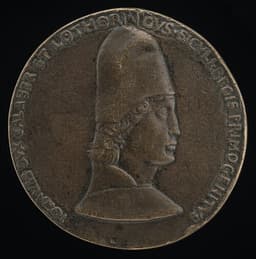
John II of Lorraine
Emperor · Medieval
37.5Total

Julius Caesar
General · Ancient
82.8Total
Basic Information
Born
1426
-100
Died
1470
-44
Era
Medieval
Ancient
Nationality
Lorraine
Roman Republic
Occupation
Emperor
General
Civilization
Western
Western
Score Comparison
Military (10%)
21.2
88.0
Political (20%)
29.3
78.0
Influence (20%)
47.1
85.0
Legacy (20%)
37.5
82.0
Leadership (15%)
39.0
80.0
Strategy (15%)
39.6
85.0
TOTAL
37.5
82.8
John II of Lorraine — Complete Timeline
1458 AD
Claimed the Kingdom of NaplesPolitical Action◆ Major
John II inherited the Angevin claim to the Kingdom of Naples from his father Ren
ClaimItalian Campaign
Impact: regional
1470 AD
Died in BarcelonaPolitical Action◆ Major
John II died in Barcelona while on campaign to press his claim to Naples. His death left the Angevin claim unresolved and passed to his son Nicholas.
DeathUnfinished Campaign
Impact: regionaltragic
Julius Caesar — Complete Timeline
58 BC
Gallic WarsWar◆ Major
Caesar, as proconsul of Gaul, launched a series of campaigns that conquered all of Gaul (modern France, Belgium, and parts of Switzerland). He fought numerous battles, including against the Helvetii, the Belgae, and the Gallic chieftain Vercingetorix. The wars brought immense wealth and a loyal army to Caesar.
Gallic WarsConquestRoman Expansion
Impact: regional
49 BC
Crossing the RubiconPolitical Action◆ Major
Caesar led Legio XIII across the Rubicon River into Italy, defying the Roman Senate's order to disband his army. This act triggered a civil war against Pompey and the Optimates, ultimately leading to Caesar's dictatorship and the end of the Roman Republic.
Roman Civil WarEnd of RepublicPower Struggle
Impact: global
48 BC
Battle of PharsalusWar◆ Major
Caesar's outnumbered army defeated the larger forces of Pompey the Great at Pharsalus in Greece. Caesar's tactical use of a reserve line to counter Pompey's cavalry charge proved decisive. Pompey fled to Egypt, where he was assassinated, leaving Caesar as the undisputed master of the Roman world.
Roman Civil WarBattleDecisive Victory
Impact: regional
44 BC
Appointment as Dictator for LifePolitical Action◆ Major
The Roman Senate appointed Caesar dictator perpetuo (dictator for life), granting him unprecedented personal power. This move concentrated military, legislative, and judicial authority in one person, effectively ending the Roman Republic's traditional system of checks and balances and alarming many senators.
DictatorshipEnd of RepublicPower Consolidation
Impact: regionaldestructive
Assassination on the Ides of MarchPolitical Action◆ Major
A group of Roman senators, led by Marcus Junius Brutus and Gaius Cassius Longinus, stabbed Caesar to death at a meeting of the Senate in the Theatre of Pompey. The assassination was intended to restore the Republic, but instead triggered another civil war that led to the rise of the Roman Empire.
AssassinationRoman PoliticsEnd of Republic
Impact: globaldestructive
Expert Analysis
john-ii-of-lorraine-vs-julius-caesar
# The Measure of Greatness
On a winter day in 1470, John II of Lorraine died in Barcelona, far from the Duchy of Lorraine he had inherited, far from the Kingdom of Naples he had spent years trying to claim. He was forty-four years old, and his life’s ambition—to wear the crown of Naples—had slipped through his fingers like sand. Across the centuries, another man of ambition, Julius Caesar, had died at fifty-six on the floor of the Roman Senate, his blood pooling around the base of Pompey’s statue. Both men reached for power; both met violent ends. Yet one reshaped the entire Western world, while the other faded into a footnote of medieval dynastic politics. Why? The answer lies not in the hands of fate, but in the marrow of character, the nature of opportunity, and the terrible weight of decisions made at the crossroads of history.
Origins
Julius Caesar was born in 100 BCE into the patrician Julian clan, a family with ancient lineage but diminished political clout in the late Roman Republic. His childhood unfolded against a backdrop of civil strife—the Social War, the dictatorship of Sulla, the growing tension between populist and aristocratic factions. Caesar’s aunt had married Gaius Marius, the great populist general, and when Sulla seized power, the young Caesar was marked for death. He fled Rome, disguised and terrified, learning early that survival required cunning and that the Republic was a game played for the highest stakes.
John II of Lorraine entered the world in 1426, the son of René of Anjou, a man who held titles across France and Italy but possessed little ability to govern them. René was a poet and patron of the arts, not a warrior or administrator. John grew up in a world where claims meant more than conquest—where a parchment signed by a long-dead pope could justify a lifetime of campaigning. His inheritance was a tangle of legal fictions: the Duchy of Lorraine, yes, but also the Angevin claim to Naples, a kingdom ruled by the Aragonese. From the start, John’s ambition was defined not by what he could build, but by what he believed he was owed.
Rise to Power
Caesar’s ascent was a masterpiece of calculated risk. He climbed the Roman political ladder—quaestor, aedile, praetor—spending borrowed fortunes on games and bribes, building a network of clients and allies. In 60 BCE, he forged the First Triumvirate with Pompey and Crassus, an unofficial alliance that let him bypass the Senate’s resistance. The following year, he secured the governorship of Gaul, a province that offered both military glory and plunder. Over eight years, from 58 to 50 BCE, Caesar conquered all of Gaul, crossed the Rhine into Germany, and landed in Britain. He wrote his own commentaries, turning battlefield reports into propaganda that made him a legend while he still lived.
John II’s rise was slower, more passive. He became Duke of Lorraine in 1453 upon his father’s abdication, but his real inheritance was the Neapolitan claim, which René formally passed to him in 1458. John spent years shuttling between French courts, seeking support from King Louis XI and the Duke of Burgundy. He raised armies, but they never marched with the discipline of Caesar’s legions. His key turning point was not a battle won, but a claim inherited. He entered history not by force of will, but by accident of birth.
Leadership & Governance
Caesar governed with a blend of clemency and ruthlessness that defined Roman politics for generations. As dictator, he reformed the calendar, granted citizenship to provincials, initiated public works, and centralized administration. His military genius was absolute: at Alesia in 52 BCE, he besieged a Gallic stronghold while simultaneously defending against a massive relief army, a feat of logistics and nerve that still stuns military historians. Yet his political wisdom failed him at the crucial moment. By accepting dictatorship for life in 44 BCE, he signaled that the Republic was dead, and he was its king—a title Romans had hated for five centuries.
John II of Lorraine governed a duchy, not an empire. His administrative record is thin: he minted coins, upheld feudal obligations, and fought minor skirmishes along the borders of Lorraine. His military campaigns were exercises in futility—he never came close to conquering Naples. His political acumen was limited to securing loans and promises from more powerful neighbors. Where Caesar reshaped institutions, John merely inherited them. Where Caesar wrote laws, John followed them.
Triumph & Tragedy
Caesar’s greatest moment came on August 2, 47 BCE, at the Battle of Zela, where he defeated Pharnaces II of Pontus and famously declared, “Veni, vidi, vici”—I came, I saw, I conquered. It was the essence of his genius: speed, decisiveness, and the ability to turn a messy conflict into a clean victory. His tragedy was the Ides of March, 44 BCE, when sixty senators stabbed him to death. He had ignored warnings, dismissed omens, and walked unarmed into the Senate chamber. His final words, according to Suetonius, were to his friend Brutus: “You too, my child?”
John II’s triumph was never realized. He died in Barcelona, not on a battlefield but in a bed, his claim to Naples unresolved, his army unpaid and dissolving. His tragedy was not a dramatic fall from greatness, but a slow, grinding failure to achieve anything of lasting significance. He left no commentaries, no reforms, no legend. He left only a dead end in the tangled genealogy of European royalty.
Character & Destiny
Caesar was audacity incarnate. He crossed the Rubicon River in 49 BCE, defying the Senate and declaring civil war, because he understood that hesitation was death. He pardoned enemies, promoted talent regardless of birth, and gambled everything on his own ability. His flaw was the same as his strength: he could not imagine that his luck would ever run out. That confidence made him great; it also made him blind.
John II was cautious, persistent, and ultimately overwhelmed by forces beyond his control. He lacked Caesar’s charisma, his strategic vision, his willingness to break the rules. He played the game of medieval politics as it had always been played—by inheritance, marriage, and petition. In an era when men like Louis XI of France were centralizing power and breaking old feudal structures, John clung to a claim that was already an anachronism. His character did not shape his destiny; his destiny shaped him, and it was a small one.
Legacy
Caesar’s legacy is the Roman Empire itself. His adopted heir, Octavian, became Augustus, the first emperor. The title “Caesar” became synonymous with imperial power, surviving for centuries as “Kaiser” and “Tsar.” His military tactics are still studied at war colleges. His calendar, with minor adjustments, is the one we use today. He is remembered not just as a conqueror, but as a turning point in history—the man who ended the Republic and began an era.
John II of Lorraine is remembered by specialists in medieval genealogy, if at all. His death left the Angevin claim to Naples to pass to René’s other descendants, who also failed to press it. He built nothing, transformed nothing, and left no mark on the world beyond a few lines in regional archives. His total score of 43.0, compared to Caesar’s 83.3, reflects not a failure of effort, but a failure of scale.
Conclusion
The difference between Julius Caesar and John II of Lorraine is not a matter of luck, but of vision and execution. Caesar saw a world in crisis and chose to remake it in his own image. John saw a world of inherited rights and tried to claim his share. One acted; the other waited. One broke the mold; the other filled a space already carved out by others. History rewards not those who inherit greatness, but those who seize it—and Caesar, for all his flaws, understood that better than most. The Ides of March claimed his life, but not his legacy. John II died in Barcelona, and the world barely noticed.
Rankings
🥇
Julius CaesarLeader
Mil: 88.0Pol: 78.0Inf: 85.0
82.8
🥈
John II of Lorraine
Mil: 21.2Pol: 29.3Inf: 47.1
37.5
+45.3 behind
How This Comparison Works
Algorithm
Each figure is scored on 6 dimensions (0—100 scale) based on structured historical data: Military (10%), Political (20%), Influence (20%), Legacy (20%), Leadership (15%), Strategy (15%). The weighted total produces the final ranking.
Data Sources
Scores are computed from structured sub-indicators in the database. Scale factors adjust for era (Ancient ×0.85, Modern ×1.0) and civilization size (Eastern ×1.05, Other ×0.80) to account for differences in population and military scale.
Maximum 3 Figures
Comparisons are limited to 2—3 figures to ensure readability and statistical meaningfulness.
Error Margins
±5 points per dimension — Sub-scores are derived from historical records with inherent uncertainty. Two figures within 5 points on a dimension should be considered roughly equivalent in that area.
Total Score Accuracy
±3 points overall — The weighted combination of 6 dimensions produces a total score with approximately ±3 points of uncertainty. Differences of less than 3 points are not statistically significant— the figures are effectively tied.
Known Limitations
- Historical records are incomplete and uneven across civilizations
- Figures from oral-tradition societies may be underrepresented
- Occupation labels can misclassify multi-role figures
- Scores measure capability and impact, not moral character
- Quantitative scoring is a comparison tool, not absolute truth
Capability Radar
Military (10%) — Battles & Warfare
Battles
10
95
Win Rate
10
92
Expansion
10
97
Political (20%) — Governance & Reform
Reform
10
90
Diplomacy
20
85
Economy
10
82
Influence (20%) — Cultural & Global Reach
Cultural
10
88
Global
10
94
Legacy (20%) — Historical Impact
Historical
15
95
Longevity
10
96
Leadership (15%) — Power & Stability
Tenure
15
75
Stability
10
60
Strategy (15%) — Tactics & Innovation
Strategy
10
94
Tactics
10
96
Reform
5
88
Similar Comparisons
Comments & Discussion
史料之锤6/17/2026
数据不会撒谎:凯撒统治了罗马二十年,横跨欧亚非,写了《高卢战记》;约翰二世连洛林都没守稳,1470年死在巴塞罗那,连个像样的墓志铭都没有。拿他俩比就像拿核弹和爆竹比——凯撒改变了文明的轨迹,约翰只是中世纪贵族权力游戏里的一个配角。别扯什么“不同时代的背景”,伟大就是伟大,湮没就是湮没。事实摆在这儿,争什么都没用。
戏谑史官6/17/2026
作为古典学学者,我忍不住笑:把约翰二世和凯撒摆一块儿,就像把地方戏和莎士比亚同台。凯撒定义了“伟大”——他的日历还在用,他的名字成了皇帝的代称;约翰连个像样的传记都没有,后人记住他全靠和凯撒比。这不是公平不公平的问题,是历史本身就爱把巨人放大、把矮子缩小。凯撒的野心撞上了罗马帝国的骨架,约翰的野心撞上了中世纪的分裂墙。命运不公?历史本来就不讲公平。
Chronicler50396/17/2026
Caesar rewrote the map of the known world in blood and ink—John couldn’t even hold Naples. Comparing them is like comparing a hammer to a feather. Caesar crossed the Rubicon, conquered Gaul, and broke the Republic’s back; John spent years chasing a crown that slipped away like smoke. One legacy echoes in every dictator’s dream; the other’s a trivia question. No contest—Caesar’s ambition carved history; John’s just carved a footnote.
Chronicler14416/17/2026
Military historian here: John of Lorraine was a competent late-medieval commander who mastered siege warfare, but Caesar was a tactical revolutionary. John’s best move was the 1455 recapture of Pont-à-Mousson—minor. Caesar invented the concept of the standing army, crushed Pompey at Pharsalus, and turned the legions into a personal instrument of power. John played chess; Caesar played chess with pieces that could conquer planets. There’s no moral here—just a humbling lesson in scale and timing t