Loading...
This comparison has not been analyzed yet.
One-time AI generation (~1 minute). Scores and timeline are already available below.
John Key vs Kalkot Mataskelekele
John Key leads by 18.8 pts · 2 figures compared
…

John Key
Politician · Modern
56.2Total
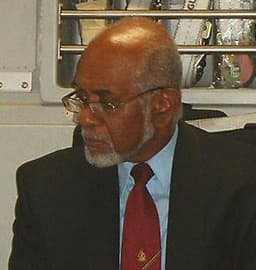
Kalkot Mataskelekele
Politician · Modern
37.4Total
Basic Information
Born
1961
1949
Died
—
—
Era
Modern
Modern
Nationality
New Zealand
Vanuatu
Occupation
Politician
Politician
Civilization
Western
Other
Score Comparison
Military (10%)
50.0
27.6
Political (20%)
72.0
26.4
Influence (20%)
54.1
47.1
Legacy (20%)
43.3
36.7
Leadership (15%)
79.8
38.1
Strategy (15%)
41.2
40.2
TOTAL
56.2
37.4
John Key — Complete Timeline
2008 AD
2008 General Election VictoryPolitical Action◆ Major
Key led the National Party to victory, winning 58 seats to Labour's 43. He became Prime Minister, succeeding Helen Clark, and formed a minority government with support from ACT, United Future, and the Maori Party.
ElectionNational PartyGovernment Formation
Impact: national
2008-2014 Global Financial Crisis ResponsePolitical Action◆ Major
Key's government implemented a series of economic stimulus measures, including tax cuts, infrastructure spending, and a deposit guarantee scheme. New Zealand avoided recession and recovered faster than many comparable economies.
Economic PolicyGFCStimulus
Impact: nationalconstructive
2011 AD
2011 Christchurch Earthquake ResponsePolitical Action◆ Major
Key's government coordinated the national response to the Christchurch earthquake that killed 185 people. The government established the Canterbury Earthquake Recovery Authority and committed billions to rebuilding.
Natural DisasterRecoveryChristchurch
Impact: nationalconstructive
2013 AD
2013 Marriage Equality ActReform◆ Major
Key's government supported the Marriage (Definition of Marriage) Amendment Act, legalizing same-sex marriage in New Zealand. The bill passed 77-44, making New Zealand the first Asia-Pacific country to legalize same-sex marriage.
Same-Sex MarriageSocial ReformLGBTQ Rights
Impact: nationalprogressive
2016 AD
2016 Resignation as Prime MinisterPolitical Action◆ Major
Key unexpectedly resigned as Prime Minister and National Party leader, citing family reasons. He was succeeded by Bill English. Key left with high approval ratings and a stable economy.
ResignationLeadership ChangeEnglish
Impact: national
Kalkot Mataskelekele — Complete Timeline
2004 AD
Elected President of VanuatuPolitical Action◆ Major
Kalkot Mataskelekele was elected as the President of Vanuatu by an electoral college. His presidency lasted from 2004 to 2009, during which he served as the head of state in a largely ceremonial role, representing the nation in diplomatic functions.
PresidencyVanuatu Politics
Impact: national
This comparison has not been analyzed yet.
One-time AI generation (~1 minute). Scores and timeline are already available below.
Rankings
🥇
John KeyLeader
Mil: 50.0Pol: 72.0Inf: 54.1
56.2
🥈
Kalkot Mataskelekele
Mil: 27.6Pol: 26.4Inf: 47.1
37.4
+18.8 behind
How This Comparison Works
Algorithm
Each figure is scored on 6 dimensions (0—100 scale) based on structured historical data: Military (10%), Political (20%), Influence (20%), Legacy (20%), Leadership (15%), Strategy (15%). The weighted total produces the final ranking.
Data Sources
Scores are computed from structured sub-indicators in the database. Scale factors adjust for era (Ancient ×0.85, Modern ×1.0) and civilization size (Eastern ×1.05, Other ×0.80) to account for differences in population and military scale.
Maximum 3 Figures
Comparisons are limited to 2—3 figures to ensure readability and statistical meaningfulness.
Error Margins
±5 points per dimension — Sub-scores are derived from historical records with inherent uncertainty. Two figures within 5 points on a dimension should be considered roughly equivalent in that area.
Total Score Accuracy
±3 points overall — The weighted combination of 6 dimensions produces a total score with approximately ±3 points of uncertainty. Differences of less than 3 points are not statistically significant— the figures are effectively tied.
Known Limitations
- Historical records are incomplete and uneven across civilizations
- Figures from oral-tradition societies may be underrepresented
- Occupation labels can misclassify multi-role figures
- Scores measure capability and impact, not moral character
- Quantitative scoring is a comparison tool, not absolute truth
Capability Radar
Military (10%) — Battles & Warfare
Battles
29
25
Win Rate
30
26
Expansion
35
32
Political (20%) — Governance & Reform
Reform
55
15
Diplomacy
60
20
Economy
70
10
Influence (20%) — Cultural & Global Reach
Cultural
30
10
Global
35
10
Legacy (20%) — Historical Impact
Historical
35
10
Longevity
25
10
Leadership (15%) — Power & Stability
Tenure
65
10
Stability
65
15
Strategy (15%) — Tactics & Innovation
Strategy
39
35
Tactics
39
36
Reform
41
40
Similar Comparisons
Comments & Discussion
No comments yet. Be the first to share your thoughts!